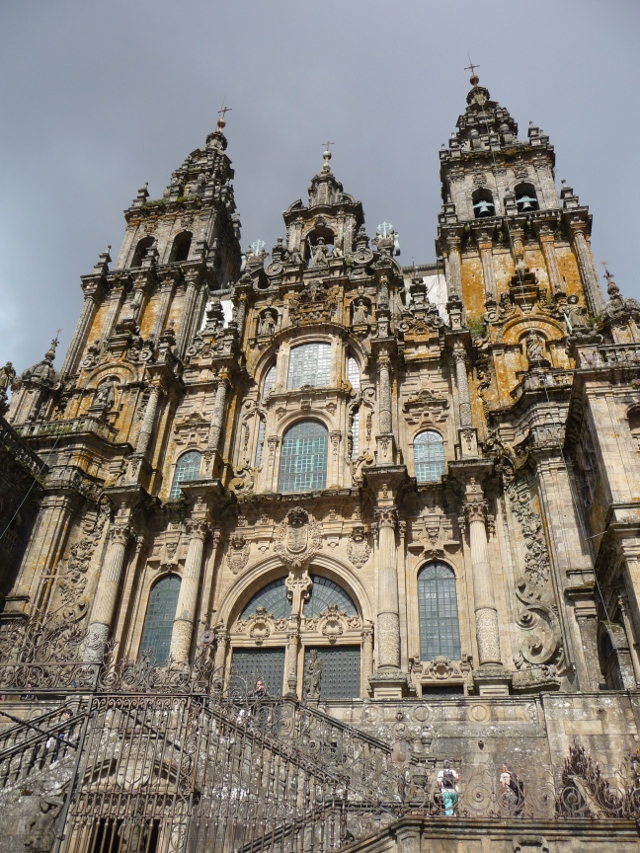
Fatima

(Warning: This post may contain traces of cynicism. It is not intended to cause offence. I’ll deal with any eternal consequences later, in person, if I have to.)

In early 1917, three small children were looking after a flock of sheep on a remote hillside when they saw a flash of lightning, and a blindingly bright lady sat in a tree. It was, of course, the Blessed Virgin Mary. Who else? After a quick chat, mostly about how the world should be dedicated to her memory, and how everybody should pray regularly, the BVM left with a promise to return. Over the next few months, she did so, always on the 13th of the month. By the last apparition, 70,000 witnesses were present.

Fast forward a handful of years. Two of the children are dead, and the third has taken holy orders. Sounds like the beginning of a mediocre airport conspiracy theory novel, probably by Dan Brown, doesn’t it?

Fast forward less than a century, to the present day. One of Portugal’s most revered religious sites has grown up here. Of a broadly similar layout to St Peter’s, Rome, but twice the size (capable of holding a million pilgrims), many of whom cross the square on their knees, it is an incredible sight – if slightly baffling to the non-believer.

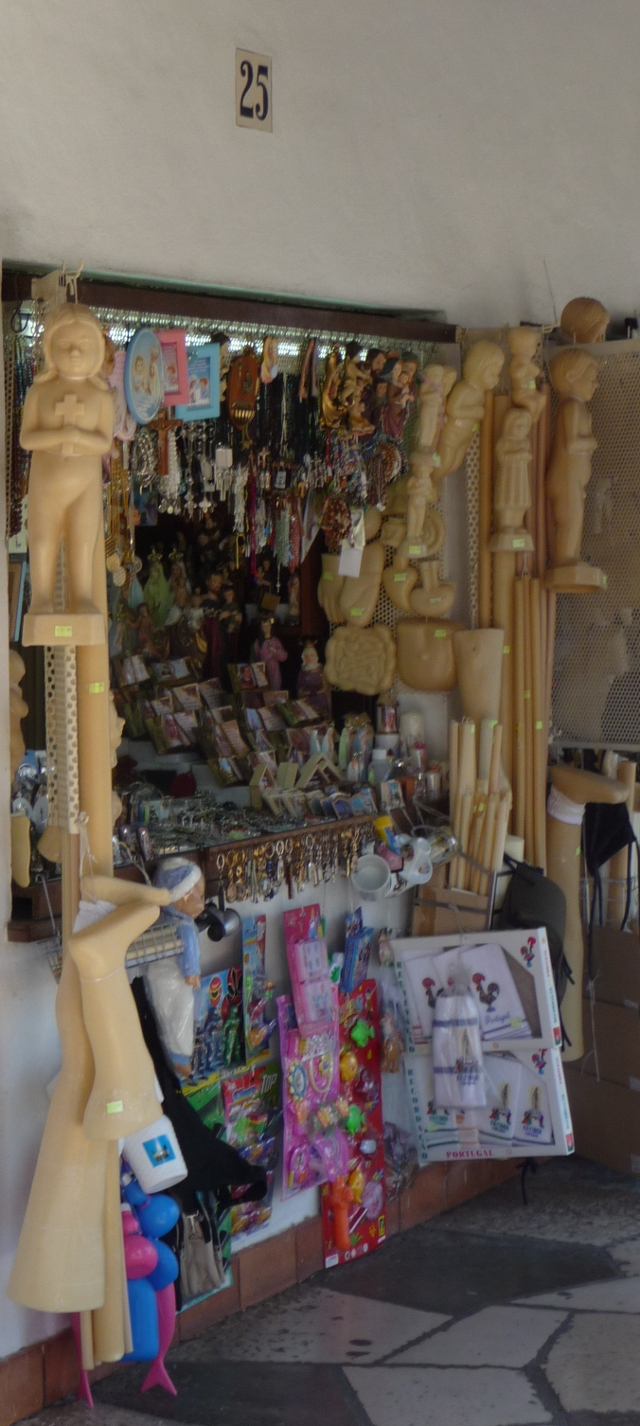
The rest of the town appears to only contain religious tat-shops – if you wanted a BVM table lamp, or a swirly-spangly-psychedelic wall clock depicting three children being apparated to, you’ve never had a wider choice. If you didn’t, your wallet will remain closed.

Candles. Now, we all understand candles in a church or cathedral, don’t we? They’re small, like slightly over-grown tea-lights, and they’re sat on a nice little rack in front of a side chapel, where they flicker gently for a while. Not at Fatima. The candle stall in the Basilica square itself sells a variety of sizes – for €0.50 you can have a small subtle one. Only an inch or so thick and a foot long. For a couple of Euros, you can go up to something resembling a wax chair leg. But if you head in to town to the tat-shops… The most common super-candle appeared to be five foot long, but about an inch thick – but they go up to three or four inches diameter at that length. Or do you have something in particular you want to pray for? A child/grandchild? An ailment? No problem. Life-size wax feet are available. Or hands. Or entire limbs. Or children’s heads (several styles). Or, perhaps, a bosom. No, seriously. I promise you.
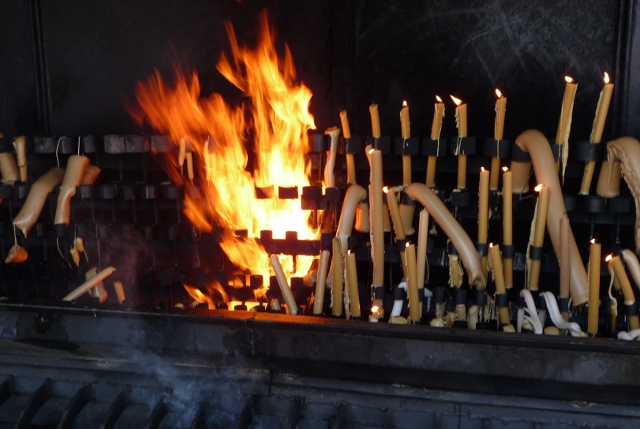
So – we’ve got mahoosive candles, and a large and eager congregation. You can guess what’s coming, can’t you? Yes, it’s conflagration o’clock. The candles are lit and placed in racks in a building, open to the air. This is a good thing, because the candle racks resemble nothing more than an over-enthusiastically stoked barbecue. Heat floods out. As a fairly predictable result, those thin tall candles quickly melt and wilt, causing more wax to fuel the raging furnace. Thick, acrid smoke (for those prices, you can guess that these are not high quality 100% beeswax) pours out. The floor is slick with wax.
Oh, yes – and on the other side of the main square to the fire-pit, there’s a section of the Berlin Wall. No particular explanation of why. There just is.

Somehow, I don’t think it was somewhere I was ever going to quite “get”, but…

Posted in Art & Culture stuff, By Country - Portugal | 5 Comments

Porto to Lisbon

Falling seriously in love with Porto meant we spent longer there than we’d planned. That shouldn’t have been a problem but for the rapidly approaching wedding of 2cv friends, Kim & Luke, back in the UK. We’d booked flights from Lisbon, and they were starting to get uncomfortably close. Time to hit the road again.

Our campsite at Porto was on the coast, south of the city, so it seemed rude not to follow the coast road. Aveiro was first stop – on a coastal lagoon, the traditional industry of seaweed collection (for fertilizer) has left the town with a network of canals around and through the centre, and colourful flat-bottomed boats with raised prows. As a result, the main tourist attraction is boat trips around the canals. However, the town also experienced an influx of wealth, from returning expats, in the early years of the 20th century – leading to a concentration of Art Nouveau-styled houses. After a quick wander around the town, we decided that the canal trips looked a little over-rated, and whilst the architecture was wonderful it wasn’t enough to keep us there for long. So after a delicious fish soup lunch right next to the fish market (just closed after the morning’s trading, but bustling with the clean-up activities), we continued on down the coast to spend the night at Figuera da Foz. A renowned beach resort, we found the huge flea market in the town square far more interesting – along with yet more salt flats. You’ll probably have already read the earlier post contrasting France’s Guerande with India’s Tuticorin – the marshes over the river from Fig’Foz provided a closer interaction with the process. There’s a very recently opened and fascinating museum, staffed by elderly gents who worked on the flats “for real”. Whilst there are still some working flats, the museum’s restored some disused flats and returned them production. There’s a walking trail right through the middle of the salt, and we had a personal explanation of how the rakes are used to pull the crystalising salt out of the evaporating water.

The following morning, another victim of the shortness of time was the ancient university city of Coimbra – we had to make a choice, and decided that we just weren’t going to be able to do it even slight justice, so better to miss it completely than drive once around and head off. Missing Coimbra, though, meant that we could do justice to nearby Conimbriga’s Roman remains.

Essentially the predecessor city to Coimbra, Conimbriga was abandoned in the 5th century following raids by invasions from the Suevi – a Germanic tribe who’d established a foothold in Iberia. As a last-ditch attempt to protect the walled city, though, the occupants hurriedly built another wall – thick, and tall, slap bang through the centre of some villas and using materials reclaimed from demolitions. As a result of this, though, there’s been very little re-use of the location over the intervening centuries, so modern archeology’s managed to reveal entire floorplans – with intact mosaics and walls (sections still plastered and painted) of several houses and other buildings. The forum and public bath-house have been partially reconstructed (from clues left by badly decomposed originals. At least, we sincerely hope so, because the reconstructions seem hugely out of place and unsympathetic, slightly spoiling the feel of the whole place… Pity, because the rest of the site (and the attached museum) are otherwise fantastically evocative.

Our next stop was Tomar – home of the once-every-four-year festival of Tabuleiros – translated everywhere as “trays”. Unmissable if you’re around the area at the right time. We weren’t. The main procession was the following Sunday, when we were going to be back in the UK… Still, the celebrations are a week long, and start the day we arrived, with a children’s procession. Which we missed by a couple of hours. However, we did see (but didn’t get a chance to photograph) people in town with the “trays”, which are more like hats. Apparently some kind of religious celebration dating back to Queen Isobel’s “Brotherhood of the Holy Spirit” in the 14th century, or maybe a pagan fertility rite, the procession involves the town’s women processing around the town balancing the “tray” – thirty bread loaves are threaded onto long canes, wound around with paper flowers and ribbons and topped with a crown. The result is a 20kg hat as tall as the wearer, requiring each woman to be accompanied by a male attendant – both, of course, in traditional costume.

Festa dos Tabulieros - pic from http://umolharviajante.blogspot.com

Tomar’s other main attraction is a castle, high on a cliff above the town. Built in the 11th century, it was the headquarters of the Order of the Knights Templar – whose military might was heavily responsible for the reconquest of Iberia, replacing Islam with Christianity – for centuries. Later converted into a more conventional convent, the main Templar chapel remains intact, containing sumptuous decoration. Surrounded by ornate later cloisters, it’s a wonderful place to spend hours wandering around.

Nearby, there’s an amazing 17th century aqueduct, originally part of a six mile supply route for water from spring to convent.

After Fatima (which really deserves a post all to itself), our final stop before Lisbon was Batalha’s abbey. Whilst the whole building was utterly beautiful, with fantastic light through the stained glass, it slightly suffered from ennui and “cultural overload” starting to set in – although that was thoroughly ignored when we reached the the “unfinished chapel”. Built on one end of the main abbey, as a mausuleum, the octagonal structure was under construction for almost 100 years until work stopped in the mid 16th century, as the buttresses to support the second storey of arches were starting to soar skywards. The abbey also contains Portugal’s main tomb of the unknown warrior, under a roof with an unsupported dome on a scale unprecedented at the time of building. The authorities were so wary and so certain that it would collapse, that condemned criminals were brought in as construction labourers – and the architect lived under it on completion to demonstrate his confidence in his design.

So we arrived in Lisbon. Our arrival in the city had none of the drama of Bilbao’s sudden emergence from tunnel to bridge right above the Guggenheim, or Porto’s full city-centre tour whilst trying to figure out where we were. We merely jumped on a trunk road just outside the city, navigated round the ring motorway, and got off at the right junction for the campsite. Dull, but effective. Would the same apply to the city itself? Watch this space…

Posted in Art & Culture stuff, By Country - Portugal, Travel stuff | 1 Comment

Love at first sight

Getting lost in rush hour traffic isn’t necessarily the best introduction to a city, but it didn’t stop us falling in love with Porto almost instantly. We were firmly hooked and ended up staying for five nights with full on days from morning till late night enjoying the city. Sorry for not blogging during this time – the more you see and do, the more there is to write about and no time to write it.

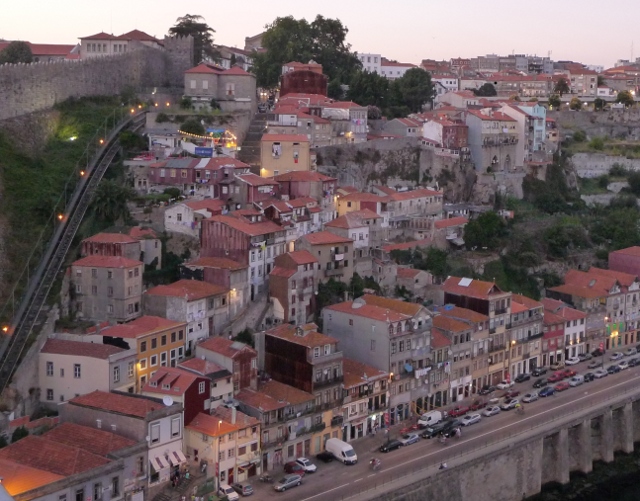
We eventually found our way through the centre of town and followed a route taking us over the Douro river that slices Porto city on its north bank from Vila Nova de Gaia, universally referred to just as Gaia, on its south. The city is steep and deep and six bridges span majestically and dramatically high across and you can see the river join the Atlantic to the west. Multitudes of terracotta roofed tenements and churches, cottages and warehouses cling to the sides. Crossing the Infanta bridge was thrilling – our eyes popping out at the views in every direction.

Porto is layers of tiled buildings, metal lace balconies with dogs sleeping, washing hanging out. Grand buildings, ornate houses, some prime examples of art nouveau and art deco design … many of them surprisingly and forlornly left to decay. Past glories fading in the hot sun, decorated with rust, bindweed and graffiti. Ramshackle tenements whose attic windows are about to cave in through their roofs, but then in one corner of the building there is life – people still live in a part of it, there’s washing and children playing and a dark hole in the wall grocery on the ground floor.

Maps are difficult to follow because they aren’t three dimensional. There’s a lot of climbing involved, aided by outside elevadors, funiculars and an overpriced cable car. The huge steel double-decker Dom Luis I bridge has a traffic level and then high above a metro tram speeds across tracks in the middle – but you can walk on either side. It’s scarily high but the views are worth it.

Porto feels wilder, edgier than a European city and some of its tenement streets wouldn’t feel out of place in India. Meanwhile, its rickety vintage trams rattling along the waterfront and elegant art nouveau cafes evoke a wistful nostalgia for times gone by.

It’s laid back but there’s an energy here – a whisper away from the crumbly cracked precarious back streets there’s the big business that helps make this Portugal’s ‘working’ city.

Port wine dominates this city. All the port in the world comes through here. Export shipping, maturing, bottling, marketing for trade and tourism – corporate big names and family owned for generations, mostly on the south Gaia side of the river where the big ‘port wine lodges’ are. You’ll know some of the names – Sandeman, Taylor’s, Croft, Cockburns. Can’t deny that the chance to try so many different ports was an attraction for us. At the tour of Taylor’s you got to see a real working operation not just a laid on for tourists representation like some of them, with the aroma of the huge barrels holding tens of thousands of litres, and a good quality tasting. We also enjoyed an early evening sojourn at the out of the way Solar de vinho de Porto, a port wine salon in an historic mansion with a rose garden terrace high above the river, with recommendations from the waiter. The list starts at around 1.50 euros a glass right through to hundreds per glass for a vintage taste.

We spent our days and nights drinking in the atmosphere, travelling the city on its trams and open top tour buses, walking its streets and bridges to see exquisitely tiled churches and central station walls, riding more trams, drinking of the many variants of its namesake drink, trying its foods and taking a blissful evening boat cruise beneath its bridges. Walking its bustling market, cats slinking in and out of railings, watching boys jumping from the bridge, riding the breathtakingly fast bus from the campsite, marvelling every time the driver managed to negotiate such narrow streets without calamity. On our last night we enjoyed the buzz and activity of a free concert on the river, watching the people of all ages out and about – very little drinking involved but a lively laid back feel nonetheless or because. When the road led us on from Porto, a little bit of our hearts remained there…

Posted in Art & Culture stuff, By Country - Portugal, Travel stuff | 1 Comment

Braga to Porto

Yes, it’s another one of those catch-up posts… Internet access has been iffy, and we’ve just been too busy seeing and doing, in all honesty.

As we left Braga, there’s a church on the edge of the city, on top of a mountain. Bom Jesus de Monte isn’t particularly old, it isn’t even particularly big – but it does have a very imposing position, and a spectacular staircase leading to it.

There’s also a funicular railway heading up the side of the mountain, but we’re not cheats. We hit that staircase. We did, I will admit, bottle out of doing it in the traditional manner taken by those wishing to make penance for some sin – climbing on their knees. (OK – yes, we did cheat and take the train on the way down. A 120 year old hydraulic funicular – it’d have been rude not to, wouldn’t it?)

From there, it was time for another spot of pre-history, with a visit to the Citânia de Briteiros.

The ruins of a pre-Roman Celtic hill town, this is an absolutely spectacular indication of how advanced the civilisations were, how early – the outlines of the domestic compounds, lining the streets of the town (complete with water distribution culvert, leading from a spring directly to the houses), sit in a naturally fortified location at the head of a river valley, controlling all navigation and animal migration to the sea. Discovered in the late 19th century, the modern village below the site contains an excellent small museum located in the farm where the archeologist who excavated the site, piecing together the culture of the inhabitants, was born.

The weather was scorching – well into the 30s, so our wander round Guimãres was a little brief – not helped by the fact that the town appeared almost deserted. For a Saturday, it seemed that virtually nobody was around – either hiding from the sun or making the most of the four-day São João weekend elsewhere. Effectively the birthplace of Portugal, the castle here was where the country was united in the early 12th century, and the first capital (only for a couple of decades, but that’s not what’s important, right…?). The campsite for the town is high on another mountain (Norfolk this ain’t), with a cable car providing the most sensible transport between the two. Because the city was so quiet and so hot, we headed back to the campsite mid-afternoon, to have a little chill out by the pool. Whilst lazing around the pool, we got chatting to a chap – Portuguese by birth, but now living in the south of France (after a few years around Yeovil) – who, with a friend, taught us how to play the local version of skittles/petanques – a heavy metal disk, more like a hockey puck, is thrown at a wooden peg placed about 15 paces away. Points for knocking the peg over, and points for the nearest puck to the peg at the end of the round.

As well as the campsite, the mountain’s also home to a large church and a monument-lookout point commemorating a Papal visit – a great place to catch the sunset over the city. The cable car had one neat feature we’ve not seen elsewhere – if you fancy cycling around the wooded areas on top of the mountain, but don’t want to kill yourself getting there, every third or fourth cabin had a bike rack, capable of taking two or three bicycles. The campsite itself was long, thin and steeply terraced – when we’d arrived at the campsite, the motorhome & caravan section looked hugely unappealing – a flat, dusty, featureless, shadeless area just inside the gate. A quick wander, though, found that the areas intended for tents were much nicer – lots of smaller plots on shady terraces. But could we get the van down to them? Yes, we could… Close, but we managed, much to the amusement of onlookers – in place, it looked almost like we’d been airlifted in.

So on to the Douro valley – the wide river sheltered beneath steep mountains either side, terraced and lined with Quintas – vineyard estates, producing the grapes that become Port. There’s a road winds down one bank, and a small branch rail line down the other. We can’t vouch for the views from the train, but from the road, the section from Peso de Regua to Pinhão is stunningly beautiful. Then we pointed the van up yet another mountain, towards a lookout point in the heart of a tiny village, way above Pinhão – and stared at the valley and river unfolding for miles. And, of course, some Port had to be tasted, didn’t it?

It was another ferociously hot day and, with the roads being so slow, by the time we got near to the campsite at Amarante we were starting to get a bit frazzled. The van fridge still isn’t working on gas, so by the end of the day, the contents weren’t exactly cold. Being a Sunday, we weren’t expecting supermarkets to be open at near-on 7pm – so were surprised to find one that seemed to be. Even better – they had cold white wine & beer…

The final stretch of the Douro, in towards Porto itself, isn’t the most scenic – so we succumbed and jumped on the (toll) motorway for a few junctions. We jumped back off again, though, to find the Quinta de Avelada – this time, outside the Port area, producing Vinho Verde. The guidebook had suggested it was worth seeing for the house & gardens, so we thought that, since we’d be passing anyway, we might as well have a little look-see. Sure enough, when we eventually found it (The odd sign wouldn’t go amiss – we ended up in town looking at the streetmap on a bus stop…), the hour or so’s circular walk through the grounds was beautiful. Then it was time to head towards the tasting building. Walking in company with three others, Ellie quickly realised they were Swedes – so, of course, we ended up chatting to them, and the five of us shared a table for the tasting itself.

Five glasses were placed on the table, along with a plate of biscuits. Then a large plate of cheese (also produced by the Quinta), and finally a bottle of their better white – which, after a healthy glass each was poured, was left on the table, with the promise that the next wine to taste (Rosé, as it turned out) would be out when we were ready for it – yep, full bottles, just left there with the expectation that we would finish ’em… That’s our kind of tasting…

Posted in By Country - Portugal, Travel stuff | 2 Comments

St João in Braga

– or –
How Ellie and Adrian got hammered and nearly left under a cloud…

June 23rd is St João’s eve – the evening of the feast day of St John the Baptist. Big business around these parts. We’d had the first inklings in Barcelos, but arriving in Braga (the religious capital of Portugal) saw a whole new take on it. As we drove in, we found that the major avenues through the town were hung with Xmas-style decorations only with sunflowers, and with stalls lining the pavements. From the van, we could only see the tarpaulin’d backs – then as we crossed the bridge, we saw the entrance to the park, lined with more stalls.

The first section of the campsite was rammed solid, but we picked one of the pitches dropping down the hill towards the back of the football stadium then over the river and on to town which were free. So off into town we wandered.

Our afternoon meander was most pleasant – every time a drum band became a bit too visceral, we could dip down half-deserted back streets, and find a local folk group in traditional costumes dancing outside a church. Beer stands everywhere, amongst the countless tat-merchants, and precisely one small loo wagon to be found – and only then after asking a policeman. But no queue … very surprisingly.

After a quick re-group back at the site, and as the bands started to tune-up on stage at the stadium, and the fairground along the river came to life, causing us to figure out why half the site was empty, we headed back in for the evening… If you can’t beat ’em, join ’em. The park featured several huge colourful tent-restaurants, with sardines, whole chickens, and large chunks of goat kid barbecuing smokily outside; inside lined with long communal tables and benches – seating capacity of each well into the hundreds – and overflowing. So we joined the queue at one. No idea how it was going to work – there was a menu whiteboard propped up, but even if we’d known what the menu items were, the handwriting was illegible. Sardines then. If we can ever attract a waiter’s attention… We did. Except she wasn’t “our” waiter, and quickly got dragged away by a senior chaos-wrangler whilst the right one was dragged in and given a rollicking.

Sardines, please. How many? Umm, for two? Yes, yes – but how many? Umm…? We agreed on eight. These weren’t your one-bite-and-gone whole sardines that live in ‘ickle oily, salty tins, but a good six to eight inches of glistening silver, lightly charred.

Five arrived. They were, it seems, the last five in the whole place. No problem. They were delicious, once disembowelled. No discussion over what accompanied – that was just taken as read. Boiled potatoes and a salad of tomato, onion, olives, cucumber and pickled green peppers; sufficient to feed a small army. As word reached the still-lengthening queue that the sardines were off, it evaporated. Instantly. People already seated, waiting to order, got up and left. Sardines are, it would seem, popular.

Fed, we continued to wander, along with the entire population of Braga. Old, young – they were all meandering, back and forth, to and fro, aimlessly – pausing briefly to look at the life-size plastic re-enactments of Biblical scenes from St John’s life, or to let a procession of marching bands, folk dancers and giant paper-mache-headed people past – but…

This is the bit that remains inexplicable, and there may be a prize for the best explanation. What – exactly – is the connection between the religious festival of St John the Baptist and squeaky plastic hammers? Or, come to that, five-foot long Allium flowers?

The nice lady at the campsite was unable to enlighten us. “It’s traditional”. Every ten feet, somebody presided over a blanket piled high with squeaky plastic hammers of varying sizes and colours. They were doing good business, too. Every other person was holding one – and, as they wandered, using it to hit the heads of every other random person. Squeak. Squeak. Then there were the Alliums. Long stalks, with round flowers at one end and a garlic bulb at the other – held at full stretch over random shoulders to tickle unwary noses. Squeak. Tickle. Squeak.

(It’s entirely my fault that there’s no pictures of the evening – I left the camera in the van. But, to be honest, I fail to see how photos can possibly capture the absurdity of it all…)

We’d considered going to the concert – but, in the event, the street party was still going strong when the last band started at 2am. One thing worth noting – in spite of the throngs of people hitting each other with plastic hammers, late at night, fuelled by beer & caipirinha stalls, not a sign of drunkenness or trouble – just a really friendly atmosphere.

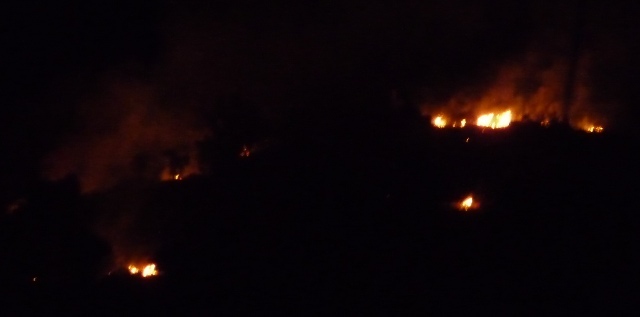
At 1am, the fireworks had started – a spectacular show from the top of one of the heavily wooded mountains overlooking the city, the trees themselves were silhouetted by a golden-amber backlighting. Except that the backlighting started to flicker, and – as the fireworks finished – the smoke failed to clear. Then that backlighting started to grow and spread. Ooops.

The fireworks had started a forest fire. From the campsite, it became clearer, with trees across the upper swathe of our own hill merrily ablaze. Eventually – once they’d changed, presumably, out of their marching band costumes – the Bombeiros arrived and showed exactly how much practice they had at controlling burning tinder-dry hills.

Finally, satisfied that we weren’t going to have to evacuate the campsite, we hit the sack – our exhaustion being lulled gently and instantly to a deep sleep by the continuing deafening raucous oom-pah Pimba music and airhorns of the fairground.

Posted in Art & Culture stuff, By Country - Portugal, Food stuff | 3 Comments

Portugal at last

We crossed into Portugal on the ferry across the wide Minho river which marks the northern border with Spain. We had woken to an overcast morning, but cliché or not, the sun came out as we landed on the Portuguese side. And it’s been shining since and is getting hotter … although thunder storms are forecast.

The two countries are so close and sharing similar culture, and yet so markedly different. We have fallen in love with Portugal really quite quickly with its pretty picture book villages and charming people,  and have discovered an expectedly rich seam of places we just have to see. How to pack them all into the relatively short time left now before our other ‘dates’?

So far we have spent our first week in the northern Minho region, visiting Viana do Castelo and its famous church high on the hill at  Monte de Santa Luzia. with tremendous views. Also Valença – a delightful, if touristy fortified town with views across the Minho to Spain. We particularly loved Ponte de Lima and the Lima valley though so far. We camped up river from Ponte de Barca on the edge of the Peneda-Gerês national park for two nights in a tranquil foresty campsite overlooking the water and swapped travel notes with another English couple, John and Margaret, over white port. This reminded us that we hadn’t spoken to any other English people for several weeks.

The market at Ponte de Barca drew us in with its local produce, ceramics and unbelievable amounts of unattractive clothing that no one seemed to be buying. Adrian braved buying meat in the old fashioned butchers shop without Portuguese. They don’t have the different cuts on view like we’re used to, but you have to ask for what you want and they cut it for you. A nice bit of beef for a Euro.

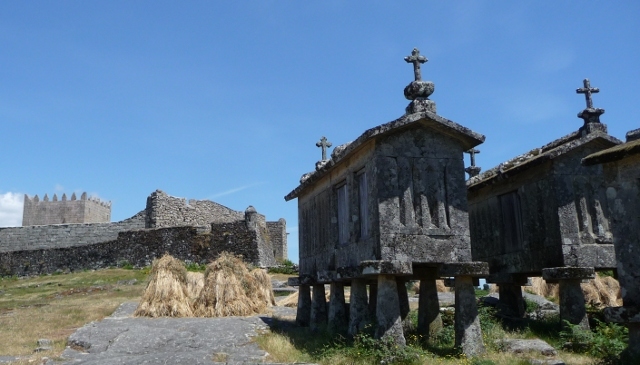
We then headed up the valley to the village of Lindoso to see its impressive number of raised grain stores like tombs, particular to this area of Iberia and which we also saw in Galicia.  We also explored its castle – strolling around its walls in the midday sun.

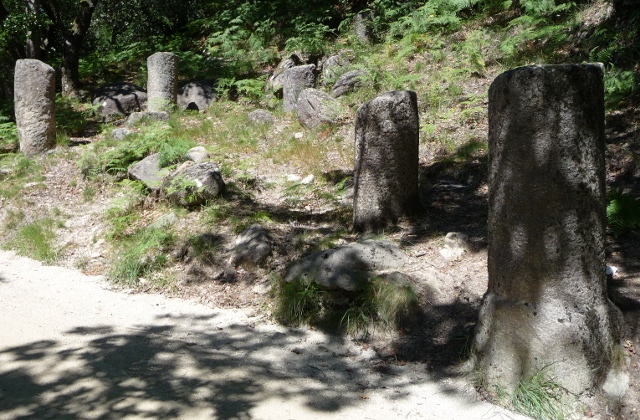
Lindoso castle and grain storesWe continued on into the mountains of the national park close to the Spanish border and came across an intriguing but very rough track which was on the map and had road signs so we persevered, and after a while noticed clumps of Roman milestones along the road. We were on the Via Nova Roman road.

Every time an emperor died the milestone with his inscription had to be replaced, but they left the old ones behind. The road followed the edge of a reservoir above a gigantic dam (not there in Roman times) and then the road crawled higher and higher through tiny cobbled crumbly villages and over the top eventually bringing us back to our “home village” of Entre-Ambos-os-Rios.

The following day we planned to move onto the city of Braga, but first were looking forward to market day at Barcelos – every Thursday. Supposedly one of the biggest regular markets in Europe. We were absolutely devastated that just this week, because it was a religious holiday for St John or St João in Portuguese, the market had been on Wednesday instead. They didn’t mention that in Rough Guide! Adrian’s post about the rest of that day follows.

Posted in By Country - Portugal, Travel stuff | Leave a comment

Curro

Wild horses dragged us out of bed early on a Sunday morning in Baiona after all. We’d heard about curros – local round ups of wild horses with associated partying – in certain areas of Galicia in May and June on Sundays. Of course, we had to find one, which proved trickier. They are not a tourist thing at all (I think we were the only non-locals present) and as lovely as the Spanish tourist information women are – they only have information about their immediate area, village even. In Santiago though, once we’d discovered how to pronounce ‘curro’ with a real rolling of the ‘rrrrr’ we got a list of curros for forthcoming Sundays. We found one in Morgadans, near Gondomar in south west Galicia, close to the Portuguese border and a stone’s throw from where we were roughly planning to be anyway. Finding out more about exact location and timings proved harder with conflicting information.

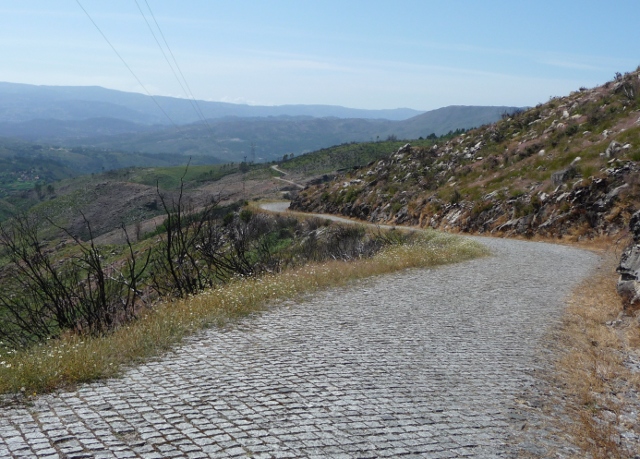
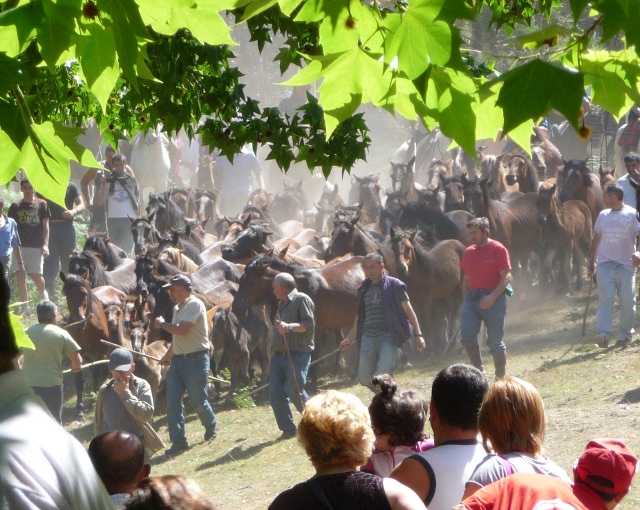
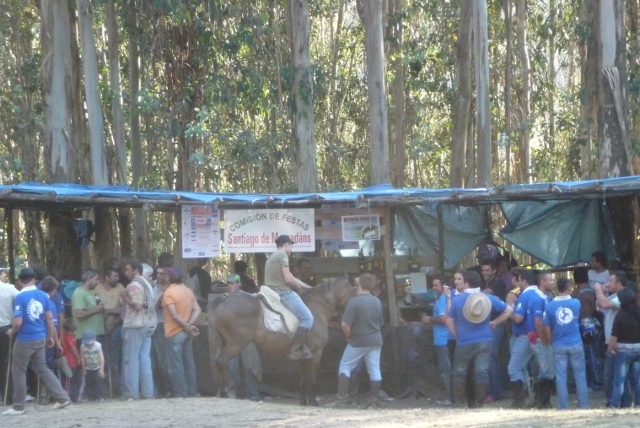
With almost no signs in existence, we took a few wrong turns in the back lanes but after asking local villagers and finding some cars to follow, we found a clearing up in the eucalyptus forested hills, set deep in a hollow forming its own amphitheatre. Dozens of riders went out to round up the wild horses first thing in the morning, corralling them further up the hill at first. Riders of all shapes and sizes, men, women and children take part, with the prowess and posturing of a few of the young and not so young men very much on show. In the meantime, hundreds of locals showed up and partook of the wonderful makeshift bars set up around the clearing, the smoke and flames from their crackling ‘churrasco’ barbecues mingling with the dust from the masses of horses being ridden back and forth with the sunlight filtering through. The cooking smells of the slabs of ribs and chorizo blended with the strong fresh scent of the eucalyptus trees… and the smell of horses.

The palpable buzz grew around midday as we waited for the horses to be brought down to the corral. The 60 or so horses arrived and almost straightaway the 15 or so foals were manhandled into a separate enclosure.

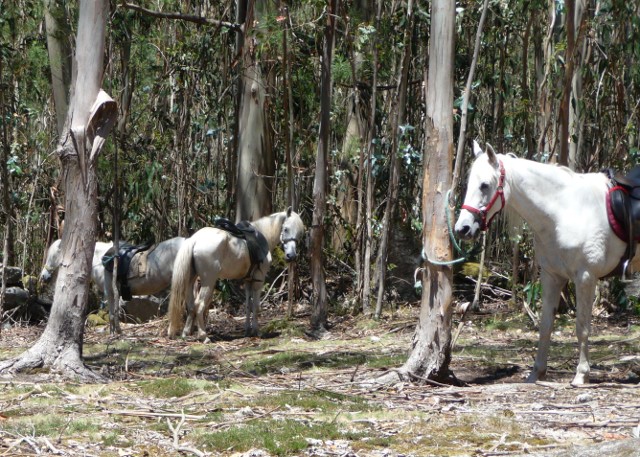
Then nothing happened for quite a while. It was lunchtime of course – so there was a three hour gap where people chilled out – the horses and riders relaxed at their encampments in the trees and people picniced or enjoyed the bars.

The action later was in the main pen where the horses were lassoed one by one – sometimes with great difficulty and drama, and then dragged off for spraying with disinfectant, the younger adults were branded, some had shots and some were selected for mane and tail trimming. They were then let loose to go back off into the forest once more.


Some horses gave their handlers a very hard time… kicking and bucking… and a couple got away and made a dash for the hillside into the throng of spectators, and we came close to being trampled on. When a wild horse, whites of eyes showing, nostrils flaring, mane and tail flying is galloping straight for you, it’s hard to know which way to run without getting in the way of the men chasing to catch it. Miraculously no one was trampled or hurt in any way and it all added to the excitement of the afternoon.

As with any event involving animals overseas, the standards of animal welfare did concern us. In this case, the wild horses and their foals being penned up for a long hot day (more than eight hours for some) without food or water, and the treatment some of the ‘wilder’ ones received when they got the better of their handler. One chap beat a horse so hard his stick broke – much to the vocal abject derision of the crowd and his fellows though. A couple of mares and foals were kept aside and taken for further veterinary attention once everybody had left.

On a happier note, judging from activity in the pen, a new wild horse could well have been conceived, much to the cheering of the crowd and sniggering of the children looking on.

What a long and enthralling day … the raw wild-west atmosphere started to wind down about mid-evening, but beers were still being served.

We moved the van into a more level bit of clearing and stayed the night there. The forest lay silent once more. Or were those hooves we heard in the middle of the night?

Posted in Art & Culture stuff, By Country - Spain, Travel stuff, Wildlife stuff | 4 Comments

And breathe…

After the disappointments of the North, and the excesses of Santiago, we promised ourselves a few days relaxing on the coast, doing not very much. We’d found a likely-looking site in the camping guide, near Pontevedra, heading towards the Portuguese border. Even better, it was in the ACSI off-season discount scheme, so cheap compared to the relatively high prices of many Spanish sites.

Then we arrived. Yes, we knew the location was going to be a bit more heavily-touristy than we usually like, but we weren’t quite expecting such a long sprawl of hotel-hotel-hotel-campsite-hotel-hotel-development-hotel-campsite. Naive? P’raps. Then we got into the site itself. Unprepossessing. Packed. Builders angle-grinding stone tiles for the new cabins right next to about the only empty pitch.

Still, we were here. But one night only. The sun was out. The laundry was piling up – so whilst I went off to hunter-gather by bike (yep, we’d forgotten to stop at a supermarket in the van), Ellie hit the washing machines. The terrain was considerably less than flat, and the nearest supermarket turned out to be about 5km away. <sigh> Relaxing? Was that the plan?

So – on again. Another hop towards the border. And here we are. We’ve found the relaxing site that we wanted, near to Baiona. We’ve done very little since we got here – a bit of light cycling around some flat bike lanes between a couple of pleasant and understated towns, a walk along the beach, a little light blogging. Exactly what we needed. Wild horses couldn’t drag us away…

Posted in By Country - Spain, Personal stuff, Travel stuff | Leave a comment

St James of the Field of Stars

Even if you don’t quite swallow the myths about how Santiago de Compostela was founded, with the body of the Apostle being taken by boat to Galicia in a “miraculous” seven days after his beheading in the Holy Land, then his grave being located at several politically very convenient points in history for the church, in a city founded on a whim because the stars happened to single out one particular field, it’s one heck of a place. The constant stream of pilgrims flooding to the impressive cathedral, with the city being filled with many other astonishingly beautiful old churches, convents, monasteries and squares – any one of which would alone make any other town worth visiting.

After arriving, our moods were quickly lifted by a walk in to the centre, and a first meander to orientate ourselves.

The following day, we started off by running a few errands around the town – the fridge in the van was failing to cool effectively on gas, and we weren’t even sure how much gas we’d got in the tank. Our van’s got a fixed gas tank, rather than using bottles, so we needed to find an LPG pump. The big advantages of doing it that way are compactness, capacity, and cost – the drawback in a country with very few LPG pumps is a hunt to find somewhere to fill it… Santiago had a pump, though, which we eventually found. Two thirds of a tank – for €8.50. Not bad for a month’s worth of cooking, heating water, and an extended period when we didn’t realise the fridge had failed to turn the gas off, burning it at the same time as actually chilling by electricity.

So off to the other errand, find a fridge-fixer. Santiago has exactly one caravan dealer. Who, it turned out, when we located them on the diagonally opposite outskirts to the LPG pump, only opened in the afternoon. And afternoon here begins at 3pm… After killing a few more hours, we returned. No, they don’t do repairs. Just sales. Their other site, in Vigo, on the other hand…

Back to the site, drop the van off at the pitch, then the bus in to town again. A bit more of a wander turned into a tapas crawl with the hectic and atmospheric El Gato Negro our favourite bar of the night followed by alcoholic hot chocolates at Megate, and a missed last bus back.

Finally, a full day in the old town. Cathedral. Cathedral museum. Pilgrimage museum. Exhibition of the history of the cathedral. Plaza. Park. Plaza. Back street. Alley. Plaza. Church. We just wandered, stared, touristed, enjoyed. Then we ate, drank, and enjoyed some more.

Pulpo – octopus. Chocos en su tinta – tiny squid in their ink. Berberechas – cockles. Sobrasada – soft, red sausage. Delicious. Not a single “Hmm, maybe we won’t bother with that again” dish.

But the one thing Santiago isn’t blessed with is great weather although it had improved a bit while we were there. It was time to leave.

Posted in Art & Culture stuff, By Country - Spain, Food stuff, Travel stuff, Van stuff | Leave a comment

There (was) gold in them there hills

West of Astorga, near Ponferrada, there’s the remains of Roman mining activity – for gold. North-West Spain was one of their main sources, so they weren’t afraid to throw some engineering and muscle power at the excavations.

It’s difficult to know exactly how much gold was brought from this area, but the estimate seems to be that somewhere around a million tons of earth and rock were shifted…

The little village of Las Medulas is now sitting on another kind of gold mine as a result – tourism. Who’d have thought people would flock to see the remains of mining, and that it’d be a UN heritage protected site? But when the Romans used hydraulic pressure to chisel away the mountain, they left an astonishing moonscape behind. Our guidebook reckons the landscape’s Arizona-like. Yep, I can see that. But it reminded us more of Australia. Except for all the greenery.

From the village itself, there’s various footpaths that wind through the rocks themselves – we did a circular walk that took us to a couple of echoing caves, in which the remains of the channels and chambers, dug and tunnelled by tens of thousands of workers over the decades the mines were active, and through which high volumes of water, built up in dammed reservoirs on top of the mountains, were allowed to flow, causing rapid pressure increases to literally blow the mountain apart. Just water. No dynamite, no machinery, no gigantic JCBs or trucks – none of the modern quarry’s armoury.


Then off on another footpath, to a lake formed by the overflowed water from the workings. Ellie’s Swedish mother would have had a little huff and mutter at the somewhat optimistic use of the word “lake” – it wasn’t exactly huge – but the range of wildlife present made the wander worthwhile. Dozens of small, vivid green frogs leapt and dived for cover at our approach, whilst huge and equally vivid (but blue and yellow) dragonflies battled amongst themselves – the sound as their wings clashed into each other was surprisingly loud. A heron stood proudly on the opposite bank, before flying off in a slow looping arc over our heads.

We headed off westwards again, leaving the trail of the Camino, towards the medieval walled town of Lugo, but our intended campsite deep into the mountains was still closed for the winter. Ooops.

That left us a dilemma. Back at Bilbao, we’d bought a book listing and mapping every single Iberian campsite. But it didn’t always agree with the locations marked on our Michelin atlas. Which to trust…? They all agreed on a site some way North East, but the atlas showed one more on the logical route. Except the roads towards it didn’t seem to be very major. Hey-ho. We’ll give it a crack. The roads narrowed, twisted, turned, climbed, dropped, climbed some more. The few sign posts only showed places that the atlas denied all knowledge of. Then we arrived at a hairpin bend with another road heading straight – and no signs at all.

We tried straight on. It narrowed rapidly. The road filled with sheep and goats – but no shepherd. The sheepdog didn’t seem particularly helpful, then we spotted a few people in a field. They were setting up for a village Fiesta that evening. Yes, they knew the direction we wanted – and it was the other way from the hairpin. We were more than welcome to stay for the Fiesta, though…

We had a serious think about it – and just as we were leaning towards staying, the shepherd himself lurched towards us, keen to give us directions and suggestions. Trouble is, his accent was so thick that I don’t think we’d have stood a chance of understanding him even if he’d been stone-cold sober. Which he wasn’t. By a very long chalk. After about ten minutes of this, we were starting to lean away from an evening of being objects of curiosity, so ploughed on. At least we (thought we) now knew the right direction, and that it wasn’t too much further. Horizontally, at least. Fortunately, it was towards the top of the very last climb that the van started to cough, splutter and lose power. The fuel gauge was saying that we were just about in the red – on the level. Climbing that sharply, the remaining fuel was running to the back of the tank, and we were running out.

We got to the top, and started the descent. As we rolled into Samos, the wall of a huge and ancient monastery unrolled in front of us. With – I kid you not – a tiny petrol station nestled against it. A tiny black-clad monk was quickly joined by the pump attendant – who’d been sat with some mates and a beer outside the café opposite, and we relaxed. Briefly, since it turned out that the map was wrong and the camping guide right. There was no campsite here. The helpful passerby Ellie had asked promptly swept her off whilst my back was turned – to show her a spot around the corner where we’d be more than welcome to park up for the night, just outside a tiny and ancient chapel with a thousand-year old Cypress tree next to it. And some public loos.

That was it. We didn’t need to think about it. We moved the van to park up, and found that we’d got no brakes… The hot smell that had enveloped the van whilst filling up wasn’t just hot pads – descending all those mountain passes, especially driving a bit more aggressively downhill in an attempt to keep momentum up to minimise fuel use on the following climbs, had generated enough heat that the brief pause had caused it to soak into the fluid and boil it. Ooops… again.

Definitely time to leave the van stationary for the night and relax in the bar. The food we’d planned to cook stayed in the van’s fridge, and we partook of the Menu del Dia. Caldo Gallego – thick veg soup – followed by Salmon in a thin batter and griddled. A restful and relaxed night followed.

The following day, we headed up to Lugo. The medieval walls are completely intact, enclosing the city centre. A quick peak into the Cathedral showed that it was in use for Mass, and whilst there were some interesting bits of the rest of the walled city amongst the cold, grey post-Civil War drab concrete, the desire to wait for the service to finish before looking around was overwhelmed by the desire to get out of the equally cold, grey rain…

So we headed up towards the north coast. Least said, soonest mended just about sums up the rest of the day (Can I refer you to our catching up post?) which finished in a campsite near Ferrol – the glorious sunset on a small and lovely beach was quickly overshadowed once we went to bed by high-pitched whining… The night of a squillion flying-biting things had begun. Finding that the showers in the morning were icy-cold only sealed our mood. We ummed and ahhed about whether to head straight for Santiago, but decided we weren’t in the right frame of mind to do it justice, so headed round the coast some more, intending to head in the next day. By mid-afternoon, our moods hadn’t been helped by the continuing failure of Galicia to provide anything much for the tourist, nor by the continuingly grey and miserable weather. A look at the camping map confirmed that our morning decision had been the wrong one, so we relented and headed straight for Santiago.

Posted in By Country - Spain, Personal stuff, Travel stuff, Van stuff | 4 Comments