Transylvania part 3 – Glass icons and hairpin bends

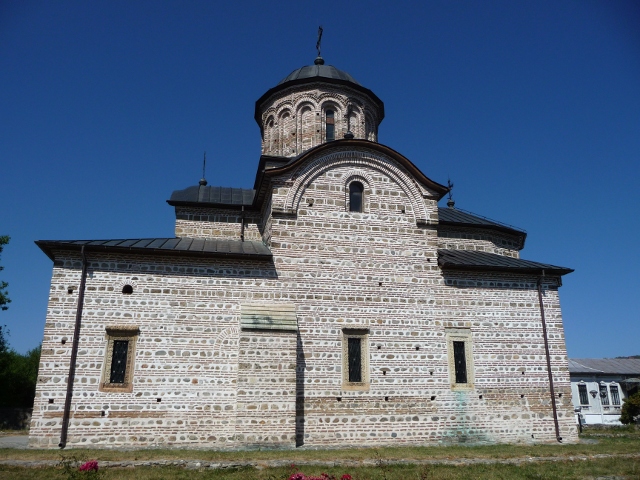
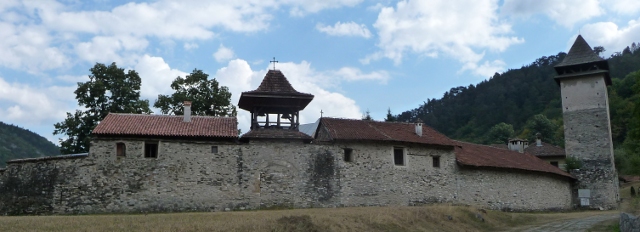
The first real place west of Brașov is Făgăraș, but our attempt to avoid it altogether didn’t quite work. One minor fuel-level-related marital later, we found the petrol station which had eluded us for the entire stretch of the DN1 between the two cities, and took a subtly different route off the main highway. I’m not going to make any value judgements as to whether our original planned loop would have been a better route or not – but the revised detour certainly got us off the beaten track. Or, indeed, almost off any track altogether… Our target was the monastery of Sambata de Sus – founded by Constantin Brâncoveanu (who we’d already “met” several times), and his burial place (although his body is actually in Bucharest). The monastery’s buried at the foot of some fairly serious mountains, forming the southern border of Transylvania – a wonderful location for some beautiful buildings. Inside one section of the cloisters, there’s a museum of icons painted on glass. We’d seen some of these in the Museum of the Romanian Peasant, back in Bucharest, and wanted to find out a bit more. However, it turned out that we might have done better the other way around… Whilst the selection here was beautifully presented and lit, in a wood-panelled attic, there weren’t actually that many – and very little information. Meanwhile, in the background, the (lay) chap behind the ticket desk at one end of the museum only paused his loud viewing of somewhat anachronistic YouTube music videos to answer his mobile…

Still, as we started to wander back to the van, we were interrupted by a slightly funky rhythmic tapping. A quick look around soon found the source – a monk, circling the church, beating the long wooden board which has been hanging outside every Orthodox church here, as a call to prayer. After a few minutes of this, the bells started to peal, and the evening service began.

Meanwhile, we’d found our way back out to the main road, via a town which looked to be one of the recipients of Ceașescu’s “Systematisation” policies – clearing the villages and housing all the residents in “modern” concrete apartment blocks, to try to level the inequalities between urbanites and the rural peasant. The inevitable result, of course, was a lot of very unhappy people forced to live in an alien environment, and a decrease in agricultural output… Fortunately, the plan was only put into place shortly before the revolution, so relatively few clearances ever happened, and most villages were untouched.

We quickly found the one we were after, Cârța, home to a Dutch-run campsite down a little dirt track from the village centre. The village shop – a steel shipping container, with a window and door cut into one side – was doing thriving business. When Ellie wandered down to get some provisions, she was accosted by an older-looking lady in traditional costume, who seemed determined to have a chat. A certain amount of linguistic confusion reigned, but it started off with pleasantries and asking about age, children etc – then quickly moved on to asking if Ellie would like to take a photo of her, before requesting coffee/cigarettes/money…
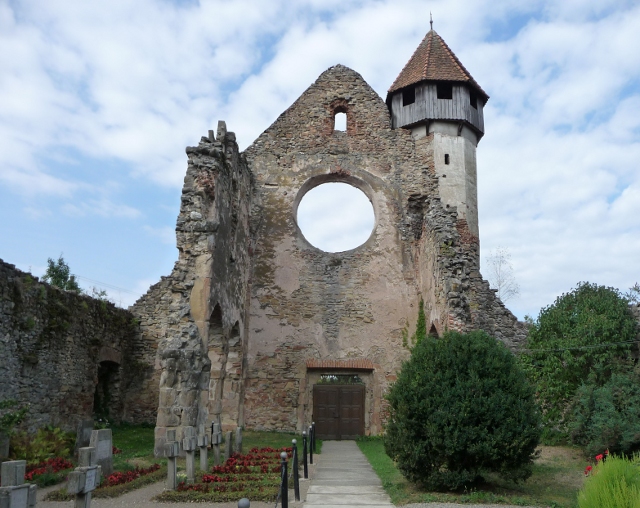
There’s also the ruins of a Cistercian abbey in the village – the arches of the cloisters tail off into the shrubbery, but the church remains in use, as does the tall and stand-alone bell tower. There’s a set of steps leading up the tower, just inviting a wander up to survey the landscape. If you should happen to take that invitation up, I’m told that it’s really easy to forget that you’re right in the middle of the bells, and be so busy watching your feet to make sure you don’t fall head-first down the ladder that you promptly head-butt one of the bells. Still, the blood wiped off the bell easily enough.

As with so many of the Saxon churchs in Transylvania, the war memorial plaque shows one of the little-known follow-ons from WW2. After the communists took over, the entire working-age Saxon population were deported to Soviet forced labour camps as a reprisal for their connections with Germany. This, of course, ignored completely many having fought against the Nazis… A large proportion of them, of course, never came back – and those that did found most of their property confiscated.

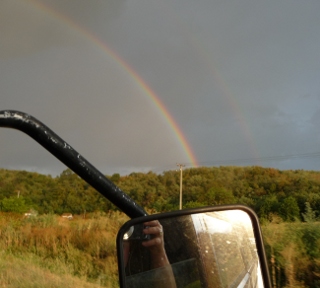
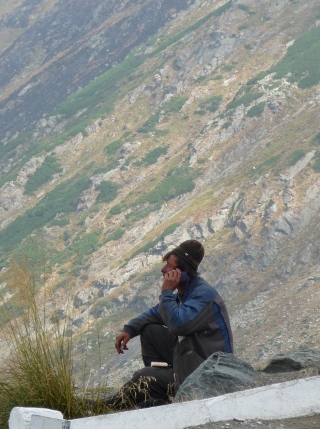
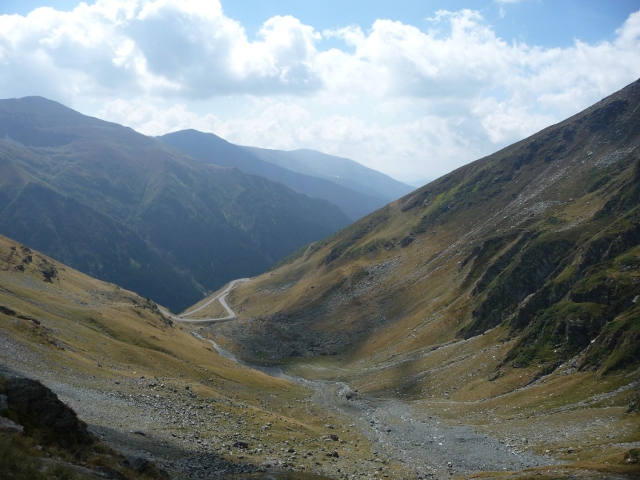
Barely a kilometre or so further up the main road from Cârța, there’s an innocuous-looking side turning for the Trans-Făgărașan Highway. That last word might be a bit of a stretch, but what a road! Allegedly, Top Gear claimed this was the “world’s best road”. Whilst I’ll treat that with the usual disdain reserved for Clarkson, it is indeed a corker – probably better than the Norwegian Trollstigen. Heading south, you climb back-and-forth up the mountainside, with a tremendous view beneath you as a (Coca-Cola liveried!) cablecar narrowly misses your roof as it makes its own way up. An ever-changing mist just added to the drama whilst we stood in a layby, watching transfixed, as a huge flock of sheep picked their way down what appeared to be a near-vertical rockface, whilst the shepherd sat on the edge of the road nearby idly rolling a ciggy and writing a text message – to his dog, p’raps?
The very top of the pass was marked by a tawdry mess of tourist-tat stands, but once past there, the road descended through yet more hairpin bends and sheer drops, before forestry hid the view.
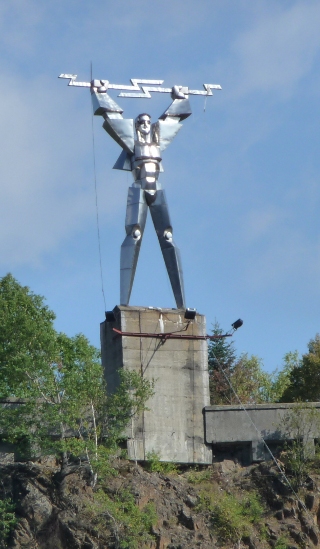
Between the trees, there was the occasional glimpse of Lake Vidraru, but not much more – or maybe I was just too busy trying to keep out of the way of the large and heavily laden logging trucks, tonking their way down? It was only after the map said we’d been following the shore for about 25km that we got to the dam and hydro-electric power station that created the lake, below a dramatic stainless-steel sculpture of a figure throwing lightning bolts about.
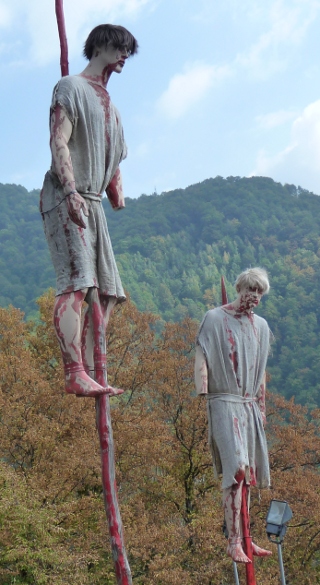
The main reason we’d come this far down the valley – almost back to Curtea d’Arges – was to find Poienari Castle. Built by Vlad Tepeș, you suddenly spot it atop one of the steepest rocks in the area. I don’t even want to know what it would have been like to visit back in the day – but today’s easy modern access involves 1,480 steps… Once you get up there, though, the views remind you just what a fantastic location this would have been for a fortress – totally controlling the route across the mountains between the then-independent kingdoms of Wallachia and Transylvania. The castle might be ruins today, but Vlad’s favourite hobby is celebrated by two firmly impaled mannequins outside the front door. One of them bore a suspicious resemblance to Boris Johnson, but I think it might have been a coincidence.
As we neared the end of the return journey over the pass to Cârța, we spotted another little old camper parked up, not far into the really steep bit of the climb and with the bonnet open. As we drew level, a quick “Are you OK?” thumbs up got a “Umm, not really” response – so we pulled in to see if there was anything we could do. It appeared that Josh & Carol’s Mazda Bongo had just got a bit hot and bothered, and decided to throw coolant all over the ground, but a quick check-over didn’t show anything seriously amiss. They decided to call it quits, though, and followed us back to the campsite. Another evening descended into nattering over dinner & wine…

The city of Sibiu next – another centre for the Saxon population, and with architecture that strongly shows this. The centre of the old town, spread over three main squares and closed off from the new town along one side with the remains of the old city wall and guild-built bastion towers, is very Germanic in look. The Evangelical cathedral was closed for restoration, but still dominated the place. Off to one side, legend says that the “Liar’s Bridge” will collapse if anybody goes onto it and tells a lie – strangely, it survived Ceașescu standing on it to give a speech… We didn’t bother with the Brukenthal art museum – it’s meant to be one of the best in the country, with a long roll-call of Old Masters – but the tickets weren’t cheap, even though a big sign pointed out that most of the big-name paintings were on loan to an exhibition elsewhere, and replaced with copies. The whole place was, to be honest, just a bit antiseptic and over-restored for our taste.
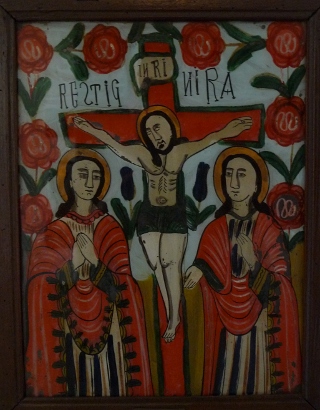
Sibiel, though, was much more like it. The church in the middle of the village is the home for another museum of glass-painted icons, set up by the village priest in the 1960s.

Most of the local homes had at least one of the icons, the work of local “naive” peasant artists and artisans. By displaying them in a museum, the priest reasoned, they would be available for many more people to admire, and to help understand this part of Transylvanian culture. The villagers decided he was right, and donated most of their icons, although some of them continue to visit the museum daily to pray to their original icon.
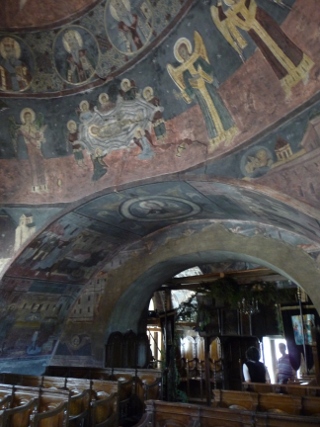
The priest, Father Zosim Oancea, had spent time in prison for activities deemed anti-communist, and had only just been released when he was posted to Sibiel – presumably, it was deemed somewhere quiet where he’d just disappear without trace or trouble… Not only did he start the museum, but he re-discovered the original 18th century frescoes in the village church, hidden under layers of whitewash. When we arrived at the museum, the friendly lady behind the ticket desk wasted no time in abandoning her post to give us a tour around, with the regional differences between the icons explained, in French. She was so enthusiastic about our tour that, when some Romanians followed us into the museum, she wasted no time in asking them if they also spoke French. Yes? Good, then you can join us…
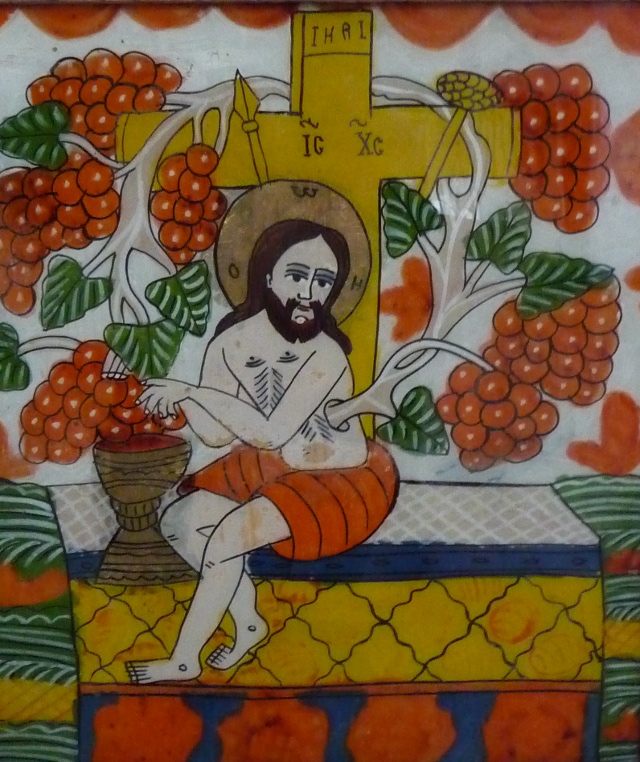
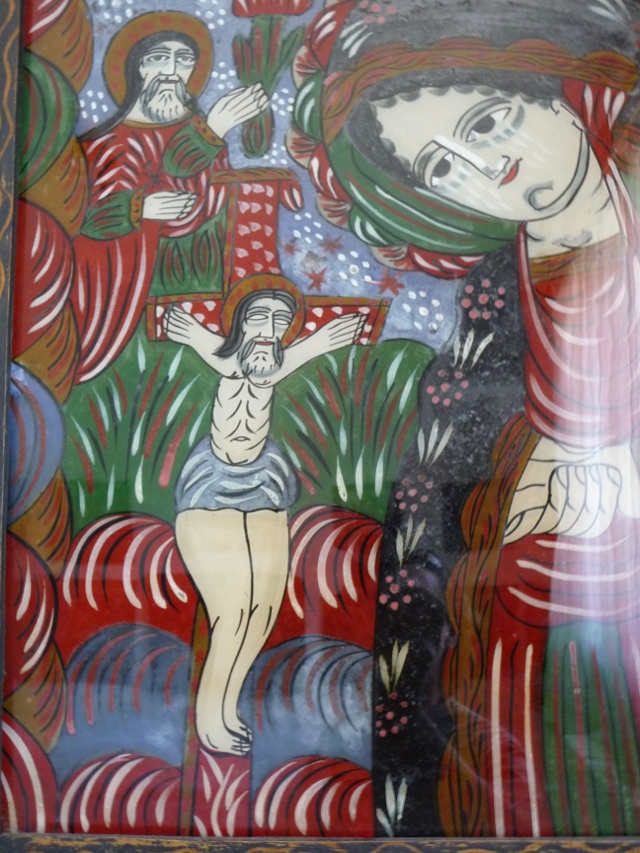
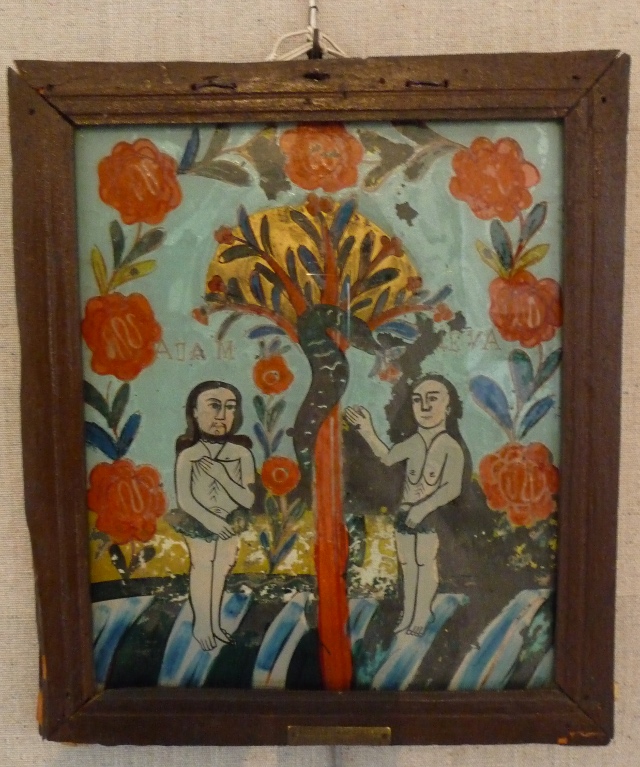
The biggest difference between an icon on glass and an icon on wood is that the glass is painted on the back – meaning the details have to be painted first, before the background colours, making fine detail much more difficult. Add in the self-taught nature of the artisans producing the icons, and the representations are much more naive and individual than most other works of art. They also reflect strongly the areas they were produced in, with variations in local costumes being shown. This was much more what we were wanting to find than the slightly sterile museum at Sambata had been!
Posted in Art & Culture stuff, By Country - Romania, Personal stuff, Travel stuff | Leave a comment

Colourboration – Green with envy

Click to see larger image (1280×1029, 822kb)

Green with envy is what I’d be if I read about someone doing the trip we’re doing. I pinch myself sometimes to make sure it isn’t all a dream. This time Lynne at Dovegreyreader and I have chosen to explore the colour green.

We’re in love with Romania, which is partly why the blog is a little bit more behind than we’d like. There is just so much to see here and our days are packed with visits and impressions, more to write about and less time to time to do so.

We are loving the vernacular architecture of the rural hinterlands, where horses pulling long carts are commonplace, as are people in traditional dress. This green collage is mostly inspired by those details, from walls, verandas, doorways and gates in both town and country in the Transylvania and Moldavia regions. I love textures and the old paint on a rare neglected door creates a texture like a reptile’s skin. We have been spotting different styles and methods of haystacking on our travels too, and the picture on the right hand side shows some fresh ‘haystack trees’ – so much prettier than hay bales in plastic bags don’t you think?

The patch of grass in the centre of the collage isn’t just any random patch of grass but is real fresh growing grass displayed in the Memorial Museum to the Victims of Communism and the Resistance [to Communism] in the former political prison at Sighetu Marmatiei. It is in the cell telling the story of the repression of the peasants when they tried to resist the introduction of collectivism.  It symbolises  ‘the land, alive and free and the grave of those who sacrificed themselves for it’.  A ray of sunshine shone through the high barred window onto it. The prisoners were denied all but a fleeting glimpse of daylight. More about our visit to this museum coming in a post soon.

In the meantime, pay a visit to dovegreyreader to see what greenery Lynne has discovered.

Posted in Art & Culture stuff, By Country - Romania, Colourboration | 2 Comments

Transylvania part 2 – Fortifications

Braşov, founded by the Saxons in medieval times, was a prosperous place. It grew rapidly in the 1960s when the mass industry of the Communist era brought in workers from other regions and it became one of the largest cities in the province. By the late 1980s though economic decline set in, factories closed and the revolution lead to bloodshed in its streets, a park with headstones commemorating those who died lies in the centre of town. Friends who visited Braşov just before this time speak of the poverty, the lack of food in shops, people offering them money for their jeans.

Times have changed, there is still some industry left and in other areas huge out-of-town international brand stores such as Carrefour, Decathlon and H&M fill the gaps where factories once stood. but I’m not sure how many people can really afford to shop there. We are seeing a lot of second hand clothing outlets, many of them advertising clothing from Germany or Denmark, more so than any other of the former Communist countries that we’ve visited.

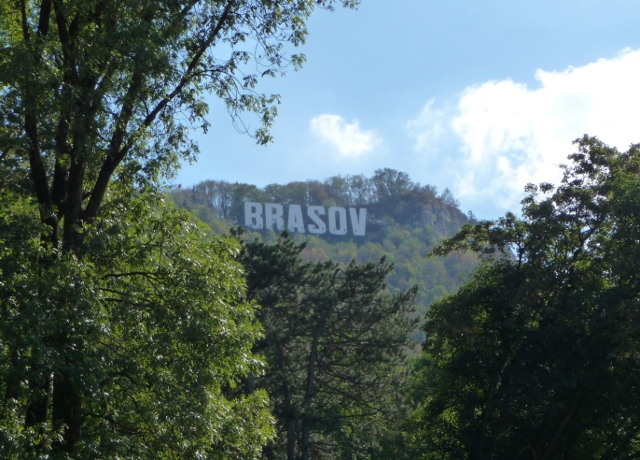
The centre of town is a bustling lively place – quite Germanic in feel, surrounded by mountains. There is even a tacky Hollywood type sign on the top of one of them, and a nearby ski resort – Poiana Braşov.
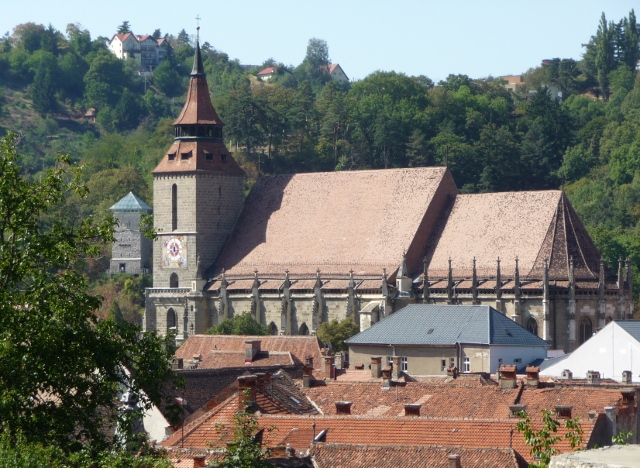
We came first to the Black Church, completed in 1477, named so after a fire, started by an occupying Austrian army back in 1689, blackened its facade. Supposed to be the largest Gothic church east of Vienna, it has a simple interior, but is famous for its 17th century Turkish prayer rugs, gifted to the church by returning local merchants. These mainly hang from the walls or are draped over pews, and add a welcome splash of colour.

In one side chapel, there were information boards telling the story of the restoration of these carpets, since the 1960s, and one in particular. They were often cut in half to line pews, and for this one, it was only after hundreds of years that the two halves were reunited, restored and sewn together again. In the meantime, there were candle wax spills, drag marks and other signs of the wear and tear of the ages. As the information boards outlined though it’s these stains and marks that tell you about the history of the item and if they are removed during restoration the object would be deprived of its story and represent merely a decoration, not the used item it had been. Another aspect of the work of restoration is revealed in a quote by one of the dedicated German restorers working in the 1960s and 70s on the collection, Era Nussbächer: “all that we intervene on these several hundred year old rugs must be reversible, for the case that future generations come up with a better method to conserve them.” It’s thanks to the work of this German financed project that we can see the rugs displayed today.

Our next port of call happened to be the Vodafone shop. We had bought a sim card and data package for Romania a few days previously when we were in Targu Jui and on finally arriving somewhere without free wifi had activated it, and it had been set up wrongly for a deal that was a lot less than we’d paid for. We waited with our queue number for about half an hour before we eventually got served. Luckily the assistant spoke English, but there his helpfulness ended. He didn’t trust that we weren’t trying to pull a fast one, we must have been responsible for the set up on line and there wasn’t anything that Vodafone could do to change it. Adrian assured him that it was a Vodafone issue and yes they could rectify it, and that we would insist on getting the package we’d paid for and nothing less. This discussion continued for a little while not getting anywhere fast. After a while, with Adrian’s British tones sparking the interest of other customers and our insistence, the assistant went to speak to his manager. He came back subdued, and immediately began setting up the correct package on our account. An hour later, which had eaten into our day, we left the store, but at least we had been successful in the end.

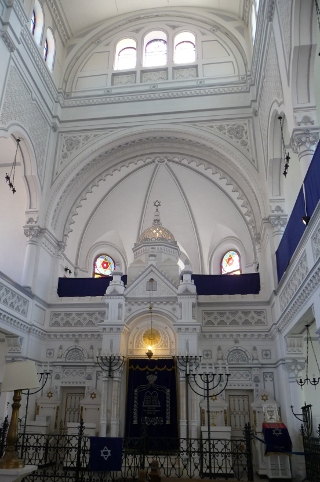
We headed off for more sightseeing and walked past the synagogue, the only one in the town. As we got there a small Dutch tour group were being let in so we tagged along, Adrian donning a skull cap.

The lady in charge apologised for her lack of English, which was of course totally brilliant and in any case far better than our Romanian, before giving us a short lecture on the building, the Jewish community of Braşov and so on. It was interesting, Braşov was long considered a tolerant city and the Jewish population had been steadily growing from 1807 when the first Jews were officially allowed to settle here.

During the 1940s, when Romania came under Nazi domination, the synagogues were desecrated, Jewish property burned or confiscated. Unlike so many other places in Romania though, the Jews of Braşov were not rounded up or deported, and very few lost their lives. After the war, the city became a haven for the remaining Romanian Jews. The population declined again after communism really took hold, with many managing to emigrate to Israel or elsewhere. Now the community only numbers around 300 and the beautiful Moorish style bright white interior of the synagogue is a focal point for the mainly very elderly members.

This wander took us outside the city walls to the Schei quarter. When the city was under Saxon (German-speaking) rule, this was the area that Romanians were forced to live in and they had to pay a toll to enter the city through the Schei gate. Now it’s a quiet area with quite a few imposing administrative buildings, schools and churches. Unfortunately the main church of St Nicholas was closed. We had a delicious lunch at a restaurant – traditional Transylvanian fare. A stuffed schnitzel type thing for Adrian, chicken livers rolled in crispy bacon with a sauce for me, it was one of the best meals with the best service of the trip. We finally got to try ţuică as an aperitif too. This is Romanian brandy, a national drink, which has actually been hard to find.

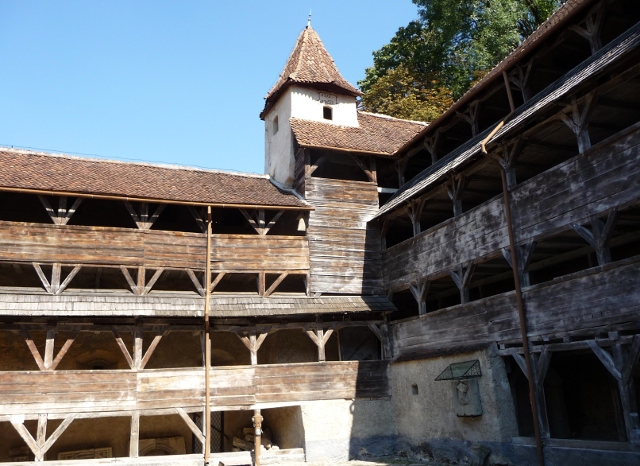
We leisurely walked back to the centre of town taking in a lot of the landmarks, including a couple of the bastions. These are parts of the city’s fortifications, financed and built by certain guilds, so you have the Butchers’ Bastion, the Blacksmith’s Bastion and in the image below, the best-preserved one, the Weavers’ Bastion.
The fortifications were much needed as the city was attacked by Tartars and Turks, and by Vlad Ţepeş in 1460, when he burned suburbs and impaled quite a few of the residents along the top of the hill to the north of the city. We also managed to find Rope street (Str. Sforii), supposedly the narrowest alley in Romania.

Back at the campsite that evening we were joined by Niki, a Romanian chap with a bottle of wine he said was the home brew of the governor of the National Bank of Romania. It was very good. Niki works for the bank and gave us some tips on what to see on our way further east. The job must pay quite well, as his 4×4 pick-up looked very new, though his aging caravan (like many here) was clearly originally British, with the door on the “wrong” side.

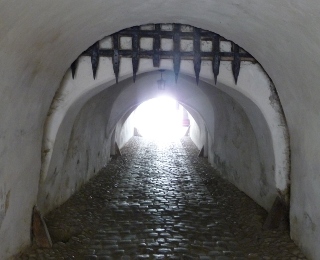
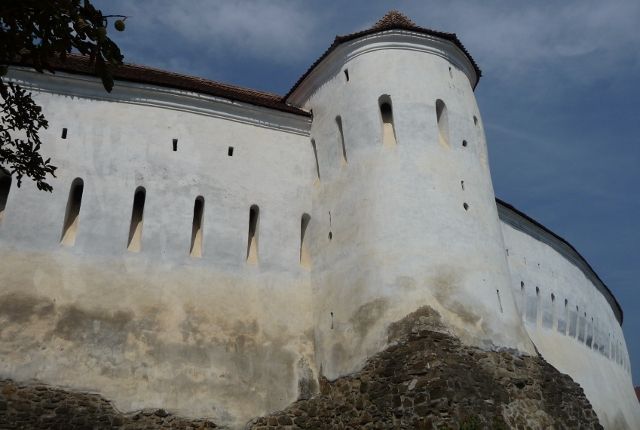
This area of Transylvania is also famous for its Saxon-built fortified churches and we had read up about a couple to the east of town, at Prejmer and Hărman. We visited Prejmer first, which is on UNESCO’s list of World Heritage protected sites. It has a circular outer protective wall reached through a passageway with a portcullis half-way along it for lowering at times of trouble.

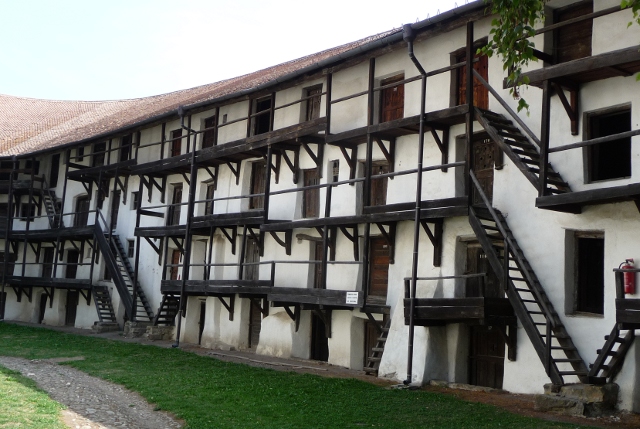
Inside there are store rooms and school rooms with external stairs up to them. In the centre is a 13th century church, the fortifications came later. Church aside, the structure reminded us strongly of the Ksour, the fortified grain stores we’d seen and loved in Tunisia.

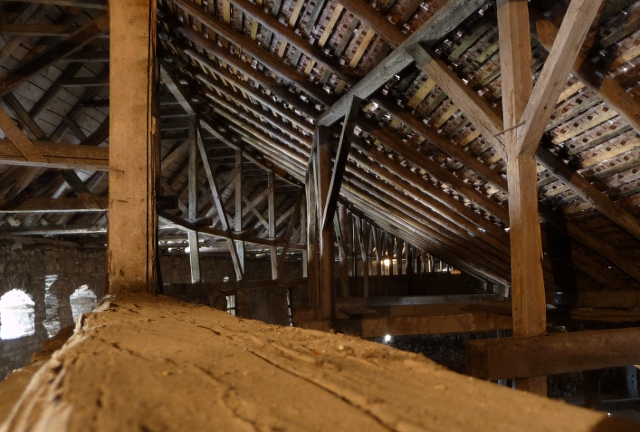
The interior of the church was simple and beautiful with merchants’ rugs like the Black Church in Braşov. We also found our way into the passageway inside the roof  of the fortifying wall and walked right round – a welcome escape from the noisy Polish tour guide leader speaking into a PA system to his group even in the church.

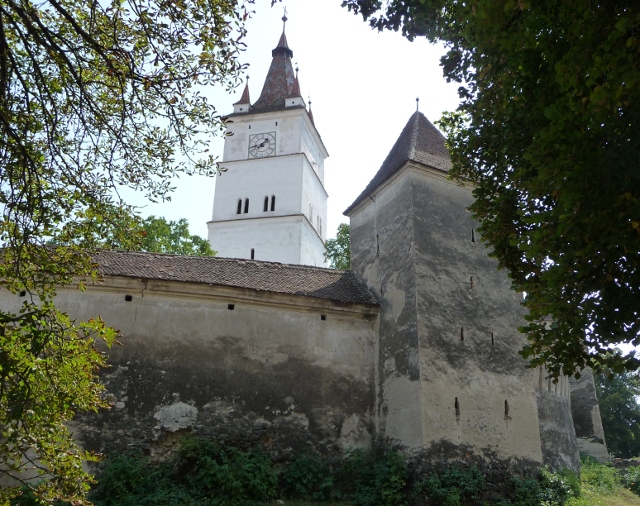
Hărman felt smaller and quieter than Prejmer, and the ladies taking the ticket money, between cigarettes, spoke in German. The fortifications here were higher though and had originally consisted of three concentric walls, the outer one has gone, and seven towers.

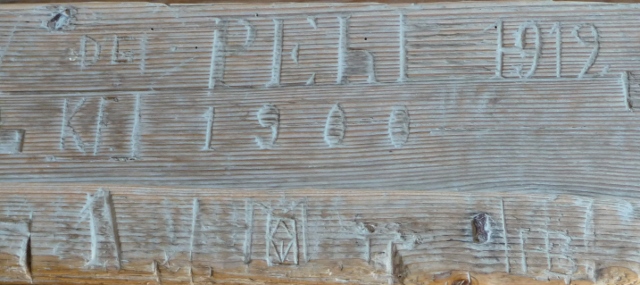
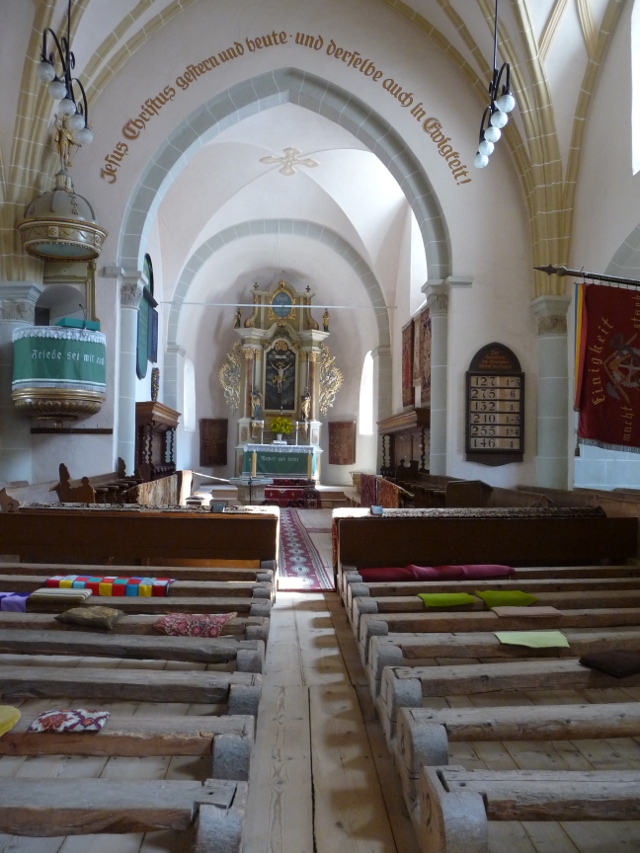
The church felt homely, very old wooden pews, some of them just benches, personalised with ages-old graffiti, and more current cushions and blankets, as well as the merchant rugs. Again we could explore some of the rooms and lofts of the fortification. There was a mocked up school room here too, and various displays of implements, furnishings and costumes.

A picnic in the van later, we were then fortified for our onward drive not further east this time, but westwards. We’ll be zigzagging Transylvania a few times so look out for the next instalment – Vlad will crop up again before long.

Posted in Art & Culture stuff, By Country - Romania, Travel stuff | Leave a comment

Transylvania part 1 – In Vlad’s footsteps

Mention Transylvania and it conjures up the image of a certain black cloaked gentleman with protruding eye-teeth. The Dracula we know and fear is largely the creation of Bram Stoker’s imagination, but the character is rooted in Transylvania, a land alive with folklore, including tales of vampires.

Dracula has become interlinked, even confused, with the real historical figure of Vlad Ţepeş – in English, Vlad the Impaler. Vlad’s family name was Dracul after his father was inducted as a member of the Order of the Dragon – ‘drac’. ‘Dracul’ means the devil in more modern Romanian, and was ‘borrowed’ by Bram Stoker for his mysterious count.

A prince of Wallachia rather than Transylvania, Vlad Ţepeş lived in turbulent times back in the 15th century, and became notoriously prone to impaling rather a large number of people as well as thinking up a whole range of grim tortures. There is nothing to suggest that he ever indulged in biting his victims’ necks though and he is thought of as a heroic figure. We’ll come back to those stories in later instalments, in the meantime, we entered the province of Transylvania, having stocked up on garlic, and found that there was so much more to it than Dracula, but he does keep the tourists coming.

From Bucharest, we drove directly to Târgovişte, not yet quite in Transylvania, to see the Princely Court. This complex of buildings was where Vlad Ţepeş spent his early years, before being sent with his brother to the Ottoman court as hostages by their father. Later he would return, after the murder of his father and an older brother by Wallachian boyars (feudal lords). He waited a while to exact his revenge on the murderers, which he did by getting them half drunk at a feast before his men seized them and merrily impaled them on stakes around the town. He spared a few as he needed labourers for his castle at Poienari.

It was a Monday though, and as we got closer I rechecked the guidebook and erm… like so many things but luckily not all… it was closed. Oh well, perhaps we could see the towers and so on from outside? Yes we got quite a good view, but the gate was open and we wandered in all innocence past the closed ticket office only to be repelled by a black clad security guard at the archway into the complex. He was very nice about it and let us take a few pictures. The buildings had been quite heavily restored and lacked atmosphere, so we weren’t overly disappointed at missing a more in depth visit. Targovişte’s other claim to fame in more recent history is its barracks where the Ceauşescus were killed in the 1989 revolution.

We were heading towards Bran and Braşov, and Câmpulung Muscel was sort of on our way. I read about a rock church in Nămăesti, a village just outside the town and not far off our route. We love a good rock church and this one was a gem, we parked below it, and dodging the begging Roma children by the gate, strolled up the hill. It was beautifully kept and among the icons inside in the gloom was a special Madonna thought to have healing powers.

Câmpulung Muscel was a pleasant busy town, but it was the Negru Vodă monastery behind its impressive towered gate house and walls that we wanted to see. Under the gate house arch there was a pretty church and cloisters.

Something was going on in the church so we skirted around and took pictures of the tower. As we walked past, a priest appeared at the backdoor and indicated that we should go through an opening in the wall towards what they call the hospital church, towards the rear of the grounds, minding a fierce dog on our way. Luckily the dog was nowhere to be seen and we admired the frescoes in the porch and took plenty of pictures. On our way back through, the priest handed us a couple of prayer cards with pictures of icons on them. We entered this church now, and were in awe of the incredible frescoes, admiring them to the sound of distant chanting.

Time was getting on and we had a way to go to Rucăr where there was apparently a campsite. A few miles out of Câmpulung Muscel, we saw what looked like a lighthouse on a hill. The road wound round towards and by it. The Mateias Mausoleum is a World War I memorial, set high up flights of steps, the car park below had a few beat up cars, a couple of shack cafes and about thirty stray dogs milling about. Not terribly inviting, but the dogs luckily ignored us, and we made our way up. Half way up we were called into the museum by the friendly guardian.

It was unexpectedly worthwhile, telling the story of how the Romanians held the Germans for 45 days in this area in 1916, with huge loss of life. There was a very clever recreation of a hillside trench in one half of the building, you felt as if you were there amongst the men fighting, and you could hardly see the join between the foreground three dimensional set and the painted distant landscape.

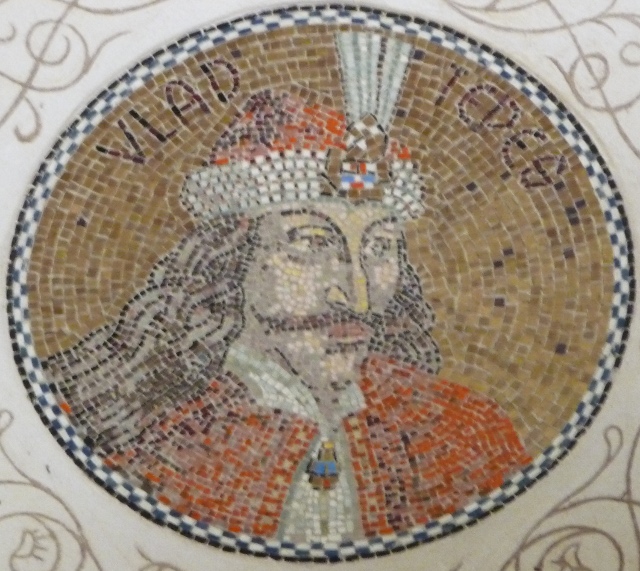
While we climbed the rest of the steps up to the monument itself, something set the dogs off into a cacophony of barking, what a chorus! Inside the building soldiers and religious figures were portrayed in gold and colour mosaics as well as national heroes, including Vlad in the image shown earlier in the post, downstairs there was a chapel and ossuary where remains of around 2000 men are kept forever.

Rucăr bore no sign of Camping Panorama, it was flat on the valley floor too, but luckily I had for once written the street address. It was 219 on the road we were on. We drove out of the town the other side and the numbers weren’t even close. It was several more kilometres and quite a few metres higher into the hills, when we spotted the campsite on a bluff above the road – mainly because there was another T25 parked up there. The view across the valley was stunning as we settled into our pitch in the Dutch run site, made friends with the Germans in the T25, and enjoyed the last few rays of the sun. We are still experiencing hot days, but up in the hills the nights are now quite cold.

Early morning view from the van at Camping Panorama

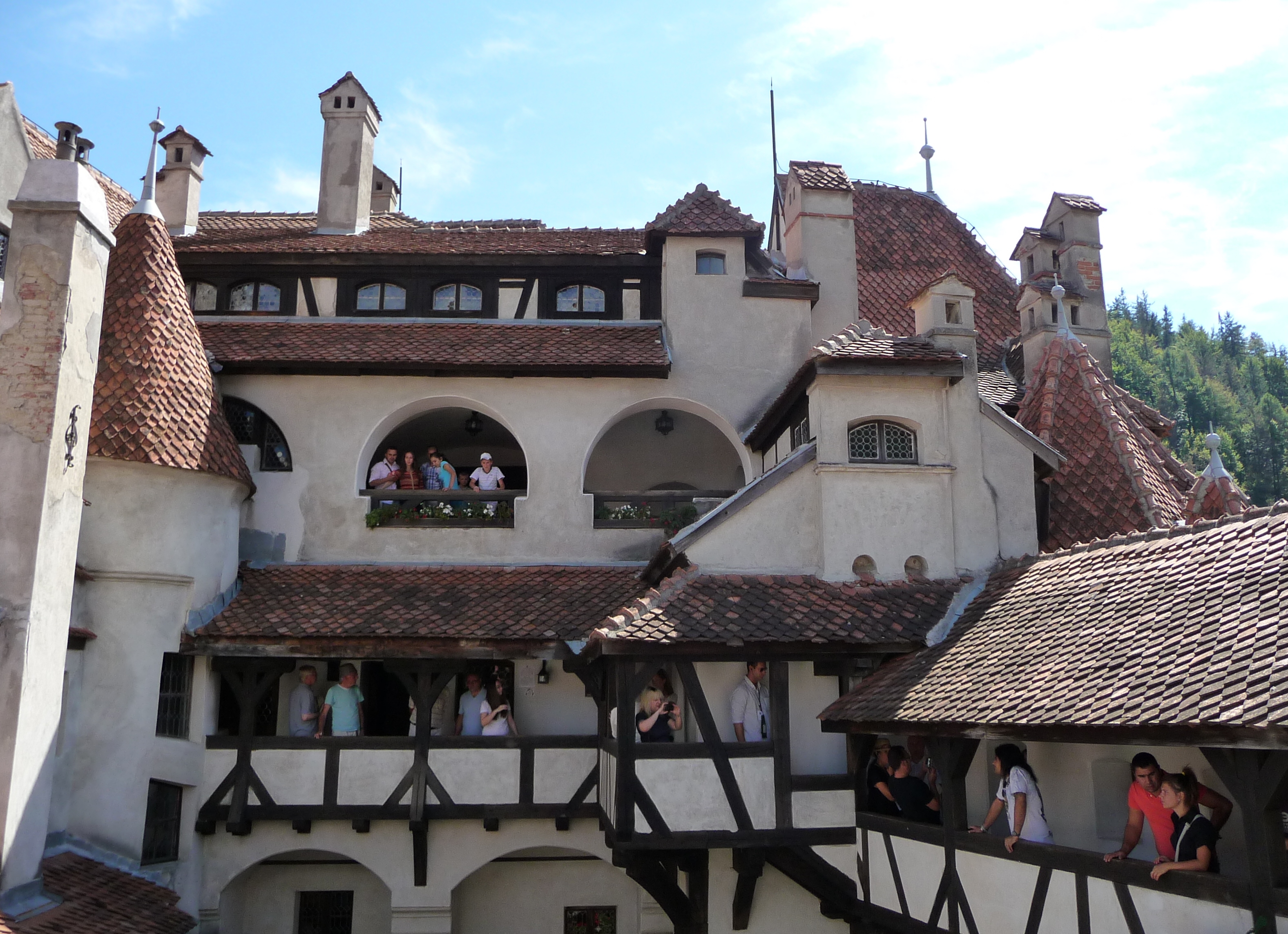
Next day hills and valleys and more views on the road to Bran, home of ‘Dracula’s’ castle. Well, Vlad Ţepeş may once have besieged it. It is suitably dramatically situated high on a rock above a narrow gap in the valley, all turrets and towers. You can see how the imagination worked over time in the continuation of the Dracula myth. It was originally built to protect the trade route through to Braşov back in the 13th and 14th centuries.

Nowadays it is the presence of one of Bran’s later residents – Queen Marie of Romania – that is felt. It is a castle that you can see yourself living in, with stairs and passages up and down and every which way – the kind of house I always dreamed of as a child.

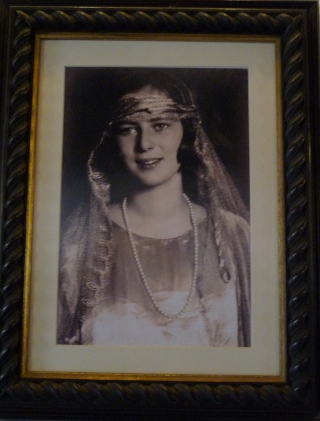
Queen Marie is an immediately inspiring figure, a granddaughter of Queen Victoria who married Prince Ferdinand, the nephew of Prince Carol I of Romania in 1893. She evidently embraced her new country wholeheartedly (if not her husband), becoming the ‘voice of Romania’ at the Paris Peace Conference in 1919. She was not only stunningly beautiful, but artistic herself and a patron of the arts. She nursed sick soldiers in the Balkan and 1st World Wars and won the hearts of Romanians.

Bran castle is furnished in what would have been her style, simple and elegant. Obviously over time, her children inherited the castle, but then it was confiscated under Communism and they fled Romania for the States. It was open to the public, but in 2009 it was finally restored to the family again, Marie’s grand-children, who formed a company to run it and keep it for the public to visit.

To serve the Dracula myth, there are a couple of upstairs rooms with useful information boards about Dracula, Vlad Ţepeş, vampires and Bram Stoker. The small exhibition of instruments of torture was closed though. Down in the town it’s a different story – stalls galore with all the tat you can imagine and people dressed as werewolves to scare teenage girls into a frenzy of giggling. All would have been perfect if we’d only have had the place to ourselves!
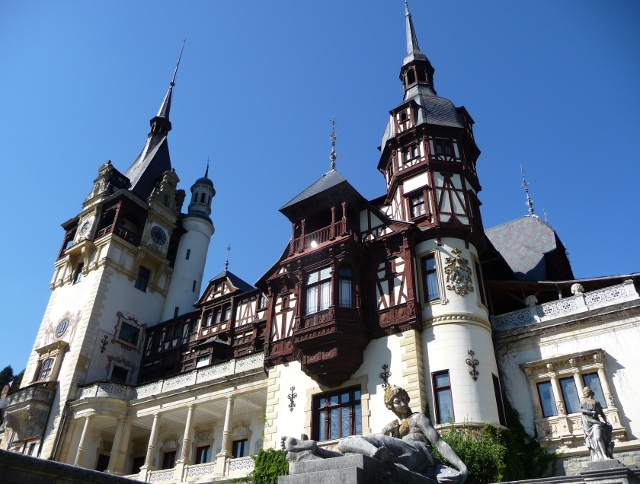
Before heading to Braşov, we backtracked south again a bit further east to see Peleş Castle at Sinaia (no Vlad or Dracula connection). This castle had been in Ceaucescu’s thoughts when he was planning his mammoth palace in Bucharest, and it was commandeered as a residence for the president for a time, but has now also been restored to the descendants of the royal family. Built in the 19th century, it resembles a Bavarian castle, and is set in parkland like an English country estate.
The entry fee to get in was about £5 each – but to buy a permit to enable you to take photos inside would have cost us an extra £7. We were getting used to the Romanian ‘tax’ on taking photos which seems to be a common practice at a lot of sights (thankfully not Bran Castle though). This was extortionate.

We waited for a tour in English, and were barked at to put on over slippers – not the plastic throwaway kind, but proper slippers from a pile of mismatched grubby and worn out slippers… Then barked at to follow the guide, who it turned out was rather soft spoken and not easy to hear. Adrian got caught out and reprimanded for trying to take a sneaky photo or two (she could be heard by everyone then!). The interior is impressive, lots of wood panelling and carvings, but heavy and over ornate after the simplicity of Bran. Neighbouring Pelişor castle might have been more to our taste, smaller and with art nouveau interiors, but this was closed on Tuesdays and Wednesdays.

We headed north up the valley again to a campsite on the southern edge of Braşov in time for some laundry and a sundowner. Look out for Transylvania part 2 …

Posted in Art & Culture stuff, By Country - Romania, Travel stuff | 1 Comment

The Madman’s House

Originally officially called Casa Republicii (House of the Republic), then Casa Poporului (People’s House – irony, presumably), and currently Palatul Parliamentului (Palace of Parliament), the unofficial but popular name seems to fit just perfectly.

Back in 1984, when a huge swathe of the city was cleared at a day’s notice to the residents, few people would have thought that Nicolae Ceaușescu’s plans would result in something that benefitted the average Romanian citizen. But the reduction in rations that was needed to pay for this would probably have come as a surprise to most. The end result? I’m fairly sure nobody would have expected this.

Even today, it’s apparently the second biggest building in the world, by volume, after the Pentagon. It’s clearly huge as you wander towards it, but then you just keep approaching. It’s not only 270m wide, but it’s also 240m deep. As if that wasn’t enough, it’s 86m high. Above ground. There’s another 82m below ground… It looks a bit lost in the plot, too – set inside large grassy slopes, the total road frontage must be at least 500m.

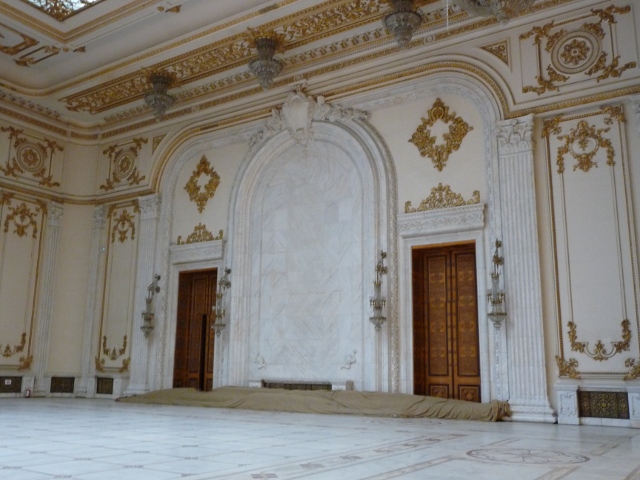
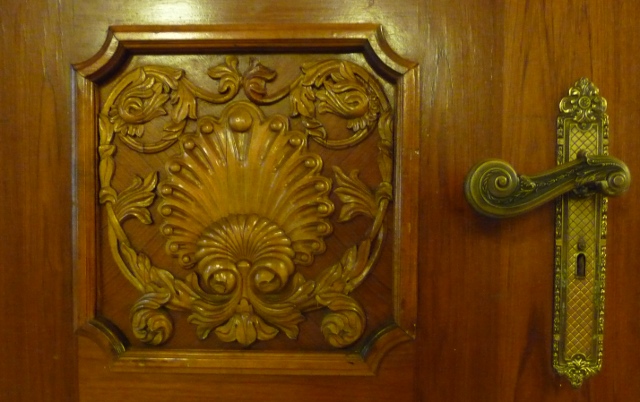
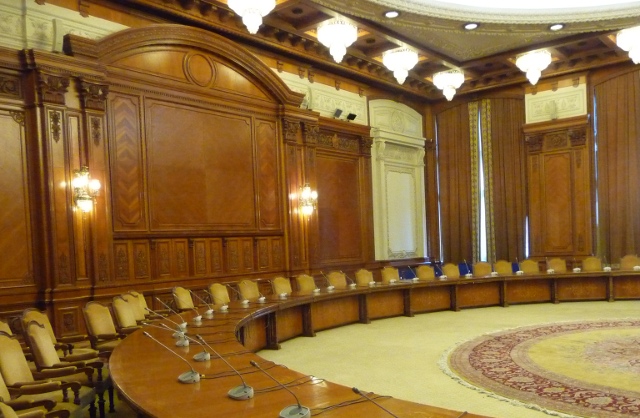
Even the sheer size of it doesn’t quite demonstrate the full obscenity of the project, either. It’s huge, sure. But it’s also cram-packed with the sort of list of materials that you really don’t expect to find in real life. The wood panelling everywhere? Carved by hand, with exquisite inlaid details. Those marble columns? They’re marble-cladding around a concrete or brick core, right, like virtually every other marble column post-Romans? Nope, they’re solid marble. The huge single-sheet mirrors, together with the similarly huge windows in various internal doors? They’re not glass. They’re crystal. The curtains? Hand-woven and embroidered. By nuns. All of them. Just one set, alone, weighs a quarter of a ton. The carpets? Made, of course, specifically for every single room. In a single piece. So why the seams visible today? Ah. That’s because they were too large to actually transport and install, so had to be cut up and re-joined. In one room, the carpet requires seventy people to roll and move it. Unfortunately, that’s the ballroom – the only room where the carpet is required to be moved regularly. Which does seem a shame in a way, since underneath every carpet, every single floor is individually and exquisitely detailed…

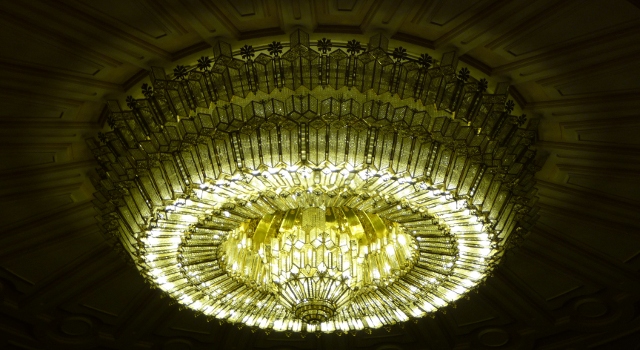
Then there’s the chandeliers. All 4,500 of them. The largest is so heavy that it can’t even be lowered to change a bulb or clean it. So what to do? Aha. That’s easy. Just have a “secret” room above, from which the workers can climb down into the chandelier and walk around inside it…

Only 4,500 chandeliers? That’s because of that pesky revolution. If only that’d been held off for a bit longer, the place could have been properly finished, and all 11,000 planned would have been installed. By late 1989, when Nicolae had to run for the helicopter, and promptly wished he hadn’t, the palace was more-or-less structurally finished, but the fittings-and-furnishings were a good chunk away. The incoming government faced a very difficult choice. Should they keep and finish this monstrosity, or should they cut their losses and construct something more modest? They were going to need something as a parliament building – but there was certainly no need for this scale. It was decided that, even factoring the ongoing costs in (a team of about 800 full-time cleaners is required, before you start to count the rest of the maintenance staff needed), it was cheaper to finish off what was underway than to start from scratch.

And so, today, the building is in use for a variety of purposes. It’s not only the home of both upper and lower houses of government, but it also houses offices for representatives, senators and their staff. It’s also a conference venue and the Modern Art museum. Then there’s the tours around, bringing plenty of revenue in. And, even with all of that lot, it’s still far from fully utilised.

When we first found the palace, we couldn’t join onto a tour – we’d not brought our passports with us. Given how far we’d walked to find the place, then to find the entrance (Signs? What are they?), we were a bit less than chuffed. Still, it did mean that instead of just grabbing the next – last for the day – English language tour, we could find out the schedule for the next day. Which is why we joined the full tour, including roof & underground, instead of the “normal” tour. Also – remember I said it’s a conference venue? That first attempt was on the Friday – and, because of a telecoms conference, we’d have been restricted to just a tiny handful of rooms. Instead, the Saturday was after the conference’s finish – so we got the full version of the tour. And, no, there wouldn’t have been any reduction in ticket price to reflect the 70% reduction in the tour’s scope…

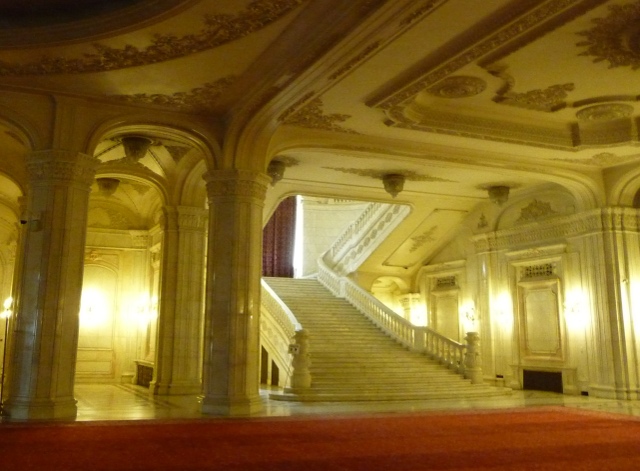
A guided tour is essential. Not just because of security (and there’s more of that than in a few airports), but because of that sheer scale. We were very lucky – our guide not only spoke excellent English, but also displayed a very healthy sense of irreverance and a willingness to drift off-message for a good anecdote. And that’s how we found out the truth about the graceful double staircase into the reception lobby. When meeting a dignitary, Nicolae C would take one, whilst his wife, Elena, would use the other. They’d then meet in the middle, before walking together towards the impressed visitor.

But, of course, it’s difficult to create a suitable impression from _any_ old stairs. And that’s why they were redesigned not just a couple of times, but a total of seven times. Each time, a full-scale model was submitted for approval, failing miserably. Allegedly, Nic was a little bit sensitive about his lack of physical stature, and particularly so when it came to descending stairs. He liked the height of each riser, and the width of each tread, to be just so – that way, he wouldn’t need to watch his feet, and could just descend using his natural gait whilst looking straight ahead.

Apart from the actual parliamentary chambers – we were shown the firmly closed doors, and told they were never open to the public – we wandered from hall to hall, wowed at every turn by the sheer opulence. And, yet, there was a certain incongruity about it all – you walked into a fabulously luxuriant chamber, every detail gorgeous – except the tables are all covered in discarded glossy brochures and cables for microphones leading back to the flimsy row of cubicles housing the simultaneous translators. Some of the hand-made carpets are starting to look threadbare, especially around the should-never-have-been-there seams. Walls are already cracking and peeling badly in places – not least around the joins between the three buildings. Three? Yes, three. The palace isn’t just one structure, but three completely separate structures with a gap of an inch or two between them – Bucharest is very earthquake-prone, and this is one way that the architects tried to provide seismic protection.

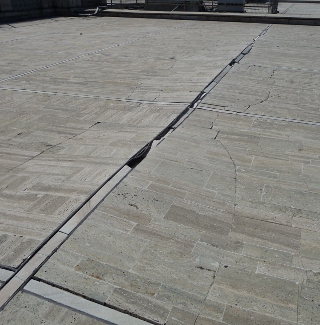
When the tour reached the roof terrace, further evidence of the construction quality was very clear, in the large rifts and folds in the concrete of the roof structure. Looking out over the surroundings from the terrace also showed the reality of the abrupt cessation of the project. Over twenty years later, the rear of the building opens onto nothing but scrubby wasteland where further grandiose plans should have been realised. There’s a building site for a new cathedral, currently just about to floor level. But that’s it. Nothing else but weeds. To be honest, the roof tour wasn’t that compelling. By the time the group had all got the lift up, and had a quick once-around, it was almost time to start waiting for the lift back down again.

The underground section of the tour was also a little uninspiring – a quick wander through some air-conditioning ducting to have a look at some display boards with photos of various stages of construction, then off to find “the last remaining communist party symbol in the palace” – a piece of peeling cardboard. The tunnels to various ministries, the airport and – of course – to Chez Ceaușescu? They never happened. The nuclear shelter? Never got off the plans.

Or did they? Perhaps it wasn’t just the “secret” passage for bodyguards (and, p’raps, a handy escape route) to just behind Nic’s seat in the main party council chamber which was finished – the outline of the door clearly visible in the panelling. Who knows?

Posted in Art & Culture stuff, By Country - Romania | 1 Comment

Bucharest

The campsite at Bucharest sits in woods to the north of the city, a very pleasant and clearly affluent area – there’s a large US embassy building just down the road, together with a massive shopping centre full of western-brand stores, and right next door to a very flash looking restaurant set in verdant parkland complete with a day-glo clad tart touting for business right outside the restaurant door, clearly visible as we waited for the bus in to town. She seemed to be doing good trade, too. On top of that, just catching the bus itself was… entertaining. There isn’t anywhere to buy a ticket. The campsite can’t sell you one. There’s no booth nearby. The driver’s hidden behind a glass partition, and can’t sell you one on board the bus. The only solution is just to catch the bus, and hope you don’t get a tug from a ticket inspector.

Once into town, what greets you? A large city. Bucharest spreads far further than the other capitals we’ve visited recently – but, then, with a population about the same as the whole of Slovenia it would have to. Broad boulevards plough through the city, lined with buildings which leave you in no doubt as to the era of the city’s heyday – the late 18th, early 19th century.

The current name of probably the central square of the city, Piața Revoluției, also leaves you in no doubt as to the part it played in more recent history. One side of the square hosts a large, squat concrete building – now government offices, it used to be the headquarters of the Communist Party.

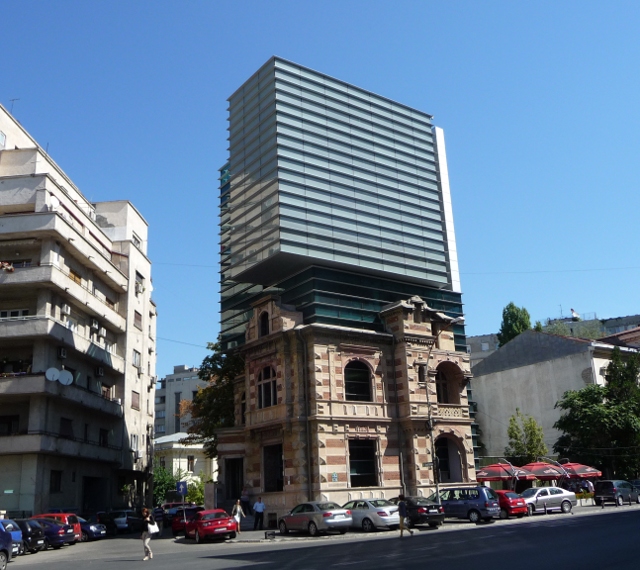
The first floor balcony above the main door is the one from which Nicolae Ceaușescu had to make a sharpish exit in December 1989, faced with the reality of public hostility. From the balcony, he left the building by helicopter – and only a few days later, faced a firing squad. Off to one side of the square, a surprisingly modest and elegant house was the headquarters of the loathed and feared Securitate – the secret police, whose informers were rumoured to be anything up to a quarter of the population – in reality, they were probably not even one tenth of that, but they were still truly fearsome. 20 years later, that building has been rebuilt and extended, in an inspired connection of new and old, a steel and glass rectangle shoots skywards out of the original facade. It works.

With the location of that pair in mind, the memorials to those who died in the revolution, in the centre of the square, are no surprise. What is a surprise, though, is the even larger building on the opposite side of the square – the Royal Palace, now the National Art Gallery. Right next to it, there’s the beautiful old Orthodox Crețulescu church built by the daughter of Constantin Brancoveanu. Inside, it’s as covered with frescoes as any of the other churches throughout the country – yet the location has meant that it’s born the brunt of bombs, revolutions and earthquakes.

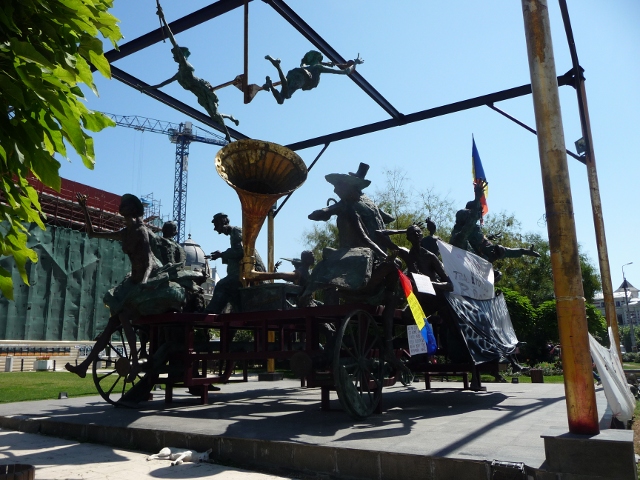
Just a few blocks away, Piața Universitații continues a long tradition of protest. One of the traffic islands bears headstones of those who died protesting against the post-revolution government, basically a Communist party reshuffle (minus a certain leader) with a lick of paint to try to work around the wave of reform which swept the entire eastern bloc. When we were there, the square was occupied by anti-globalisation/EU/US protesters, with banners hung from a large and rather wonderful bronze statue/sculpture/installation of musicians.

I use the plural “protesters”, but there was only one present at the time. At least, I think the guy having a snooze on a bench was with the banners. Just behind there, the National Theatre was failing to provide a dramatic backdrop, due to being in the midst of very heavy reconstruction – from behind the builder’s shrouds, only bare steel girders were visible; whilst on the opposite side of the square a series of ramshackle trestle tables were overloaded with dog-eared and yellowed second-hand books for sale.

The third main square in the city is a slightly different beast. In the mid 1980s, once the regime had managed to fully pay off various international loans (by rationing food to the population, so that the maximum possible could be exported for hard currency), Nicolae thought back to an earlier visit to North Korea. After all, what totalitarian dictator could really justify the name without a series of truly world-scale boulevards and a massive palace of his own? And so, one day, a big black limo pulled up just across the river from the city centre, and an arm waved a huge swathe of the city out of existence. THIS was where the palace would be. THAT would all be cleared to make way. Today, when you walk across the bridge and into Piața Unirii, you walk past a large and generic shopping centre. The square that lies in front of you, though, is quite simply huge. It’s so big that the Metro has two stations – Piața Unirii I and Piața Unirii II – on opposite sides. On either side of it, Boulevardul Unirii spears through the concrete canyons towards the Palace of Parliament.

The boulevard is deliberately slightly longer and wider than Paris’s Champs Elysee. The Palace, though – well, that cannot be done justice without a post of it’s own. When Nicolae decided to completely redevelop 8km2 (yes, EIGHT square kilometres – no mucking about), a whole one day’s notice of eviction was given to the residents. All forty thousand of them. Oh, yes – and to top it all, no compensation was paid, and they had to buy new apartments out of their own pockets…

Once the land was cleared, construction of the Centru Civic began. We were quite surprised at how harmonious and elegant it all looked – we’d been expecting the usual bland and featureless walls of concrete, but that wasn’t what we found. Facing the palace, the boulevard opened onto a large crescent of ministry buildings, detailed in a sort of ageless semi-elegant way. If it reminded me of anywhere in particular, it was Canary Wharf – that same blend of pseudo-something-trying-a-bit-hard mixed with a “doesn’t quite gel” blend of retail and food establishments.

Just around the corner from that crescent, though, we found a little hidden gem – a wall with a large gate in it. One thing we’ve noticed in Romania, particularly in Bucharest, is that a large swathe of the population just cannot pass any church by without crossing themselves. On a bus, driving, cycling, walking – there’s a full-on Orthodox crossing (with a much more pronounced upward movement at the shoulders compared to Catholicism – done with verve, it resembles the swinging of the incense burner – and not just once, either – every patron or favourite saint deserves recognition). So it wasn’t much of a surprise when we peered round the gate and found a rather lovely old monastery hidden in there. When the area was cleared, several churches were left, and one or two others were actually moved completely on rails.

Going back across the river, the old town centre still kind-of peers out from behind a mess of very generic bars and restaurants. There’s some gorgeous old buildings – some decrepit, some restored – behind there. Somewhere. But, on the whole, the streets around Strada Franceză are a bit full-on tourist-trap.

Still, for Ellie’s birthday evening, we met up in town with a smashing couple we’d bumped into at the campsite – David & Tracey, on a long trip in a VW T4 van – and hit some bars. There wasn’t a lot to say for the first one – right in full-on tourist central – apart from the waitress’s very, very tight t-shirt. We moved on, though, via another couple of bars – including the Irish-themed “Gin Factory”, and found some food in the Caru’ cu Bere – Beer Cart – restaurant. It’s a bit of an institution, and the building hasn’t changed much for centuries, inside or out. The overall atmosphere has clearly changed, though – yep, touristy! We were initially a bit disappointed to be given a table outside, until the music got cranked up and the waiters started dancing inside…

The evening finished off with some mind-meltingly lethal cocktails, for ridiculously small amounts of money, at a small jazz cafe-bar somewhere off a main drag. It was only after taking a photo of us all that the camera popped up with the time on the screen – half two? How the…? Hey-ho. You only hit that particular nice roundy birthday once, right? Taxi! It wasn’t until the following day that we headed a bit off to one side of the main tourist drag, and found the (very, very sketchy) remains of the Princely Court – Vlad Tepes’s pied-a-terre in the embrionic city – and, right opposite, the very newly restored Hanul lui Manuc. Easily the oldest inn in the city, the elegant wooden cloisters around the sides might not be quite finished, but provide a wonderful location for lively bar & restaurant tables.

Just to get back to the guided-tour of the city itself, though, that jazz cafe was on the Calea Victoriei – once the swishest main drag of the city. It still is, kinda – if your thing is the odd big-brand clothes shop mixed in with could-be-anywhere chain hotels. And that just about sums up most of the swish bits of the city, to be honest. One of the books we’ve read whilst we’ve been away is Olivia Manning’s Balkan Trilogy – the first half of the “Fortunes of War” epic. The first two books of the trilogy are set in early ’40s Bucharest, and her descriptions of the setting really do make you feel like you know the place. So, when we wandered around, it was always with the adventures of Guy & Harriet Pringle in mind. The Athenee Palace hotel is now a fairly generic Hilton – we wandered in, and the lobby has a series of “Then and Now” photo-boards clearly intended to show you how much better it is now than it was in the ’20s – except, to our eyes, they prove the exact opposite. Wandering up Calea Victoriei was the same – some utterly beautiful buildings, gently rotting into the ground, next to big flash nouveau-riche hotels and shops with similarly big flash Mercs and BMWs double-parked outside. The one sort-of exception to this was the Cișimigiu Gardens. Just off to one side of the city centre, the gentrification hasn’t quite reached this far. The park itself might have nice new garish outdoor gym equipment and plastic rent-a-pedalos alongside the rowing boats that’ve been there for decades, and the cafes have been definitely redeveloped, but on a sunny Sunday afternoon, the main clientele of the park certainly hasn’t changed a bit. Bench after bench was solid with little old ladies and little old men, in their slightly threadbare finest, just watching the rumours and gossip go by through gently dappled sunlight.

Once you’ve had a wander round the park, and wandered back into the city again, you reach Piața Victoriei at the top of Calea Victoriei. This is the start of one of the nicer bits of town. There were a few big broad roads of once-grandiose houses, but as the Calea turned into Șoseau Kiseleff and headed up towards the Arc de Triumf, they moved up a league. Better maintained (or just better restored), many housed embassies or ambassadorial residences. Some of the old buildings had been replaced with new – Peru’s embassy was a wonderful piece of modernism, as was Canada’s. About the first building as you head north from Piața Victoriei is the “Museum of the Romanian Peasant”. It’s an odd mix, with the basement still housing the remnants of the Museum of Communist Party History… The main areas contain everything from religious icons painted on glass, through handicrafts and costumes, to a complete house, church and windmill dismantled from their original locations and reconstructed inside the museum! Much of the layout was little short of inspired, with space and surroundings given almost as much thought and care as the artefacts themselves. Truly, one of the best museums we’ve gone round on the trip.

Heading north again, the other side of the Arc (almost a direct copy of that in Paris), the “Village Museum” provides a home to plenty of other relocated vernacular buildings.

Cottages, churches, everything – all clustered around one shore of a lake and park. Our visit felt a bit flat, probably due to being a Monday, as very few of the buildings were open – peering through windows just showed how much care had been taken to furnish and accessorise them.

It didn’t seem to worry the coach parties being dragged around en-masse, though.

Mass tourism is definitely hitting Bucharest. One evening, we returned to the campsite, to find that our nice quite enclave had gone mad whilst we’d been in town for the day. An organised tour of about twenty big fridge-freezer motorhomes had taken over, filling almost every spare centimetre of space, whilst the occupants headed off to the restaurant next door – then headed into town by coach in the morning. They weren’t staying long, though – the stickers on every van listed the itinerary – a month for all of Hungary, Romania and Bulgaria.

Posted in Art & Culture stuff, By Country - Romania, Food stuff, Personal stuff | Leave a comment

Across Wallachia

Romania. We really didn’t have the first clue what to expect from the country. Think about the Ceașescus, the 1989 revolution, and the orphanages and aid convoys in the aftermath. But it’s been a part of the EU for the last five years (whether it should have been or not is another question, of course), and that’s got to have left traces, right?

When we arrived at the Iron Gates dam, and the border from Serbia, we found… a queue. By far and away the biggest queue we’ve had at a land border on the trip. It moved, slowly, though, with the shabby random dogs lying in the shadows gazing half-heartedly around. Eventually, we were out of Serbia, and onto the dam and no-man’s land. On arriving at the Romanian border, the first thing we noticed was the number of dead cars parked in every possible place, within the border itself. Western European plates, mainly, but many Romanian plates. What was the score? Confiscated for smuggling? No papers? Who knows.

Eventually, we got through the police passport check, and moved forward to the customs guy. He took a quick look at the van, our passports, then us – “English?” Yes. “Why you come to Romania?” Well, we’re on a long trip, and we want to see your country. “Ah, then… You have a map?” With the queue building gently behind us, he proceded to spend ten minutes poring over the map and telling us the best places to go and the best things to see. I’m starting to really enjoy border crossings.

Once we’d found a cashpoint, and got over our surprise at the Lei notes it dispensed (they’re all printed on plasticy paper!), we headed off to see what the reality would deliver.

Our first real stop was the town of Băile Herculanea. The outskirts of the town had a real dishevelled, down-at-heel, peasant feel to them, with decrepit fences around muddy threadbare fields. The station, though, hinted at something else entirely – a wonderfully over-the-top confection of fin-de-siecle elegance, now gone slightly to seed. The town itself has been a renowned health spa for years, and was a fashionable resort in the early 20th century. Lush and sumptuous bath houses, civic buildings and hotels were erected all over what’s now the old town centre. Post-war, a concrete new town was put up a little further down the valley, but that’s not what we want to see, is it?

We parked up outside the Neptune Baths, and wandered over the rickety bridge to the town centre, basking in the sunshine as we meandered down the arcades of the town museum (long since closed and emptied), but thoroughly ignored the alleged health benefits of the spas themselves – why is it that the better the water is meant to be for you, the worse it smells?

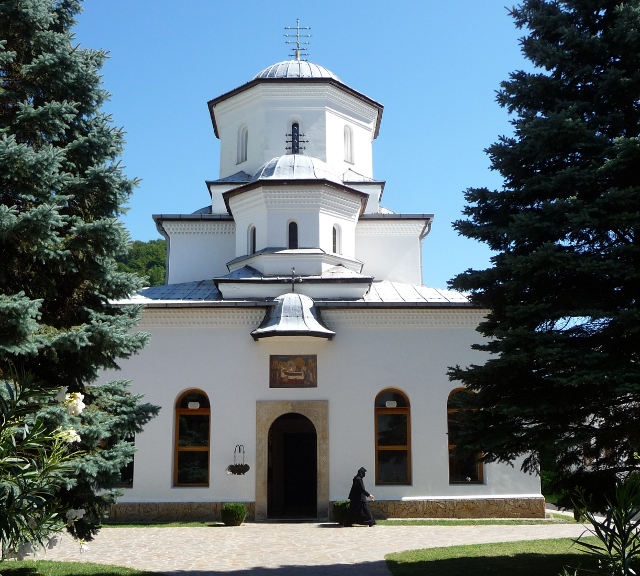
Herculanea is not just a spa, though – the waters themselves rise from springs in some stunningly jagged limestone mountains above the town, so we took a road climbing steeply through those, then through the Cerna valley, heading eastwards. Eventually, we came to Tismana, home to the oldest monastery in Romania, founded in the 14th century (although completely rebuilt several times since). Beautifully maintained and detailed cloisters are lined with colourful and well-tended flowerbeds, surrounding a church with layered octagonal towers.

In one corner of the monastery, a small museum protects ancient frescoes removed from a previous iteration of the church. But the over-riding impression we left with was one of tranquility. From the flowers to the nuns smiling as they wander, giving out a joyous radiation of peace and contentment, the whole place just seemed to be quietly enjoying life.

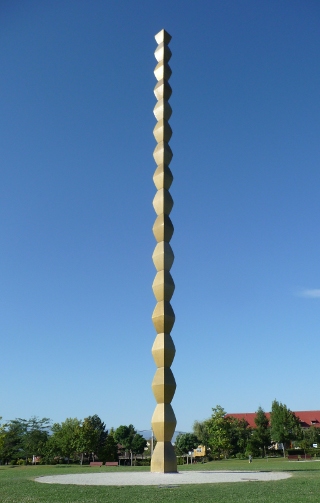
A little further along the road, the tiny village of Hobița contains the house where Constantin Brancusi was born. It’s a simple wooden hut, three rooms in a line, all accessed from beneath a veranda sat in deep shade from the steep wooden shingle roof, and it’s been preserved as it would have been when he lived there. Brancusi is reckoned to be Romania’s greatest artist of recent years, a sculptor whose international repute derived from his simplification of his sculptures to their most basic forms. The nearby city of Târgu Jiu was intended to have twelve pieces placed in public spaces as a memorial to the first world war. He died, though, before they were all delivered, but all four which he did complete are still present. In a park in the town centre, a tree-lined alleyway leads from the Gate of the Kiss, a simplified triumphal arch, past the Avenue of Seats, 30 stone egg-timer shaped stools, to the Table of Silence, another dozen stools around a simple stone table. At the opposite end of the town’s main boulevard, the Endless Column rises from another small park, the repetition of simple shapes echoing the carvings on the veranda posts of the village house.

Whilst we were in Târgu Jiu, we also took the opportunity to get a SIM card for internet access – ending up in a Vodafone shop, with their offers and our questions being translated backwards and forwards by a mixture of telephone relay and Google Translate on the shop computer…

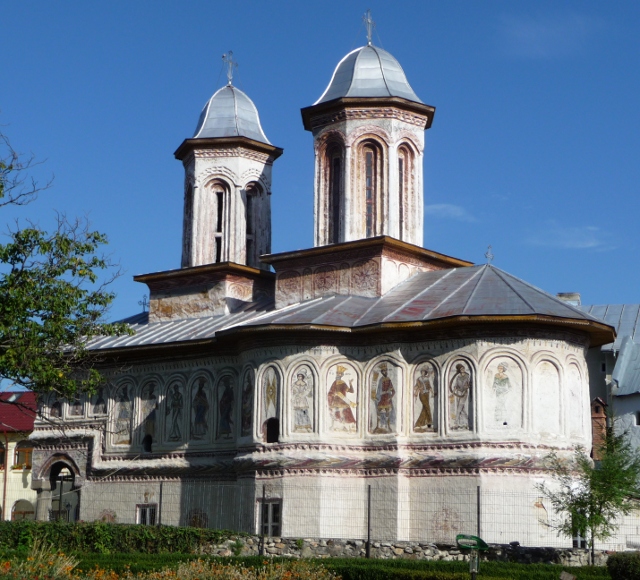
Continuing eastwards, an overnight break was taken at a small campsite behind a restaurant and bar in the town of Horezu. Dirt cheap, both for the camping and cold beer from the bar, the camping area itself was mainly occupied by small but cute wooden cabins – and a large number of semi-feral dogs. In the morning, we headed through the town, pausing briefly to grab some Gogoși for breakfast. Clearly a popular snack, these doughnuts-without-holes were hot and tasty – just what was required. Our guidebook said almost nothing of the town itself, which we thought strange when we noticed the amazingly beautiful church in the middle. Surrounded by yet more colourful flowerbeds in full bloom, every single arch on the church walls was painted with a representation of a saint – and that was just on the outside!

The porch was fully frescoed, and passing through the ornately embossed iron-clad doors showed yet more frescoes in the dim light, in front of the intricately carved wooden iconostasis. The tourist office in the village also turned out to be a bit of a gem – the very effusive and friendly chap exercising his French to explain far more than we needed to know about the area, its attractions and traditions. From somewhere in the depths of his stores, he extracted some very lavishly produced brochures on different aspects of the country, which he handed over with glee. Tempting though the local pottery museum was, we headed out of the village towards the Horezu monastery a couple of km away. UNESCO protected, it’s very similar to that we’d seen at Tismana, but more so – built in the 17th century, it’s said to be the finest example of the school of architecture defined and named after Constantin Brâncoveanu, ruler of Wallachia (this southern region of Romania) at the time.

It was certainly impressive, with elaborate stone staircases to the cloisters, and even more vibrant frescoes in the porch and church. Around the outer walls of the cloisters, the monastic complex contained various wooden store buildings and a couple of other small chapels, before heading back out of the beautifully carved wooden gates into the village again. As we walked past the cluster of stalls outside the gates, we had a chance to have a better look at the pottery that Horezu is known for. Mainly plates, they feature intricate hand-painting, often looking like marbled cake icing or spider webs. A small wooden hut down the road had an exhibition of some work by local craftsmen, with a wide variety of colours and styles, but all very clearly related. Before we headed onwards, we had a quick peak in past yet more ornate wooden gates, barely metres from the main entrance to the monastery. This time, the church sitting behind was much smaller and simpler, but equally elegant.

Another couple of monasteries were just up the road. We had a quick look at Bistrița, but it didn’t really float our boats – maybe it was just much more of a “working” monastery, but the untrimmed and weedy grass seemed in sharp contrast to Horezu and Tismana. However, high above Bistrița sits another monastery, Arnota. The sign took us around a bridge that was being rebuilt, and up a dirt track which just kept climbing and winding, before arriving at the ramshackle gates of a quarry. Had we come the wrong way? No, the barrier opened, and we were waved through and round a corner of the yard before seeing a sign pointing up another track. Finally, we arrived. The monastery wasn’t as big or quite as picturesque as the first two, but it definitely had that feeling that had been lacking from Bistrița.

Curtea de Argeș was our next stop, capital of the region in the 14th century. Much of the legacy of that status is now no more than ruins, but the Princely Church still stands in remarkable condition, the oldest in the country.

As we wandered in, we were collared to buy tickets from a chap who turned out to be a historian, who wasted no time in explaining the significance of the frescoes – in great technical detail… Before Ellie managed to get me out of there, slightly glazed but essentially unharmed, I’d managed to take on board that the frescoes were a bit of a missing link between the Ottoman artistic tradition/Byzantine renaissance and the much later and better known Florentine renaissance. Much of the detailed logic and explanation went straight past me, but parallels were drawn to Giotto and others. I’m much less ignorant than I was when we left home, but I’m still no expert on the history of art…

One thing that I did firmly agree with, though, was that whilst the Princely Church was interesting, the Episcopal church on the end of town was much less so (actually, he was a lot ruder than that about it, but…)

From the outside, it’s truly astonishing. The exterior twiddles and flourishes are massively overdone, and almost no surface has been left alone. The basic form of the building is probably very similar to the “masterpiece” which it replaced in the late 19th century, but the overblown detail was entirely the work of that era – a “restoration” process very similar to that of Viollet le Duc at Carcassonne, with a similar effect. Inside, the frescos were bright and vibrant – but utterly lifeless, lacking any kind of soul whatsoever, almost a parody of the restrained dignity we’d seen elsewhere.

With that, and with evening approaching almost as fast as Ellie’s birthday – just one more full day away – we headed towards Bucharest. With the reminder of last year’s birthday and the disappointment of V-l-D’s “Catharland” theme park fresh in her mind, Ellie was adamant that she didn’t want to spend her birthday in the city, but a quick look at the map suggested there wasn’t really a lot of sense in delaying it until later in the trip. Maybe we could do the city in a day, and be out into the countryside again in time?

Posted in Art & Culture stuff, By Country - Romania, Food stuff, Personal stuff, Travel stuff | Leave a comment

Circles around (former-)Yugoslavia

Another chapter of the trip closes … we have been zigzagging our way around the countries of Former Yugoslavia since April. There’s only one country we didn’t get to and not everyone agrees that it is a country – Kosovo. Potential border difficulties on subsequently entering Serbia, plus the car insurance challenges we have faced, together with Foreign Office advice, meant we didn’t go there – there was nothing special we wanted to see, and it’s tacky just to go somewhere to tick it off a list. The others we have spent various amounts of time in, with Croatia leading by a long way. Having once been one country, it’s impossible to visit them without comparing them. How have they developed since the great Yugoslavian break up? How have the conflicts affected them? Are there still ethnic tensions? How westernised are they, and is it in a good or a bad way?

We’ve spent more time here than most other travellers we’ve met and have been to a lot of places, made friends with locals and had a great time exploring a region so exciting both culturally and scenically. We also feel that we have barely scratched the surface and can’t comment in depth on the state of nations here, but comparing and contrasting is inevitable so here’s a few thoughts from our experiences …

We won’t go into the pre-communism history here, but in the aftermath of WW2, the partisans under Josip Broz – better known as Tito (and a Croat, if it matters) – emerged as the Communist party and managed to hold control of the entire region under one country – Yugoslavia. When Tito died in 1980, the state was left without an effective successor, and just sort of drifted through the next decade, with inter-regional/ethnic tensions emerging. When the Iron Curtain started to fall, Slovenia managed to extricate itself relatively neatly and painlessly from Yugoslavia. The other countries fared less well. Twenty years later, where are they?

  • Slovenia is easily the most successful of the countries – but, of course, it had that head start, and a large part of Yugoslavia’s international industrial relations. The west is Italianate, the north Teutonic, reflecting their neighbours. The mountains are wonderful, and Ljubljana pipped Skopje as our favourite of the capitals.
  • Croatia has the coastline. And that, of course, means huge amounts of tourism. Excluding Zagreb and the surrounding area, once you get away from the coast, the challenges the country still faces start to become very apparent. Will EU membership from June 2013 make a difference? Or will it just increase the difference between coast and inland?
  • Montenegro has some nice coast, too, but the strong links with Serbia meant it missed the first round of foreign tourist investment. Instead, and reflecting a reputation for – umm – slightly flexible ethics, Russian money is heading in en masse. It seems to be the opposite to Croatia – head inland, and it just gets better…
  • Macedonia is the forgotten country. Stuck way down south, with the only ex-Yugo neighbours being Kosovo and Serbia, and the southern neighbour – Greece – wanting their very name “Macedonia” for themselves, and with little in the way of obvious foreign investment opportunities, they really don’t seem to have much in their favour. But the people are perhaps the most irrepressibly friendly we met – and that’s saying something – and the bombastic monumental redevelopment of central Skopje – another wonderful city – shows that they aren’t content to be quietly left behind.
  • Bosnia and Herzegovina definitely has the longest and hardest road ahead of it. But, of course, it’s also got the furthest to come to just get back to where it was before the conflicts. It’s here that the ethnic divisions are most visible, but is that because it’s one of the most mixed populations?
  • Serbia might have Belgrade – the old Yugoslav capital – but it also has the international reputation of having caused the conflicts. I’m not sure it’s quite that simple, and you certainly can’t paint every Serb with that brush – but that’s a lot of weight to carry for a predominately rural nation.

What is clear is that the Balkans have been an area of turmoil over the centuries, lying between Austro-Hungary and the Ottoman Empire for so long, fought over, invaded, borders and peoples shifting, different religions holding sway, wars casting long shadows, nationalism, changing allegiances. Visible influences on architecture, foods, religion, and language; Venice to the north-west, Turkey to the south; yet all the while it is predominantly the same ‘South Slav’ peoples who live in this area – even though some might be Catholic, some Orthodox, some Muslim. The same but different, currents and whirlpools. So many similarities that they could be one country for a time, but enough striving for their own identities that this could never work for long. Meanwhile they are all trying to shed the Communist trappings, and develop democracy. Now the similarities are down played and we could clearly see that conscious efforts are being made to make the similar languages more dissimilar. Sometimes there are clear visible differences on travelling from one country to another, whether it’s religious symbols or language – or even just wealth – these countries don’t seem so very different from each other and all the time one is consciously searching for what is different and what is the same.

All those people who travel to the Croatian coast every year might get a wonderful seaside break – but they’re also missing the opportunity to explore a fascinating chunk of very recent history, and to meet some wonderful people in some wonderful places.

Posted in Art & Culture stuff, By Country - Bosnia, By Country - Croatia, By Country - Macedonia, By Country - Montenegro, By Country - Serbia, By Country - Slovenia, Personal stuff | 2 Comments

Through the Iron Gates

And so it came time gradually to leave Serbia. We had chosen to return to the Danube to follow its course around 130km eastwards towards and along the famous Iron Gates gorge or Đerdap canyon as it’s known on the Serbian side, and the border crossing to Romania at the Iron Gates dam. The massive dams and associated hydroelectric plants also include locks for shipping. The Danube is an important artery for shipping. The dams were a joint Romanian/Yugoslav project completed in the early seventies. Many villages and areas of historic importance were lost when the valley was flooded.

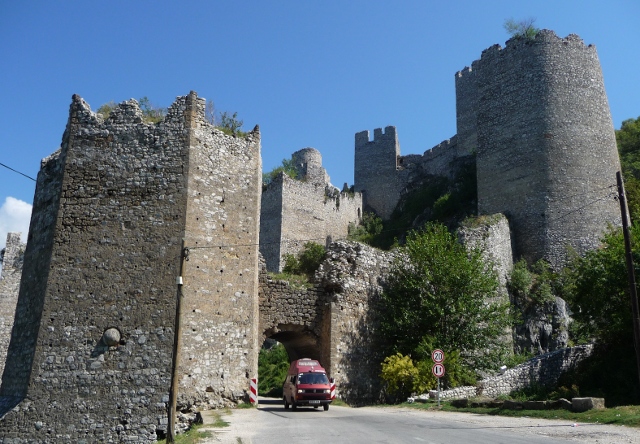
The river marks the border between the two countries and we followed it for miles, having joined the river road near Golubac where the reservoir expanse is at its widest. Shortly after Golubac we literally drove through its dramatic fortress.

As we drove on we came across the Lepinski Vir archaeological site. We had no information about it but decided to investigate. Half a kilometre’s walk along a very smart path lead us to a state-of-the-art museum. It looked a bit like a giant greenhouse and was as hot as one inside.

We still didn’t know quite what it was all about but were ushered into a screening room with the handful of other visitors and watched the film which thankfully had English sub-titles.

It was charming footage taken of the archaeological dig back in the mid-sixties and the discovery of this mesolithic village, prior to the valley being flooded. It showed the archaeologists at work and at play and conveyed the excitement of the unexpected discoveries – statues, pottery and ultimately the remains of the villagers themselves dating from 9500 to 7500 BC. It is one of the most important sites in south eastern Europe and shows that the area has been inhabited for a very long time.

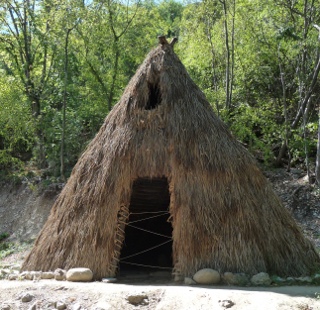
The whole of the village remains were moved and reconstructed here – further up the bank above the river. It was beautifully done, you could walk around the entire dig that you’d just witnessed on screen, and then wander outside to see a reconstruction of one of the houses.

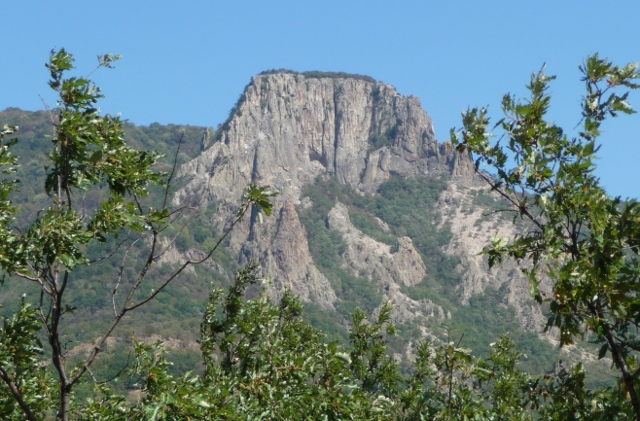
It is thought that the shape of the houses relates to the mountain on the opposite bank of the river.

Good information and a fascinating building made this well worth a stop – and Adrian got another stylish t-shirt too.
Onwards down the Danube the scenery was a little less dramatic than we’d expected – no actual Iron Gates – some good cliffs, but my guess is that it was all more dramatic before the dam was built when the valley was deeper. As we approached the dam, with its accompanying hydro-electric paraphernalia, we got our passports ready. The road across the dam is the border crossing.

A week in Serbia, hardworking and honest in its rough edges, a country with the fewest tourists of all, a land feared and hated by its neighbours, but with some of the most friendly and kindest people – friends old and new – that we’ve met on our trip. Wars are about politicians, the people may vote differently or not get the choice at all, but suffer the consequences either way and life goes on.

Posted in Art & Culture stuff, By Country - Serbia, Food stuff, Travel stuff | Leave a comment

Uvac Canyon and back to the Danube

After the struggles with the fuel pipe on leaving Belgrade, it was a relief to be in such a peaceful welcoming spot as Radomir Lukovič’s campsite on the family farm near the tiny village of Radijeviči at the start of Uvac Canyon. We were surprised that Radko’s second language was Spanish, learned while working in Spanish-speaking Equitorial Guinea. Our Spanish is long forgotten, having been superceded by Italian, but we managed to understand his Spanish and he seemed to understand our Italian replies.
He arranges boat trips on Uvac canyon, an artificially flooded lake with a zigzag of bends. An early start and we were being lead down through pastures and woodland to the waters’ edge, then it was onto the little boat which chugged around the headland to pick up more passengers – three Serbian families.

We saw Griffon vultures circling overhead. So many of them. Their population declined in this area to only nine pairs, in the early nineties, but has now increased to around 85 nesting couples again. A vulture restaurant feeding point was set up on a cliff top where dead animals and slaughter house waste was left and it was here that we could see so many birds wheeling around and descending for their breakfast, a bit more impressively than at the Hvar vulture sanctuary. Later we saw a vulture sitting on its nest on a cliff high above the water.

As the boat meandered through a gap in the rocks and into the gorge proper, we dangled our feet in the water and fellow passengers shared food around. Our first stop was at a water spring, where everyone filled water bottles and containers. The track that lead from the water past the spring was part of the historic road from Dubrovnik to Istanbul, an ancient bridge lies submerged many metres below the surface of the flooded valley.

This is a limestone karst landscape and we stopped to climb up to a cave. Not as big or impressive as some of the caves we’ve seen, but it felt like our own cave as I lead everyone along the path into the deep darkness with my torch and into the chamber of stalagtites and mites.

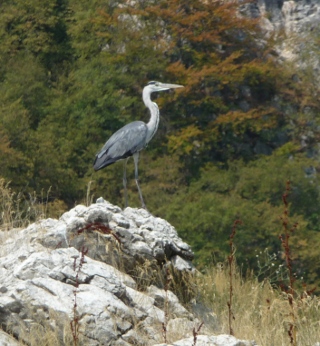
We had more amazing sightings of herons, eagles and more Griffon vultures as we zigzagged through the canyon. The best view of the zigzags is from above though, which we heard from others was a gruelling walk up and down in the heat of the day, our trip didn’t include it as there were lots of young children. Disappointed and relieved at the same time.

After six hours on the boat, it was a relief to get back to the farmhouse. A huge mid-afternoon dinner awaited us. An array of dishes was laid out, all locally grown and homemade food. Roast goat, one of those from the herd we’d seen roaming the hillside, salads, roasted vegetables, soup, cornbread, probably the best burek ever (a bit like a savoury strudel) and Radko’s mother’s award-winning cheese. We washed it down with the obligatory sljivovica and some wonderful homemade berry juice.

We didn’t do anything for the rest of the day, except relax in our tranquil orchard encampment. We were visited later by Ankica and Rade, who were staying in one of the cottages on the farm. They were from Belgrade and had some recommendations for a monastery we could visit, among other local sightseeing they had done.

Overnight the weather changed. The temperature dropped sharply (nearly 20 degrees centigrade) and it rained. The start of autumn already?

On our way out we found the delightful but locked wooden church in the village and drove via Prijepolje to Mileševa, the monastery Ankica and Rade had mentioned, which is famous for its 13th century icon depicting an angel dressed in white. On the right is a detail from the striking modern sculpture depicting the white angel.

It was a lovely place but looked better in their photos when the sun had been shining.

We’d set ourselves another long drive across country, as we wanted to take in the Unesco listed monastery at Studenica. It turned out to be a very scenic route and the rain held off as we wound up and through mountains and valleys.

Ever since we were in Italy we’ve seen black edged death, funeral and in memoriam notices pinned up in towns and villages, on lamp posts, gates and notice boards all around southern and southeastern Europe. It’s a good way to let everyone in the community know, especially when you don’t always know everyone the deceased knew. We spotted this poignant example on the wall of a roadside barn.

Occasionally we also came across small rounded brick shacks at the side of the road, smoking gently. Charcoal burning. This was the first time we had come across this activity and we saw and smelt several more burners on our way through.

We reached Studenica and wandered through its ancient stone walls under the gate house tower and into its extended church. There was a Christening ceremony going on in its inner sanctum but we wandered around other chapels and the shop where we bought some wine. Once the Christening party had emerged for photos on the lawn, we were able to enter and see the wonderful frescoes and other works of art, some of which were undergoing restoration.

As we drove out of the village a young woman stuck her thumb out. Kristina was one of the restorers from the monastery and was heading home to Kraljevo as the following day was a religious day and no work would be done. We were going through Kraljevo so in she hopped. She had worked for three months a year for five years on the frescos at Studenica and she reckoned on another 15 years for the work to be completed. We have really noticed and appreciated the role that restorers play at so many of the places we’ve been to on this trip.

There was little between central Serbia and where we wanted to get to back on the Danuble east of Belgrade, and no campsites. So the long drive took us way into the evening.

The weather was still iffy, but it rewarded with dramatic skies culminating in the brightest perfect rainbow arc we’d ever seen. We even saw the rainbow’s end as it touched the grass verge of the carriage way – we almost got our shovel out to see if we could find the fabled pot of gold. But the rainbow’s end keeps moving and then it just disappears into thin air.

We eventually got to Srebrno Jezero (an oxbow lake off the Danube) and Serbia’s ‘largest and oldest’ campsite. It took a lot of finding. Although we were able to get to the immediate vicinity there were no signs into the actual site which despite its size seemed to be very well hidden. Staff in a nearby motel helped a bit, and eventually we found it, just half an hour before reception closed at 8.30pm.

As we were signing in the staff’s supper was brought over from a nearby eatery. It looked good, so as soon as we’d been shown seemingly the only free spot amongst a multitude of ancient caravans, random dogs and kittens, we made our way over there and ordered the same thing – stuffed plescavica (a sort of Balkan hamburger), and lots of chips. Washed down with a litre of house red and rounded off with a dunja – yet another rakija variety recommended by Kristina.

Posted in Art & Culture stuff, By Country - Serbia, Food stuff, Travel stuff, Wildlife stuff | 2 Comments