The holy city of Kairouan

Kairouan is the fourth most holy place in the Islamic world after Mecca, Medina and Jerusalem, and is Tunisia’s spiritual heart. It was also its capital city from the 7th to the 9th centuries, was North Africa’s first Arab capital, and is a UNESCO World Heritage site. There’s a lot to see.

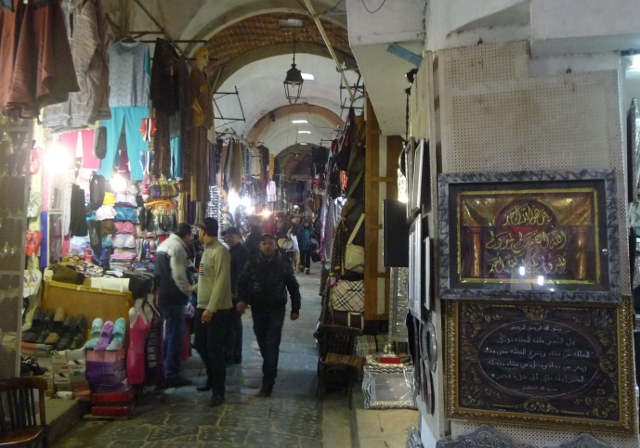
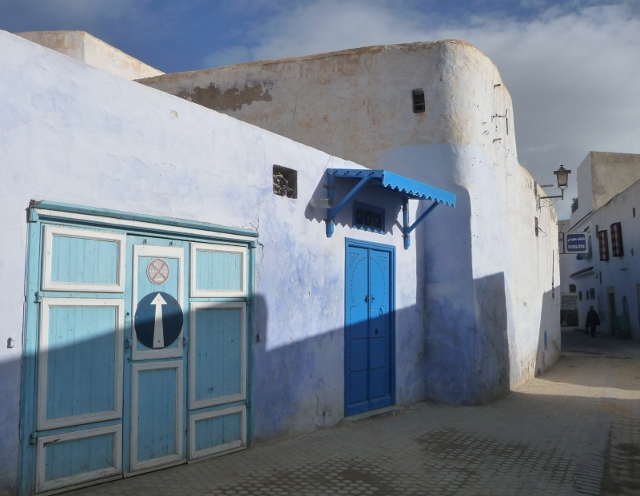
After breakfasting at our hotel, we strolled the short way through the gateway in the city walls and into the Medina (old town – incidentally the word does derive from that holy city mentioned above and applies to the mediaeval quarters of Arab towns and cities). It was warm in the sun and the light reflected off the white washed houses, many with the traditional blue doors, and gave for an airy bright feel inspite of the narrow passageways.
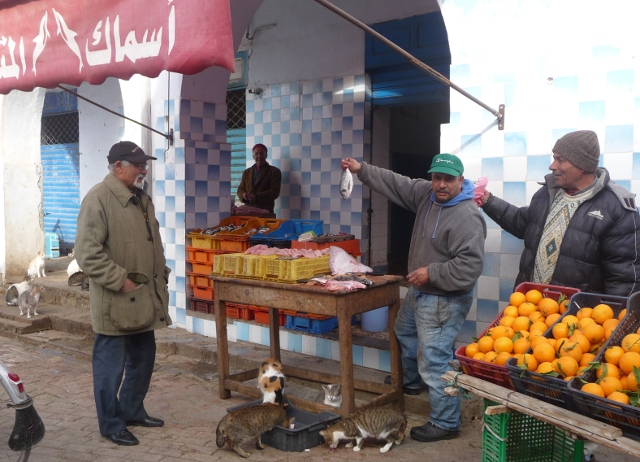
The bustle of the souks and town’s people going about their morning was as alluring as ever. A fish stall with umpteen cats thronging around it, made us stop for a photo and the fish man welcomed the chance to pose, pushing a customer out of the way so we could get a better shot.
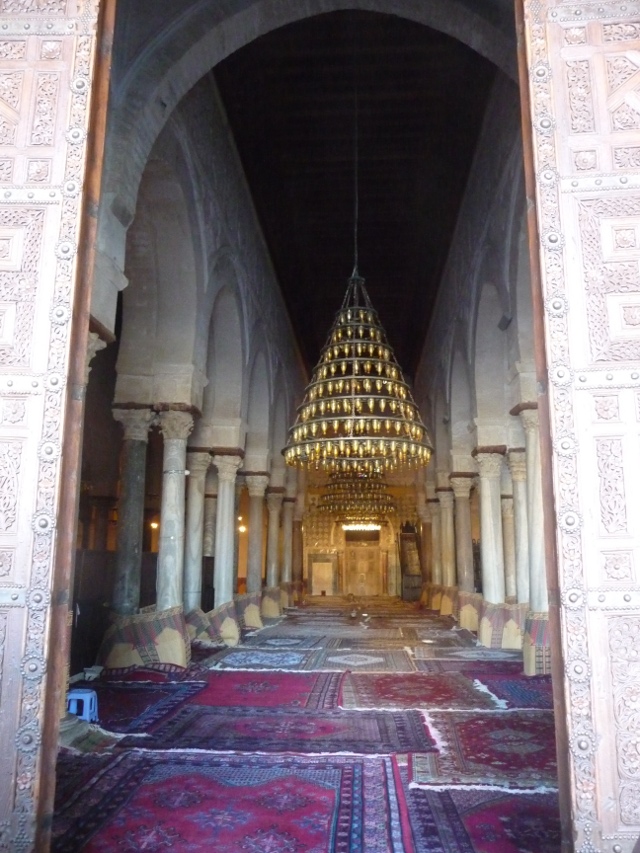
Our first stop was the 9th century Grand Mosque. The mosque is one of the oldest and largest in the country and looks like a fortress from the outside.

Its huge courtyard also served to collect rainwater and channel it through a central drain into cisterns below ground. The drain has notches which were designed to filter out dust from the water. We got a good view into the prayer hall with its floor covered in sumptuous carpets, though as non-Muslims we couldn’t go inside.
Our ticket also provided entry to several other sites in the city and we wandered the maze of streets in search of them and other buildings that had to be seen, such as the Mosque with Three Doors. Meanwhile we were tempted into a weaving workshop and I had a go of sorts at the loom. We were also cajoled into a former palace which was now a carpet shop. Kairouan is also famed for its carpets and they are wonderful. We were shown the intricate ceilings and sumptuous furnishings, but managed to escape before the hard sell on the carpets.

Eventually we found the Zaouia of Sidi el Ghariani, entry to which was on our ticket. A zaouia is a sanctuary devoted to a marabout – a holy man or saint – built around his tomb. They can be a simple domed building or an elaborate palatial complex used as a shrine, a mosque and maybe a madersa (seminary) too. This one was a palace with the wonderful features of Islamic art and architecture – the carving, the tiling, the colonnaded courtyards. Light and space and details wherever you looked, and intriguing halls leading off the main area. Zaouias of different elaborateness can be spotted all over North Africa and in the early centuries of Islam, these men played a part in bringing the faith to the Berber peoples.

We had two more zaouias to see in the city. On our meanderings through the souks to find the way out to the next one, we came across the Bir Barouta, which is a well, only it’s upstairs and has a camel trained to walk around it to commands to draw up the water bucket. A taste of the water will bring you back to Kairouan, so the story goes. Adrian will be coming back without me then!

Outside the walls of the Medina, we were hailed by some charming young school boys who seemed genuinely pleased to meet and greet us in English with great enthusiasm.

The second zaouia took us on rather a wild goose chase, but we found it with help of several passers by. Sidi Amor Abbada, was a nineteenth century blacksmith thought to be a bit loopy, and the domed halls surrounding his tomb are filled with some of his larger than life creations.

We had a disappointing café lunch, and thus unfortified went in search of the Aghlabid Pools – quite a walk from the centre via a dusty everyday market. One corner was teaming with cats, then it dawned on us that this was the chicken section. Pick your chicken and have it slaughtered and plucked while you wait. The cats were gorging on whatever gruesome remains they could find. Amidst so much beauty, raw real life intrudes quite harshly on the sensibilities at times.

The pools are restored 9th century water storage pools – round reservoirs holding water channelled here from the mountains. Apparently they became more of a breeding ground for mosquitos than a benefit to the population. Although they’re ancient and have been restored, their surroundings aren’t picturesque … not the park setting we were expecting.

Nearby was our last zaouia, and the most impressive of the day, that of Sidi Sahab. This is a particularly important and sacred place as a Sahab is a companion of the Prophet. This  incredible complex of courtyards, tombs, a mosque and a medersa is still in use as the focus of veneration, study and pilgrimages. It is awe-inspiringly beautiful and we spent some time pondering its fabulous tiling and idling from courtyard leading onto courtyard.
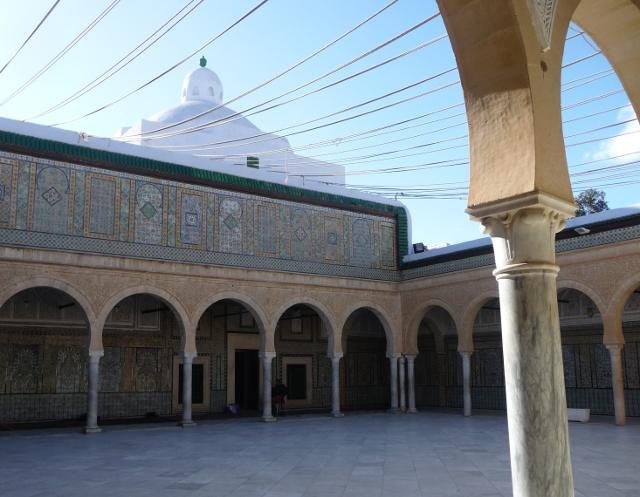
We couldn’t of course go into the prayer hall, but there was a chap on hand who would take pictures with your camera for a tip. Obviously the German couple before us didn’t give enough so didn’t get sprinkled with orange perfume like we did. (The pictures he took for us were blurred!) It was hard to leave such a beautiful place, but we were starting to flag and headed back into the centre of town.

We called in for a brief visit to the free carpet museum. Sadly it was badly lit with poor explanations. A missed opportunity for this Tunisian capital of carpets! By now, after our poor lunch, we were in need of refreshment and went round the corner to a patisserie I’d spotted. We found an array of wonderful nutty biscuits and ordered a clutch of these each to accompany our freshly squeezed orange juice, for very small change.

Back to our hotel to unwind and relax for a while before finding dinner. Last night we’d gone to the Sabra Café almost next door to the hotel and had a delicious meal of Koucha – lamb and potato in a tomato sauce. Tonight we went for couscous in huge portions at the Karowan restaurant round the corner.

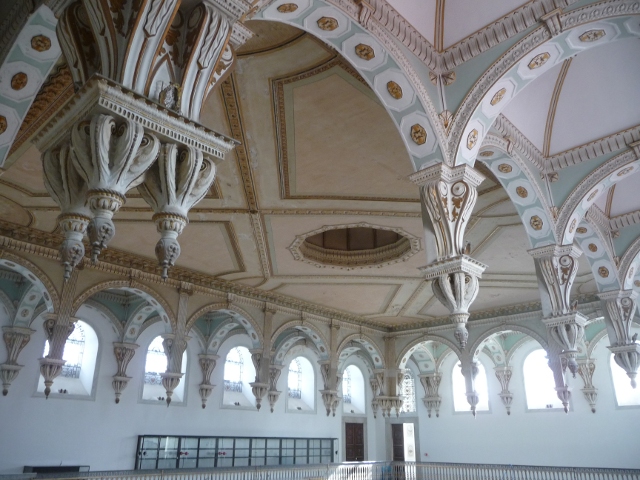
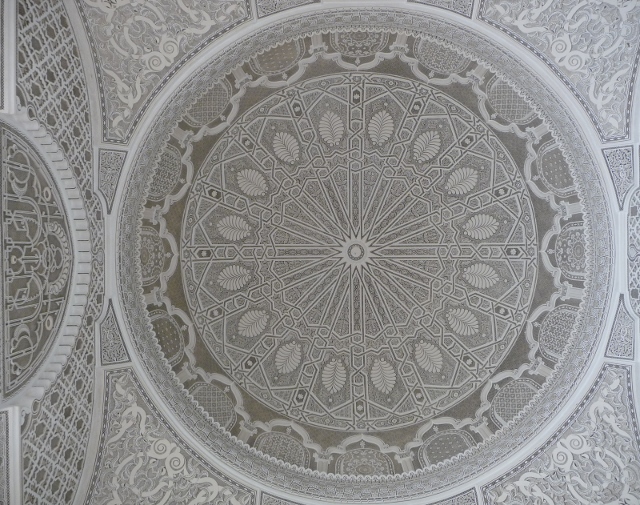
In the morning it was time to move on, with one last stop south of the city for the Reqqada Museum of Islamic Art. It was rather a let down. What they had was fabulous, but there wasn’t that much of it. The best thing though was the intricate lace-like domed ceiling of one of the rooms, which was truly magnificent.
We then headed westwards to the coast, to Sousse, dodging overtaking lorries on the way.
Posted in Art & Culture stuff, By Country - Tunisia, Food stuff, Travel stuff | 2 Comments

Dipping into The Tell

We woke to a sunny morning at our Hammamet hotel campsite, and I was greeted with pink roses picked from the gardens by the maintenance chap and by one of the cleaning ladies. The deeper we travel into Tunisia the more we are loving its charming people.

From Hammamet we originally planned to go south following the coast, but on reading around the separate chapters in our guidebook realised that there were things to see in the eastern part of The Tell region, within 50 miles or so inland that might be difficult to fit in later if we do make our intended rough circular tour of the country. It’s quite sparsely populated in this area though and there are no campsites, virtually no hotels in spite of being near major sites, and so maybe we’d be wild camping again?

The first part of the day saw us head towards Zaghouan, a small old town that nestles on a ridge below one of Tunisia’s biggest and most dramatic mountains Jebel Zaghouan, part of the Dorsale range – an extension of the Atlas mountains that stretches across North Africa from Morocco. It was brooding under a cloud as the weather had become rather less inspiring by the time we reached the area. Before visiting the town, we took a detour to try to see a Berber hill village mentioned in the guidebook. No joy though. The village of Zriba, is apparently abandoned, but there are two other towns named Zriba nearby – Zriba Hammam – a tourist spa resort mainly frequented by Tunisians, and Zriba Village, a newer rather desolate place. You supposedly took a rough track out of Hammam Zriba to get to the picturesque abandoned Zriba. We arrived to a tat filled tourist street blocked off to traffic and were immediately touted for parking fees. There didn’t seem a way through or round this so this foray was aborted, and we headed back towards Zaghouan.

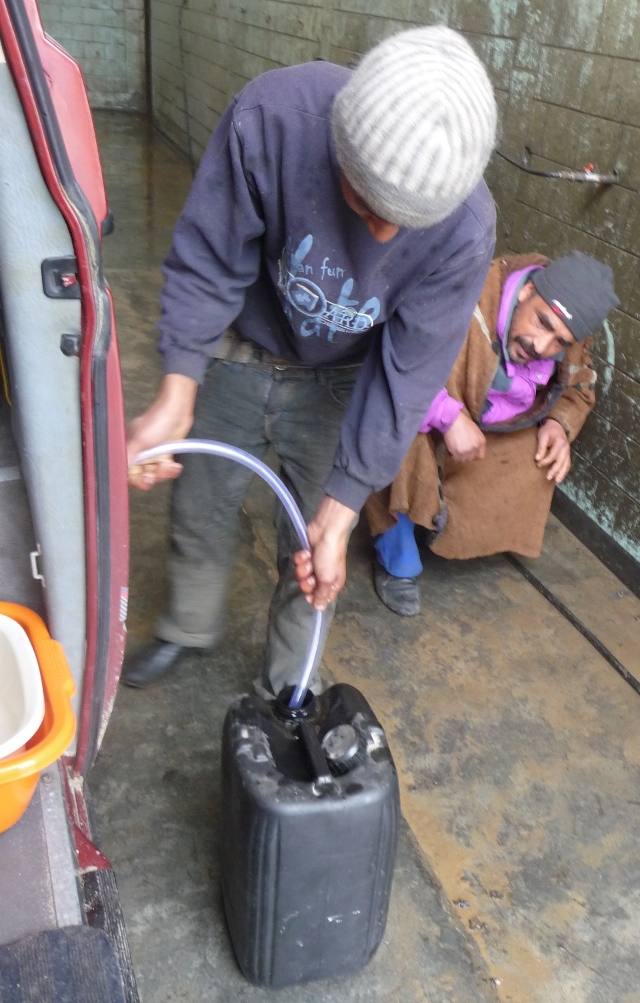
We stopped to fill up and as we were about to drive away, a chap called out that we were leaking petrol. The garage hands moved us into a car washing shed to empty the excess from the tank. We’ve always had a slight drip from near the tank filler when we fill to the brim, but this was much more dramatic and from a different place – it looks like something else to add to the list for the next round of jobs on the van.Above Zaghouan, and not quite in the clouds, were the Roman ruins of the temple of the waters. This once palatial structure was built around the spring of water that flowed down through the aqueduct that supplied water to Carthage, 130km away. There are remains of the aqueduct to be seen apparently, south of Tunis, but we’d not been aware of them as they were off our route to Nabeul. There were stunning views from the hill, but the mountain itself was still hiding.We had a wander around town although we failed to find the Roman archway that is supposedly here in spite of driving around several times and asking directions!

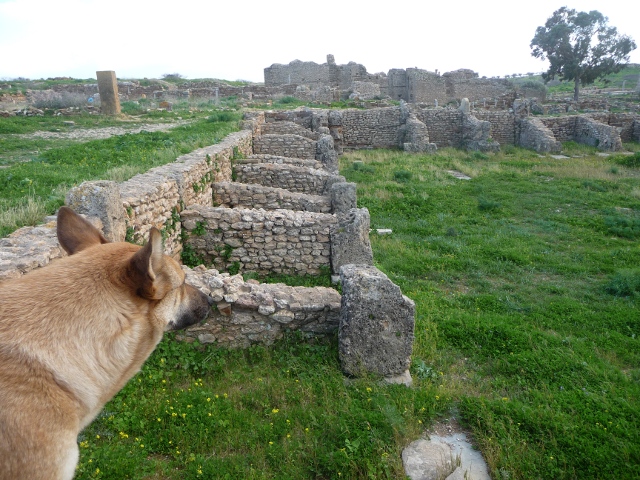
From Zaghouan we headed towards the Roman site of Thuburbo Majus. It is a substantial site and, like Kerkouane yesterday, we had it entirely to ourselves. Except for our guide that is, a sandy dog who left her place sleeping in the sun to patiently accompany us around making sure we didn’t come to harm. Oh and the couple of old men who tried to sell us Punic and Roman coins they’d found at the site after recent rain.

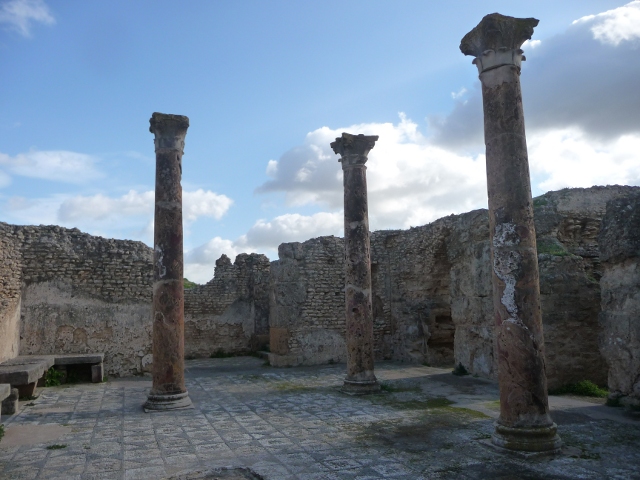
Thuburbo Majus was a Berber Carthaginian site before the Romans arrived, and was abandoned after the 7th century Arab invasion. The ruins date mainly from the 2nd and 3rd centuries AD. We were awed at first sight by the honey coloured stones. There are significant remains of temples and market stalls, summer and winter baths, as well as houses spread across the hillside.

We walked through the remains of galleries above a deep cistern and then down to the formerly luxuriant winter baths with some of the mosaics still present.

We spent a good hour and a half walking around and were reluctant to leave. The real guardian was really friendly and we feel he would have let us wild camp outside or help us find a spot. It was still a bit too early in the day to settle though so we said our goodbyes and our dog went back to her place in the sun. We decided to head south for the holy city of Kairouan and look out for camping spots on the way.

The road was straight and there wasn’t much between El Fahs, the town just south of the Roman site, and Kairouan. The scenery was dramatic at first, Jebel Zaghouan now had the sun hitting some of its rocky base, but was still reluctant to shed its veil of cloud. The hillsides were bright green with a thin layer of lush grass belying the red sandy soil beneath and other mountains whispered in the distance.

Berber shepherds tending their flocks the same way they’ve done for centuries appeared every couple of kilometres, and roadside sellers of produce piled high marked the way. Men standing at the edge of the road holding what looked like sticks enticed us with their wares. We realised after a while that these were not celery or rhubarb, but large spring onion-like bunches.

Lots of waves and greetings on the way as we drove out of the hills and into the plain, a prelude to the desert. It was so very flat and really didn’t provide a lot of scope for rough camping.

There are often police checkpoints along the roads that seem to focus on trade vehicles, but at one point a young soldier flagged us down. The very shy freshfaced young man just wanted a lift to Kairouan and we were happy to oblige.

We reached the chaotic outskirts of town at evening rush hour and wended our way to what we hoped was the centre, there not being any signs at all. We managed to find a landmark, the central Post Office by a roundabout, and were able to pin point vaguely where we needed to be from here. In the meantime, a chap on a moped insisted on showing us where our proposed hotel was, offering his guiding services for the next day and the chance to buy carpets as well – both of which we turned down.

We checked out a couple of hotels and settled on Hotel Tunisia which had a spacious room overlooking the side street where we’d parked the van. Safely ensconced, we set out to find somewhere to eat.

Posted in Art & Culture stuff, By Country - Tunisia, Travel stuff, Van stuff | Leave a comment

Cap Bon

The road out of Tunis wasn’t straightforward – just getting away from the garage where we’d left the van took us round the edge of the main central market place (in full swing at 10am on a weekday, of course), before we could even start to negotiate unsigned diversions to avoid driving past the Interior Ministry – the armoured cars and razor wire made that main route “inadvisable”…

Our destination was Nabeul, a small town at the base of the Cap Bon peninsula, renowned for pottery and stone-carving. We narrowly missed the weekly market, but easily found the campsite in the grounds of one of the town’s hotels, a few kilometres out of the centre. Not a busy site – just a couple of others there, including an elderly Belgian chap who took his cat for a walk on a lead at frequent intervals, and a German on his way back home after spending a few weeks travelling around the desert in the south, in a somewhat ginormous 4×4 truck.

A pleasant day and a half easily passed, just cycling into and out of town, and not doing much. There’s a long pedestrianised street through the heart of the old part of town, lined solidly with “artisanal” tat shops – we did succumb, equipping the van’s kitchen with an olive-wood spatula for a third of the initial asking price… The food market saw much more purchasing, including a citrus squeezer and a bag of Harissa mix powder large enough (and fiery enough) to last us from now until eternity. With delicious, sweet and juicy oranges being piled high on stalls or in the back of pick-up trucks, and costing as little as 10p per kilo, we’re now busy dosing up on nice fresh Vitamin C at every opportunity!

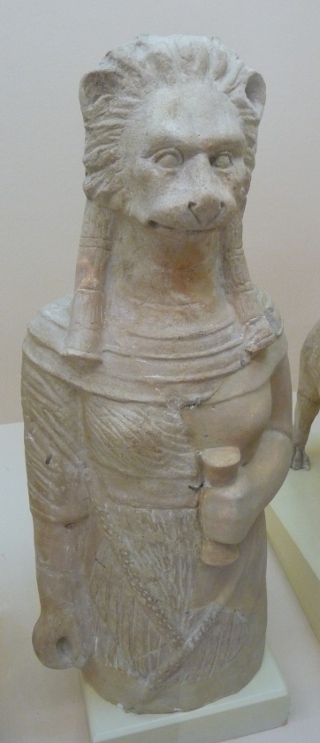
We managed to miss the much-vaunted ceramic workshop tours – we did find one of the locations, firmly locked, but it looked a bit “industrial” anyway – and our attempt to visit the town centre’s museum of local culture, in an old house, was abandoned in short order. We followed the signs into an entrance lobby, and assumed the loud growling was some kind of recorded soundtrack. Realisation dawned as a dog launched out from underneath a bench hidden in the shadows, fangs a-flashing behind a cacophony of barking. I have no idea how close it actually got to us before reaching the end of its chain, but “too close” seems like a good guess. The archeological museum, fortunately, was a much more civilised affair. Small but perfectly formed, containing mosaics and statuary from various local excavations.

The biggest drawback to the Nabeul campsite was quickly found in the morning – icy cold showers… Hot showers were available, by asking for the key to one of the hotel’s empty rooms – but two hot showers added 40% to the night’s camping fee.

Sunday morning, according to our guidebook, saw the neighbouring town of Dar Chaabane host a weekly market selling the wares of the area’s stone-carving workshops. We didn’t find the market, but did find the workshops – and asked the two guys in one of them about it. No, no market here… <shrug> Oh, well. We stood and watched them work for a while, resisting their attempts to carve our names in Arabic script into a slab of marble for us, then headed up the peninsula.

We were now definitely away from the orbit of the big city, in a largely rural area, with a markedly “traditional” way of life apparent as you pass by. Produce was piled high, and firmly monotonous in it’s seasonality – apart from oranges, every other ancient and battered Peugeot 404 pickup was laden to a good foot or so above roof height with fennel, alongside donkey-carts piled high with carrots.

A quick stop was made at the Sunday market at Kouba – Merguez sausages bought for dinner (we weren’t allowed to buy the small number we actually wanted, but were told firmly that we had to have more, since they were only small…), and my toolkit grew yet further, with the addition of a set of pipe-spanners. Unknown in the UK, they’re common in France, and it seems that many fasteners on old Citroens were positioned with them in mind. Whether these are indeed genuine Facom-brand ones, I am unconvinced – most of them have what looks like a genuine logo on them, but one of them doesn’t even have the brand name spelt right. But since half a dozen cost less than a single one in France…

The next town up the coast is Kelibia, home to an imposing fortress on top of a large rock, right on the edge of the coastline. Since the rest of this part of the peninsula is ever-so slightly devoid of anything which could vaguely be termed a hill, the fort is visible for miles around. So visible, in fact, that it seems that we forgot to take a single photograph of it. However, we did have a walk around the ramparts, and saw first-hand the other benefit of the location – one seriously strategic view. Kelibia’s other point of interest for us was some Carthaginian tombs, cut deep into rock, complete with steps leading down to their doorways, amazingly sharp and freshly-carved looking – but totally unsigned and somewhat incongrously located slap-bang next to a concrete factory in the midst of flash resort hotels and villas.

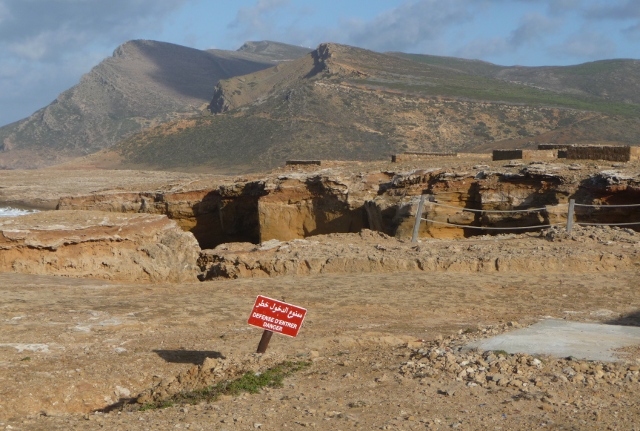
At the tip of the peninsula sits the town of El Haouaria, a bit of a nowhere’s-ville, apart from a long-standing tradition of falconry and quarries carved again by the Carthaginians, right on the sea. When we got there, it was far too windy for any hope of seeing any falcons flying, and the caves had been closed to the public following a landslip – no indication of when, but our guidebook said (without saying why) they were “due to re-open late 2008”!

So it was time to find a wild-camp spot, before heading back down the peninsula again. The first few likely locations we checked out were utter non-starters, but we found a secluded spot, right on a beach but hidden by a large bush on a small sandbank, near the town of Dar Allouche. Fantastic, we thought, and settled in just in time for the sun to set.

The evening passed quietly, and we hit the sack. We both awoke to the sound of an idling engine and headlights, pointing right at the van from only a couple of metres away. 2.45am. Oh. Gawd. As I peered out of the curtains, and the worst-case scenarios started to flash across our minds, our visitors tooted their horn, flashed their headlights – then flicked their roof beacon on briefly. Police. Hmm. A short conversation in bleary French later our wrists were gently slapped for not informing the local National Guard station of our intentions, and they left us alone for the rest of the night.

Come the morning, we headed off as subtly as we could – not easy in an 8ft tall red van, with a Michelin man on the roof. Especially when you get tangled up in the local school-run taxi-minibus’s morning collections… Still, we seemed not to be unwelcome, going by the huge waves and even blown kisses from the mothers walking back home. We arrived at the excavations of the Carthaginian town of Kerkouane (which grew and stayed wealthy well into the Roman era off the processing of shellfish shells into the purple dye used for Roman imperial robes) shortly before the scheduled opening time – much to the surprise of the on-site guardian, who was just meandering around whilst his little charcoal stove heated his morning coffee. We sat in the van and took our time over our own breakfast, washed down with the juice of a kilo of fresh blood oranges (expensive at 40p’s worth), and headed in, on the promise of paying later once he’d fully opened up. This really is an utterly fantastic site – enough remaining to not only get a real sense of the layout of the town, but to “feel” the individual buildings, too.

Mosaic flooring, even domestic bathing facilities, were intact and readily accessible. In contrast to the Romans, who built huge communal bathing facilities and abluted in public, the Carthaginians all had bathrooms in their houses, with water being routed away to covered sewers down all the streets.

At one point in our wander, the guardian headed in to find us, take our money and give us our tickets – and a quick run-down of some of the areas of the site which were unlabelled.

Once we’d left Kerkouane, Kelibia’s weekly souk was our only remaining stop-off on the road south – entertaining, but utter chaos, people-choked street after street of stalls selling not much but clothing. Whether there was a food section, we don’t know – we just gave up trying after the thick end of an hour.

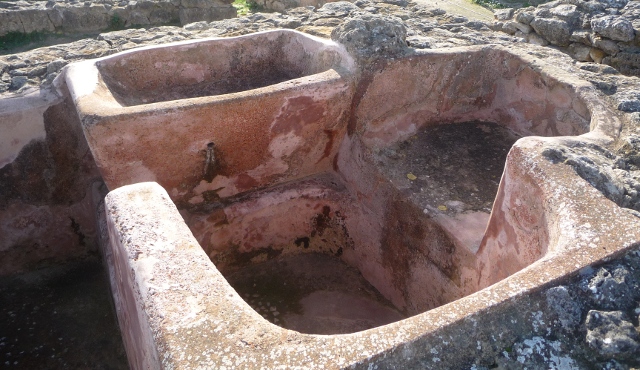
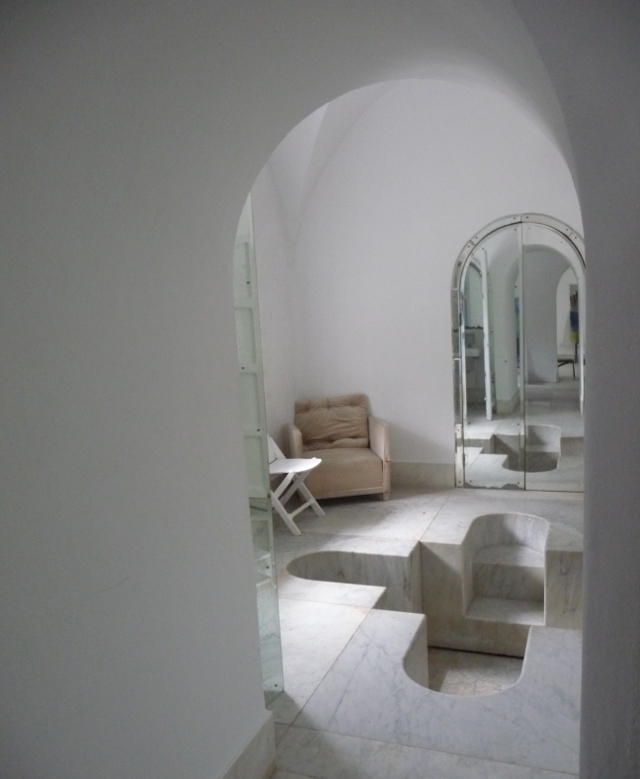
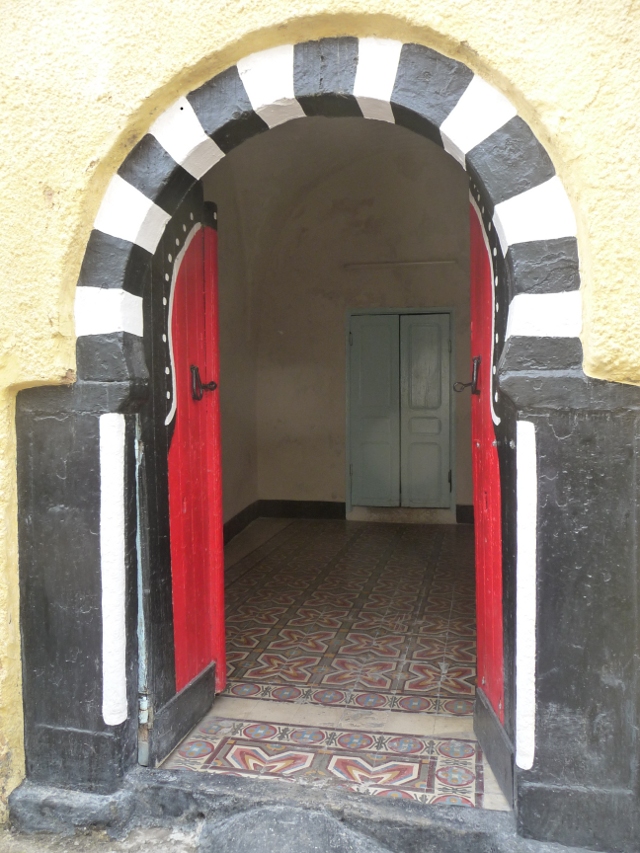
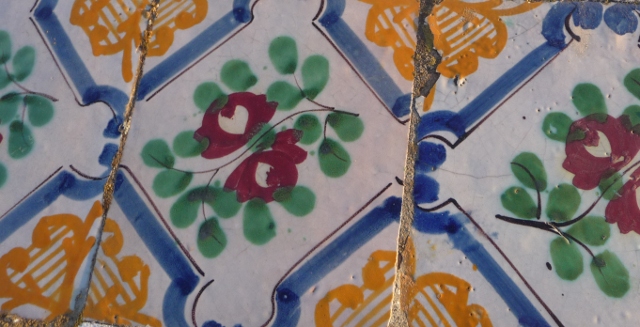
Finally, we got to Hammamet, just south of Nabeul, and a big international luxury beach resort. Not our kind of place at all. The old fort in the centre of town looked like it might have been interesting, but getting to it looked chaotic, and – to be frank – we couldn’t be bothered. Before hitting our campsite, we stopped off at the famous “Sebastien Villa”. Home in the 1920s to a Romanian millionaire, George Sebastien, it was described by Frank Lloyd Wright as “the most beautiful house” he knew. The starting point of Hammamet’s reputation as a holiday destination for the rich and beautiful international elite before the war, Churchill stayed here after the war, whilst writing his memoirs – and would have certainly used the same wonderful four-lobed sunken bath as the house’s wartime occupant, Rommel.

It’s undoubtedly beautiful indeed – especially inside, with a real grace to the clean lines of the rooms. Now, it’s in use as a cultural centre, with our visit co-inciding with a photo exhibition of the Italian premier Bettino Craxi – who was exiled to Tunisia after being indicted for Mafia-related crimes. Strangely, that bit went unmentioned in the umpteen photos of him pressing the flesh with various world leaders. The grounds of the house contain an “ecomuseum”, seemingly consisting of rows of different local trees to show to holiday-makers who won’t actually leave the resort.

The campsite was, again, in the grounds of a gently scruffy inexpensive hotel on the outskirts – this time, acting as an oasis against the bustle of the major road junction immediately outside, with shops and stalls of all kinds spreading along each of the roadsides. More oranges piled high, and the sudden dawning realisation that butcher’s shops here only sell beef or lamb. If you want to get chicken, you need to head to a different shop – which also sells eggs. Keeps the supply chain simple, I s’pose.

Posted in Art & Culture stuff, By Country - Tunisia, Food stuff, Travel stuff | 2 Comments

A baptism of steam, or eating oranges and pastries at the hammam

My back’s been killing me for a couple of days. I think it’s due to the uncomfortable seating on the ferry and then lots of walking around the souks here in Tunis, and the sites at Carthage yesterday. What better excuse to visit a hammam? These Turkish style steam baths are a feature of life in Tunisia. Some are men only, some are women only and some are for both with different times for men and women. I’ve been to Turkish baths elsewhere, in Istanbul and in Budapest. It’s quite scary when you don’t quite know the ropes and don’t want to make a cultural faux pas. It has to be done though, and afterwards you feel not only very clean, but privileged to have visited a world behind the veil.

I chose one that would be easy to find my way to through the myriad alleyways of the souks to Rue Sidi Ben Arous, one of the prettiest streets in the Medina (old town). With hammams you evidently have the choice between atmosphere: old, crumbly and none too clean, and brand new and clean. I went for atmosphere of course, and a women only hammam. For the women they provide a meeting place away from an overtly male dominated society. The minute I stepped in off the street through the dark green and red doors, I was right in the middle of it. A tiny crowded anteroom which served as a chaotic changing room, rest area, cloakroom and reception, oh and hair removal area too. No separation between these activities nor a place to put your stuff other than a hook on the wall above a mother tending to her small children.

I knew that not many older women speak French, and even paying the entry fee and for a massage proved difficult – the money for the massage went directly to the masseuse not the proprietress. I felt just a bit self-conscious with everyone’s eyes on me and nearly ran away. Fortunately, one friendly young student spoke some French and helped me through. And everyone was helpful in spite of the language barrier. I was referred to as ‘la dame anglaise’, and looked at with curiosity. They obviously don’t get many foreigners here.

So suitably disrobed (down to knickers), I went through a scruffy door into the small domed steamy water running down walls and floors hammam. The tiling was shabby and the paint peeling from so much water vapour, and the floor sloped to allow the water to flow through and drain away somewhere. Light shined in through a square in the ceiling onto half naked women of all ages, shapes and sizes going about their ablutions with blue buckets of water. No showers here – you gathered some buckets and filled them up from a huge vat of scalding water in the inner hot room to which you added cold to get your preferred temperature.

My student friend and another young girl who said she didn’t speak much French, helped me fill and refill these. You then found a space on the marble benches and sat with your feet in one bucket while you soaped and rinsed yourself from another. All the while the hot steam was doing its work and you washed again and again. One of the girls shared an orange and fetched more water for me. I think they were worried that I would scald myself if I did it.

After a while, when she considered me to be ready, the massage lady beckoned me to come and lie on a marble bench in the thick of the crowded cooler outer room, and scrubbed me with a loofah mitten and soaped me down and did it again. She then sat me up, washed my hair and threw several buckets of water over me. It quite took my breath away. Instructions were all in sign language with a ‘ca va bien?’ every so often to make sure I was ok.

After this I rinsed myself further and went out to get dressed, managing to find a raised area that had been freed up. My new friend introduced me to her mother who was there waiting for her and they wanted to know about my visit to Tunisia and were thrilled that we would be going to Tatouine, the town they were originally from. The daughter translating the mother’s questions,  they fed me pastries and taught me more Arabic words.

I felt very relaxed and very happy to have had this experience and my back does feel a bit better. It was a rare chance to meet women, that I hope to repeat during our time here in Tunisia. Next time I will make sure I bring oranges and pastries to share.

Somehow we need to learn some more Arabic and Tunisia has a different form of the language from Egyptian Arabic, for which we have an audio course, and Moroccan Arabic, for which we have a phrasebook …

On the way back to the hotel across the other side of the Medina, I called in at a café I had passed earlier – a less traditional more contemporary one – and had a refreshing glass of mint tea with pine nuts served by a charming young woman.

Being out in the souks on my own and now really knowing which way to go, obviously gave me the edge over our first faltering foray. I didn’t attract too much attention and when one stall holder stepped out to show me a scarf and I whisked by with a ‘non merci’, his companion said ‘non, elle habite ici’ – no, she lives here. And even after a few days, it really feels as if we’re starting to settle into the swing of things.

Posted in By Country - Tunisia, Personal stuff, Travel stuff, Uncategorized | 3 Comments

Carthage and Sidi Bou Said

Carthage is one of those names from antiquity one hears again and again when looking at anything to do with the Romans, but I didn’t know where it was. This trip has served to flesh out my previously sketchy grasp of the ancient world – “all part of your education” my Dad would have said. Carthage was in fact on the coast of Tunisia just north of present day Tunis. Founded by the Pheonicians (a seafaring trading peoples originally from around Lebanon who had a profound influence in the region) in 814 BC. It became one of the most significant port cities of the Mediterranean. Rome had its eyes on this strategic centre and captured and destroyed it during the Punic Wars (Punic describes the Pheonicians and their civilisation). They built their own fabulous city on the ruins, which was destroyed in turn by the Vandals in 439 AD who ruled in Tunisia for a while. The Byzantines of the Eastern Holy Roman Empire, based in what is now Istanbul, took Carthage in 533 AD. The Arabs then invaded in 647 (bringing Islam with them) making the nearby settlement of Tunis their city. Much of any riches and rubble remaining was carted off for reuse as building materials during the course of this turblulent history.

There’s not much left of it now so would there be enough to go and see beyond the odd pile of stones? We couldn’t come to Tunis and not do the sites of Carthage though, but we were prepared for disappointment. The sites are spread out among the rather select suburbs on the shores of the Gulf of Tunis and are served by several stations on a suburban train line that runs from Tunis Gare Marine (TGM line). The train chugs along the causeway that runs across Lake Tunis to this stretch of coastline calling at many small stations along the way. Children played their going to school game of jumping on the train at the last minute through doors held open by their pals, or they held on to the handles on the outside. Obviously a lot of fun.

Our first stop was the Tophet, an ancient Carthaginian burial place said to be the location for animal and child sacrifice ceremonies. It has the air of an ancient graveyard with carved stones and intriguing passages, nooks and crannies. Here we bought our ‘global’ ticket which covers most of the sites, although we didn’t expect to have time or energy to do them all.

From the Tophet it was a short walk down to what was the Punic port, but is now a peaceful stretch of water leading out to sea and surrounded by modern houses. A fascinating model has been left by one of the archaeological teams showing the grandeur that once existed here. The most notable remains are of one of the slipways used to launch ships. Otherwise it’s just a jumble of stones remaining with a rough outline of what was.

We then found the Paleo Christian museum with its Vandal and Byzantine exhibits and then headed up to Byrsa hill through some very nice streets. At the top of the hill there is a 19th century French catholic cathedral – separate entrance fee – we didn’t bother! Beside it though, was the impressive Carthage archaeological museum with a garden of sculpture with magnificent views across to the city centre and out across the Gulf. Lower on the hill below the garden was extensive ruins of this part of Carthage – lots of walls remaining.

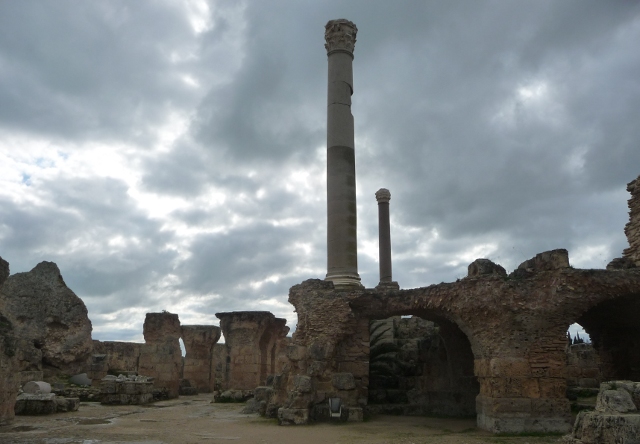
By now we’d bypassed a few stations on the TGM line and went downhill towards the shore again in search of the Baths of Antonine – passing several embassy buildings on the way. We called in at a small German excavation of a residential area called Magon Quarter. This would be one to miss in favour of the other sites. Now we were only a couple of blocks from the Baths site and rather hungry. At the beginning of the day, we’d seen lots of food stalls and cafés. Now when we really needed one, it was just huge residences. No matter, we intended the Baths to be our last stop and one we could cover quickly. It was quite a large site and we started at the top, seeing various remains of buildings, and worked our way down towards the sea. The ruins of the Baths were incredible – a real audible ‘wow’ from both of us when we caught sight of them. There’s so much there, you could really start to visualise them as they had been, helped by models and diagrams. Only one pillar has been put in place to indicate how high they were. They would have been absolutely spectacular and what was there was the remains of the below ground passages which would have contained the service areas. This is definitely the one site of Carthage not to miss. The place had quite a few armed guards wandering around, but then the president lives next door.

We staved off our hunger pangs with some hugely over priced crisps and drinks, all that was available. As it was only a few blocks away we decided it would be a shame to miss the Roman villa. Again expecting a few piles of stones, we were pleasantly surprised to find extensive ruins with some mosaics and reconstructions, again on a bit of a hill so with wonderful views over the President’s palace and all its red flags. The call to prayer echoed out from the nearby mosque. We were far from disappointed with our day exploring the remains of Carthage and only missed a couple of sites, but then we have seen quite a lot of Roman theatres in recent months.

Very tired by now after a lot of walking and peering, we almost decided to head back to town, but thought it would be fun to just pay a quick visit to another outlying suburban town – Sidi Bou Said. We jumped back on the train and two stops later we were at this idyllic small town. The sun was in its last hour or so and casting a rosy golden glow on the typical white washed houses with their Tunisian blue doors. There’s even a bye-law here to ensure that no one uses any other colours, and every corner had a photogenic sight.

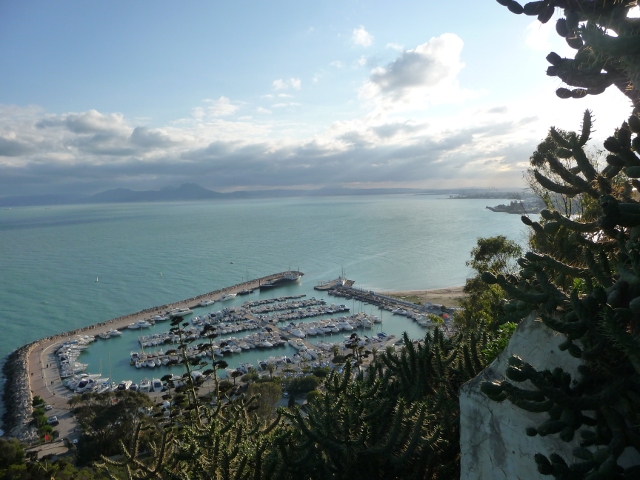
It’s obviously a very sought after select place to live which could so easily be spoiled with tourist tat. There is some of that, but luckily not too much. It is built on a hill and had the best views of the Gulf of the day – the end of the town overlooking the marina below.

On our wander back down the narrow cobbled streets we spotted an old family residence that was open as a museum. We couldn’t resist the chance to see inside. It was a wonderful place, built in the 18th century and still owned by the family. Tiling and ornate furnishings abounded, and views through doorways into the courtyards and beyond with decorative windows leading the imagination on. I would have been happy to move in tomorrow.

Back into town at the end of the day on a crowded train, we felt like commuters for a brief interlude. We had worked hard today, but not in the office thank goodness.

Posted in Art & Culture stuff, By Country - Tunisia, Travel stuff | 1 Comment

In the heart of Tunis

Tunis’ Medina spreads for a considerable distance in every direction – before the French colonisation, it was the entire town centre. The French new town spreads around it in a lovely regular grid pattern, but the Medina itself has nothing whatsoever to do with such boring predictability. Oh, no. Just little alleyways heading off in seemingly random directions, jinking left and right as they twist and wind. The only certain is that the Grand Mosque (known as the Zitouna – Olive Tree) is slap bang in the centre.

It’s a beautiful building, from what little us non-Muslims are permitted to see. A huge courtyard, with colonnades on all four sides, with the tall square minaret soaring up from one corner. It’d be a fantastic landmark to help you orientate yourself in the Medina – apart from the subtle details that many of the alleyways are covered, and there are many other mosques around…

The Medina’s not just a touristy relic, either. Yes, there’s umpteen hundred shops and stalls selling two-foot tall cuddly camels and other similar hideous tat, of course – especially in the first few alleyways as you enter. But there’s still artisanal workshops with people hammering copper pots or making traditional red felt “checia” hats, in the same streets where people have made those exact same things for centuries. From behind anonymous doors, you’ll get the strong smell of wood glue and shavings, or hear sewing machines hard at work.

There’s still plenty of plain everyday life going on – apart from the mosque, there’s streets full of clothing or general household object stalls. Sure, the contents have changed – there’s a surfeit of cheap plasticy trainers and Chinese-brand AA batteries, together with jackets with seemingly random English phrases printed on for slogans (My favourite was “Milky Step”. I jest not). But this is where the general populace of central Tunis live and work and shop. And eat, of course. People fight through the mêlée with deliveries on sturdy handcarts, apparently doing intricate yet nonchalant little dancesteps to avoid all the housewives wandering around buying food from the markets – small reddy-gold “Rouget” fish crammed, tail first and head peering outwards, into plastic crates.

Larger fish and squid sit in neat rows or stacked attractively on the ice. Butchers shops with tripe hanging from hooks above head height, and the quality of the meat demonstrated by the head of the cow itself staring blankly out from pride of place on the wall. No distance between source and plate here. Vegetables piled high, some familiar, others alien. Then they’ll stop in at one of the cafes, a thick haze of smoke from the chicha water pipes obscuring the far side of the room, a small treacly-thick black coffee in front of everybody. Everywhere, the smell of burning charcoal – either a small stove busily stewing sweet tea outside a workshop or ready for the next chicha. If you didn’t want to stop in at a cafe, then stalls and hole-in-the-wall shops were piled high with sticky pastries. Handcarts were pushed around laden high with flatbreads, ready to be sliced and filled with spicy harissa, olives and preserved lemons and salad.

Everybody’s so friendly – you’re obviously a tourist, and you’re assailed regularly by cheery greetings in French, then English or German. Most are genuine – they’re glad to see tourists here, especially since it’s the lowest of low season and the first anniversary of the revolution’s barely happened. Sure, some are touting – and it can be difficult to figure out which is which initially. You don’t want to be rude, but if you so much as return a “Bonjour!” from one of the touts, he’s walking with you trying to persuade you to visit the “Bey’s palace, with panoramic terrace and a handicraft exhibition closing today” (translation = a shop full of tat, with a low-rise view over the aircon units on the roofs – and that same handicraft exhibition seemed to close every day we were there)… But always with good cheer and a seeming genuine interest in more than just the contents of your wallet.

We were walking around one of the less-trafficed parts of the medina, just aimlessly ambling in no particular direction, when an old boy greeted us. All the usual preliminary chat, and did we like? I think we’d been taking a photo of a gently dilapidated gorgeous old doorway at the time, so we were asked if we’d seen one of the most attractive, just around the corner – and an attempt to describe where resulted, of course, in us getting utterly mentally lost. No problem, he could show us. Then another, then a palace – all the hidden secrets. He’s not a guide, of course. Oh, no. He just loves the Medina, and his father showed him all the best-kept secrets when he was a boy.

For an hour and a bit we wandered, into a silk-weaver’s and past a street full of small metalworkers, with people forgeing and hammering and welding and grinding out in the street, the air thick and smokey with a metallic tang.

Opening and entering seemingly random doorways, climbing the stairs to show us doors or ceilings or tiled panels. Of course it wasn’t purely for the love of it, and a fee was expected and given. Not a small one, but not as large as the very generous sums he claimed others had given.

A couple of days later, as we walked through other backstreets towards the old faubourg (or suburb) of Halfouine, we spotted another gorgeous old door left open – and, because of that tour, had the courage to just wander on in. It turned out to be the old palace which is now the headquarters of the Association de Sauvegarde de la Médina de Tunis, the group who are trying to keep the Medina as gorgeous as it is, and to try to arrest and reverse the decay of some of the buildings that’re more than just attractively crumbly round the edges. As we stared in awe at the entrance hall of the building, we spotted somebody in a small cubicle in one wall – and were gesticulated to come in and look around. Who were we to refuse? Down corridors, into more courtyards and rooms. All utterly gorgeous in their proportions, their light, their decor.

The streets immediately around that palace featured some of the few immaculately restored and “chic” accomodation and cafes we saw in the Medina – yet even they were cheek-by-jowl alongside scruffy cats rummaging through rubbish next to boarded-over doorways and peeling render. So when we reached Halfouine, one of the poorest yet liveliest areas of the old town, the contrast was merely one of shades. More open than the Medina itself, and with traffic-choked streets instead of the lack of any transport bigger than the odd bicycle, yet still with life teeming everywhere. More street markets. Kids pouring out of a primary school doorway towards their waiting parents – and even a sheep, with several small kids hugging its neck as it stood placidly.

By contrast, the Bardo museum stands a tram-ride away in the Western colonial suburbs. Wide boulevards funnel several lanes of traffic along (albeit chaotically, of course) past large palm trees. The museum itself is just coming to the end of an extensive renovation and extension project – due to open fully in May, apparently. Which – as ever – meant that not very much was open when we visited. Typical. Still, what we did see made us want to go back. We saw relatively few of their apparently excellent collection of classical – Roman and Phoenician – statuary, but plenty of mosaics. Even underfoot, genuine two thousand year old mosaics. Our lingering doubts as to the motives of putative “helpers” saw us try to shy away from one chap who kept following us around and offering comments on the mosaics we were looking at. Yet it turned out that he was genuine – presumably, one of the museum staff, not overburdened with visitors. Because of the renovations, huge swathes of the museum were closed – yet he cheerfully moved barriers away from doors and swung them open for us to gaze into spectacular huge chambers with intricate ceilings – and all for no more than the pleasure of seeing our reactions and hearing our thanks.

As we walked the streets around our hotel, right on the border between new town and Medina, we were briefly tempted by the line of minibus taxis – Louages – heading off to neighbouring Libya. Briefly. Very briefly. It really brings home how small the world actually is – we’re no further south than southern Sicily, only a few hours away by boat, yet we could just get in to one of these vans – perfectly normal-looking Mercedes or Toyota vans, even shiny and relatively unbattered – hand over a fare which would probably barely get you across a couple of London Underground zones and be in what we think of as a live war zone, one of our world’s longest and best-known pariah states, within a few hours and a few hundred kilometres.

Posted in Art & Culture stuff, By Country - Tunisia, Travel stuff | 1 Comment

A customs post

One thing that made us slightly apprehensive in the run-up to arrival in Tunis was a lack of information on what hurdles you’d actually face at the port. We’ve taken a car across a couple of North African borders before, and found them bewildering, disorientating and expensive experiences – and that was arriving by day. We also heard of one couple, doing the same crossing only a few weeks ago, who accepted “help” from a “friendly” local to navigate the docks – then found their new friend turning threatening when they didn’t give him “enough” cash…

So – this post is intended as a “What am I likely to face?” for anybody who might be thinking of getting the boat to La Goulette. If you want to know more of our thoughts on the trip and the change of cultures, have a look at Ellie’s post here.

We left on GNV from Palermo, but I suspect most lines and most Italian and probably other EU ports are similar. We had booked online, so only had a reference number to hand. I’ve explicitly said where people were uniformed or plain-clothes, because I don’t think it likely that scammers would have fake uniforms, but some real officials were plain-clothes. The one potential scammer (plain-clothes but with an official-looking badge clipped to his jacket) who tried to “help” me disappeared as soon as I asked if he was customs…

Leaving Italy
Our boat was scheduled to leave Palermo at 10am, so we arrived at the port at about 8am.

On arrival at the docks, we took the entrance signed for car embarkation. Security promptly told us that was the wrong entrance – we needed the next one, signed for Livorno and Genova ferries. There was already a queue of vehicles lined up along the kerb, so we joined the back, and Ellie walked forwards to check with security that it was the right entrance.

It was – but the queue was mostly parked and empty, so we drove around it and in to the port. Security had also told us that we needed to go to the GNV ticket office to check in and get our actual tickets.

The entrance to the GNV ticket office was a scrum. Cars parked (and double-parked) everywhere, and people apparently mobbing the office. I joined the double-parking, and sent Ellie to do battle with the queue, ready to phone me if we were both required for passport control. This was a superb decision, as she was back in the van in short order. One of the older men at the back of the virtually all-male throng saw Ellie and a couple of other women, and promptly shouted “Women must go to the front of the line” – and everybody in front parted to make way…

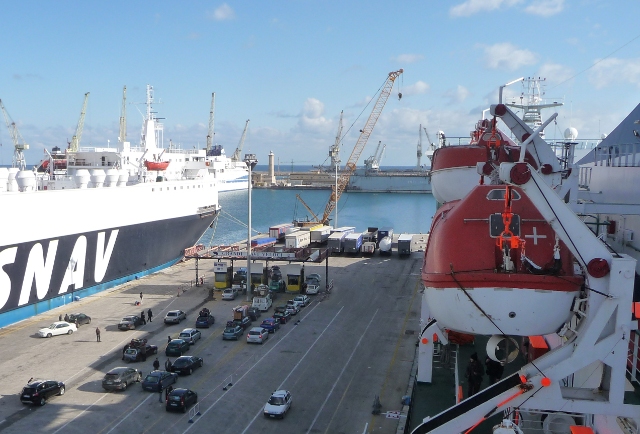
With three boarding cards (one each, and one for the vehicle) in hand, we then headed for the passport control queue, on the quay next to where the boat was already docked and unloading. At 8.30am, we were about the third or fourth vehicle in line, and it was about half an hour before they opened. As they started to do so, uniformed police walked the queue, checking vehicle registration documents and insurance certificates, passports, driving licences and boarding cards, together with their passenger manifest, then writing on the back of the car’s boarding card. Once passport control was (slowly) cleared, we joined the line to board the boat, and waited. And waited. We boarded at about 10.15 – for a 10.00 departure…

At noon, the last cars were just being loaded, and we set off about two and a quarter hours late. Virtually every single vehicle on the boat was Italian registered, bar a couple of Mercs on German export plates. We were the only motorhome, and about the only “non-local”.

On the boat
You will need to collect one (black) disembarkation card per person, one (black) card per car, and one (blue) customs form per car. On our boat, they were dumped in a rough pile on an otherwise abandoned information desk on the main deck. Fill them in now. You will not be popular if you wait until they’re required. The only pieces of information you are likely to need that you won’t already know or are in your passport are on the vehicle registration document – VIN, engine size, first registration date – so it’s as well to have that with you on the boat.

Arrival in Tunisia
Having set off so late, we were very surprised to arrive only about ten minutes after our scheduled 8pm. We were parked near the front of the exit lines from the boat, but had not joined the scrum which formed around the top of the stairs to the car deck about an hour before landing. Instead, we joined the back of the pack when the stairs were actually opened. By the time we got to the car deck, everything in front of us was already unloaded…

We followed the directions of umpteen people with whistles – mostly uniformed, but not all – into the passport control lines. There were several plain clothes guys milling around, but we were not approached by any. The plain-clothes guy in the kiosk required the three black cards and our passports, kept half of the two individual disembarkation cards and tucked the other half in our passports, then waved us on. On exit from this shed, there was a cash machine off to one side – cash can’t be exchanged into Tunisian Dinars outside the country. We took advantage of it, but didn’t need any cash at all in the port.

We headed towards the customs sheds, where uniformed customs guys waved us and a few other vehicles (mostly “better” ones – there were none of the very heavily laden and scruffier cars) left whilst most others were waved right. I _think_ both halves are similar in requirements, but left seemed to be much less chaotic. We parked up, and got accosted by the “helper” mentioned above. After a minute or three, I grabbed one of the uniformed customs guys wandering around, and he promptly started to have a quick check over the van. His main intent seemed to be to check that we’d got personal possessions aboard – as soon as I opened up cupboards etc he was happy. He quickly checked the various forms, signed the back of the blue customs form, and pointed me to a doorway in the main wall, with a small scrum around it. Inside were two plain-clothes customs guys, who checked everything, asked a few questions – we’d left our address in Tunisia and leaving date blank on the forms, but when I said we were travelling around in a camper van, he was happy. He stamped the blue form and black car form, stamped my passport and wrote the registration in. Ellie’s passport wasn’t even looked at.

After that, I headed back to the van – but got whistled at by a fellow passenger and pointed to the glass customs kiosks between car lanes. Details from the registration document, my passport and blue form were all entered onto computer, then the black car form kept. In return, I was given a print-out of the entry. From there, it was a double-back through some of the empty lanes in the same shed, around the back of the other customs shed (the one most other cars had been waved to – the heavily laden vehicles were mostly in various stages of being unloaded everywhere), and down between the side of those lanes and a few fast-food outlets and closed offices, towards the port exit. Final uniformed check of our passports and collection of the blue form, and we were out of the gates into Tunisia itself. In all, it took about an hour – but we were one of the first off the boat. The queue in the second customs shed looked like it was going to take a fair while to complete…

The one remaining thing we needed to sort was insurance. Our UK insurer won’t cover Tunisia at all – not even for an extra premium – so we needed to buy something locally. We were expecting to find an insurance office open at the port – but didn’t. So we’ve been doing a bit of digging on the web and locally in the middle of Tunis. We couldn’t find anybody on the web seeming to offer short-term car insurance for Tunisia, but did find lots of forum questions from other European overland travellers asking the same question – with a seemingly unanimous answer of “Your usual insurer should cover it – change your insurer if they won’t.” Hmm. Not helpful for us.

Fortunately, we found a couple of small insurance offices in the streets around Ave Bourgiba in the centre of town. After some initial minor confusion (the customs print-out was referred to as the “Diptych”, and we needed the “puissance fiscal” or “cheval vapeur” for the van – the French tax rating, which isn’t on a UK registration document), both gave us almost identical quotes, so we took one for no better reason than that was the office we were stood in when we decided it was clearly the going rate. Nowhere near the kind of price we were expecting – shrapnel over £100 (235TD) for three months. But we’re covered now – and at least we know the policy is from a “proper insurer”, whereas when on a previous trip we bought insurance at the border in Morocco, Mauritania and Senegal there was always a big doubt.

And back again…
The return trip was very similar in terms of formalities. Passport check, quick vehicle inspection (and sign-off on the back of the embarkation card), then over to the vehicle office where the Tunisian diptych vehicle document was taken and binned. Pity – I’d have loved to have kept it as a souvenir.

At Palermo, Italian entry formalities are done on the boat – they announce that all green passport holders should go to one end of the boat, all red (by which they officially mean EU, but really mean “easy countries”, regardless of colour) passport holders to the other. Once off the boat, there’s a final very quick vehicle check, then out into the streets. If you’re travelling via Palermo to Civitavecchia or other Italian destination, you still have to do the paperwork at Palermo.

Posted in By Country - Tunisia, Officialdom stuff | 2 Comments

Palermo to Tunis

After two and a half months in Sicily and nearly eight months on the road, we have sailed south to our first new country for a while, a different culture, and a new continent. I am typing as the sound of the call to prayer echoes in around me in the centre of Tunis.

Our feelings on leaving Sicily are mixed. We had become so at home there and were really getting to grips with our Italian and loving the characterful people (and cats). After biding our time at San Vito Lo Capo for a month and spending a week seeing the best of Western Sicily through a newcomer’s eyes (eagerly showing Adrian’s Mum the sights), we were longing to be properly on the road again bound for somewhere new.

Adrian describes in detail in a separate post the formalities for the traveller sailing from Palermo to Tunis so I won’t repeat those parts of the story. The day we sailed was fine and sunny, but our feelings were of apprehension – the early start, coping with the formalities, the crossing itself, would we find somewhere to stay when we got there with our late in the day arrival in Tunis? (There are few campsites in the north.) Would we like Tunisia?

The docks at Palermo were crammed with heavily overladen vehicles, of Tunisian and Algerian migrant workers returning home. We’re not talking flat pack furniture, but roofracks with full size furniture, cookers, fridges and side boards, tables and chairs and of course the kitchen sink. Others were crammed with a whole family of bicycles, there were mopeds, prams and the children hidden under piles of bags and bedding. Whole lives stuffed into cars and vans, roofs sagging and doors bursting at the seams, as they rested on their bumpstops. We seemed to be the only non-Italian or North African travellers, and the only ones in a campervan. Boarding was way past the scheduled departure time, and we had a late breakfast in our seats on board, and waited for the ship to start moving. And continued to wait. After a while I went off to explore and found I could get up on the high outside deck and helipad. I looked down and saw that there were still quite a few cars waiting to board. One was having a wheel changed. We mentally psyched ourselves up to face at least two extra hours on board…

The ship sailed west along the coast that we’ve come to know so well, out of Palermo, along past Mondello and around the headland to Sferracavallo and Isola de Femine.  Further past Castellamare del Golfo and Scopello, and the Zingaro Natural Reserve and to San Vito and its lighthouse, followed by Monte Cofano and the hill with Erice in the distance. All these places punctuated by distinctive cliffs and mountains, the afternoon sun picking them out through the haze. Then we struck out beyond the Egadi islands and headed south as darkness fell.

The boat was, of course, crowded with families, small children slept in rows on colourful fleece blankets on the floors for much of the day, giving them renewed energy to run around for the last few hours of the trip, while their mothers took their turn to rest on the blankets. Men sat on the open deck with chicha (hubble bubble) pipes. The time went much quicker than we had feared it would though and inspite of the delayed start we arrived in Tunis only slightly behind schedule.

We were relieved to get through the port with a minimum of time and trouble and glad to head south a few miles to an outer suburb – Borj Cedria – which our guidebook said had a campsite. The roads were uneven – and we nearly came to blows with the large unmarked speed humps as we followed signs back and forth and did eventually manage to find the place with only a few small detours. The campsite was as basic as described in the book, but we were welcomed and were happy to find somewhere safe to camp, especially arriving late in the evening. We scoffed the remains of our boat picnic, braved the fierce dogs and grim ‘ablution’ block, and hit the sack. Very weary.

A slow start the next day – Adrian braved the shower, I managed to brave the loo (a real hover and hope one). Although this campsite would have made quite a good base for exploring Tunis, we decided to head into the city in the van. On the way, we called into the nearby town of Hammam Lif and visited its lively Sunday food market. Markets are one of my favourite things to visit in any country. I’m usually reticent about photographing the people there as I don’t want to offend anyone. Stallholders here were very happy and very keen to be in my pictures, although the man at the egg shop refused me.

After the delights of a French influenced boulangerie – we headed into Tunis. Stopping for petrol on the way at little more than 50p a litre. We’d spotted a hotel in the guidebook that sounded clean, central and cheap and we actually managed to drive straight there and park along the street without getting even slightly lost. Hôtel de France is attractive and cosy, and good value at a chunk less than £20 a night for the room here in the centre of a capital city. It seems the best option for spending time in and around Tunis as there’s much to see here.

We settled in, and found a local parking garage for the van to spend the next few days in. Then headed out to wander around the Medina. Being Sunday, everything was pretty closed up, but in spite of this we still managed to fall for that old trick of being collared to look at a view from a terrace with the pretext of selling us loads of carpets and trinkets. We did manage to get away eventually persuading them that we really did only live in a tiny van with no space whatsoever, not even for jewellery. And even found our way out of the maze of the souk on our own … We then refreshed ourselves with delicious fresh orange juice at a street café on Place Victoire, before strolling along the Avenue Bourguiba – a very European thoroughfare and focal point of the newer city with major hotels, shops and government buildings – very Champs Elysées.

We had arrived in Tunisia auspiciously at the end of the first anniversary of the revolution here that ousted a dictatorship and sparked off the Arab spring across the region. Avenue Bourguiba was the focal point of the uprisings and there had been a large demonstration to celebrate yesterday’s anniversary as well as to voice protests over the lack of progress one year on. There is a feeling of tension perhaps because much of the street furniture is augmented by huge rolls of razor wire, armoured vehicles are dotted liberally about, and there are lots of military and police personnel around.

The evening saw us venture out on a surprisingly chilly night to visit a local restaurant where we feasted on brik à l’oeuf with crevettes. The local speciality of egg fried in pastry with a twist. Followed by main courses of couscous and merguez sausages and lamb brochettes the bill came in at 16 dinars – around £8. It’s refreshing to be somewhere our money will stretch quite a bit further.

Our first impressions are favourable – we’re very excited to be here and look forward to discovering the rest of the city and the country.

Posted in By Country - Italy, By Country - Tunisia, Travel stuff | 5 Comments

The van our planet

Living in such a compact vehicle with limited space and resources makes us much more aware of our consumption and waste day-by-day than when we lived in our house. On thinking of this new awareness of what we need to live our current lifestyle, it made me think of our van very much as a mini planet. We need to protect our finite and not always readily available resources. The effort and any payment involved in obtaining them is immediately connected with usage. We are aware that driving an ageing campervan on long journeys isn’t the greenest thing we could be doing with our time, but we do try and live as greenly otherwise as local facilities and conditions allow.

What do I mean by our resources? Petrol for travelling (and the heater if we use it) is probably our most expensive both in terms of cost and the planet. Our tank holds around 65 litres and the van does about 25 to the gallon. We use gas (LPG) for cooking and sometimes the fridge and our usage is minimal,  12 litres every other month or so. We use battery power for lighting, water pump and stereo. Mains power when we’re hooked up for charging and for the socket which powers laptops and fairy lights (and any other appliance should we have them). We only have one power brick and cable for the laptops, so can only use one on mains at a time, an issue now we have two machines again both with dodgy batteries!

Our water tank holds 50 litres, which is used mainly for cooking purposes, so we are very conscious of how much we use and alert to when we need to top it up. We also have to consider the waste grey water tank (20 litres) so we know how much we use and what it looks (and occasionally smells) like. Campsites usually have waste water disposal and fresh water filling points. Some communities also provide this service for campervans. It is not always free in either case.

Our wider water needs of course take place beyond the confines of our van. However, we are still very aware of how much we use and how much this costs. Showers are very often on a timed or by volume token system, sometimes this is adequate, sometimes generous, sometimes neither. We tend to use campsite facilities for washing up, hot water provision for this is a rarity. We use bottled water for drinking so this does rack up our plastics usage somewhat.

A decent drying day at Degli Ulivi camping, Sferracavallo

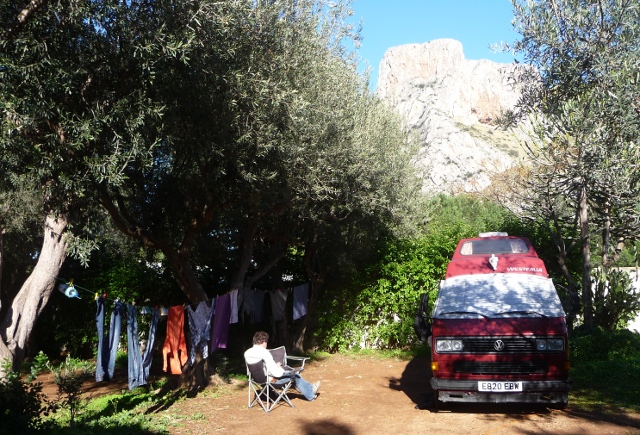
Laundry is often our biggest challenge. Not every campsite offers washing machines and when they do they have been quite expensive. The cheapest we’ve used has been €3.50 for a large and quick brand new American style machine. The worst has been €6 for a small domestic washing machine for which you had to book a timed slot. I don’t like driers, which is just as well because they are rarely available. This does mean that you are more dependent on good drying days – shorter winter days and unreliable weather limit the chances of these – and somewhere to hang everything up (trees or poles on and around the pitch for the washing line).

We also need to dispose of rubbish after nearly every meal. Not all campsites have convenient disposal areas, and many don’t have designated recycling bins. Towns and villages have mostly had communal rubbish bins and recycling collection points. In southern Italy and Sicily, recycling facilities seem to be less obviously available and often the bins are misused.

Perhaps the most scenic recycling point in the world? Zingaro Natural Reserve

If we buy something new, it has to fit in somewhere convenient, to stack neatly or to replace something we’ve lost or broken. We’ve bought very few extra items on the trip. We are much more up for making do and mending, as some things are not readily available to replace.

We buy food and drink little and often to top up our small fridge, drinks cabinet (supermarket wine carrier) and small cupboard spaces. We can’t bulk buy and this does mean we can’t always take advantage of special offers. We try to shop locally as far as we can on the road, and take advantage of the abundant seasonal produce on offer. We’d like to shop more ethically, but this isn’t something that we have seen obviously promoted to any great extent in the shops of the countries we’ve been to so far. There are just eggs full stop. Organic labelled foods are few and far between.

During our trip we’ve become dependent on having more cash than we would otherwise have about our persons, especially in Italy. Smaller notes and change are a must to smooth the path of daily shopping and travelling, even for petrol. This helps us keep on top of what we’re spending and means no surprises on bank balances.

When we are camped up we try and use our feet, our bikes and public transport for getting around locally as much as we can. This saves on petrol consumption, helps keep us trim and you meet more people too.

Posted in Personal stuff, Travel stuff, Van stuff | Leave a comment

A van made out of brick?

A strange thing’s happened. We’ve just spent a week staying in one of those large and strangely immobile brick-built campervan things. What do they call ’em again? Oh, yes – a “house”…

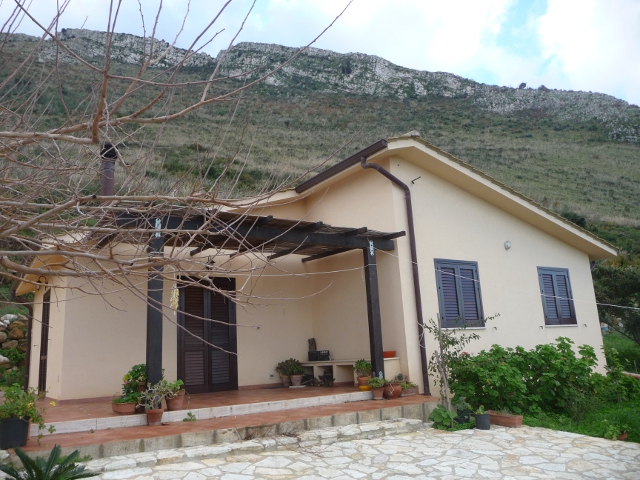
Casa Tre Sorrelle (Three Sisters) is a pleasant little holiday cottage half way up a mountain, overlooking the bay between San Vito and Palermo, and the mountains heading towards Trapani. The view takes in most of the Zingaro reserve, but from the other end to that we’d become used to.

Whilst she was with us, we showed my mother what we hope’s been a good mix of the best of Western Sicily. She arrived armed with a “Best 25 things to see” guidebook – which we were pleasantly surprised to find we’d almost entirely done in our time here.

The weather behaved itself (mainly!), with only the first day seeing any precipitation. It did that in _style_, though… The forecast didn’t look great, so we thought it best to start off with the great metropolis of Palermo. As we left the van in Monreale, and wandered towards the Duomo, we were forcibly reminded that what to us is merely the Best Before date for the tinsel is actually the religious celebration of Epiphany – and the Duomo was, of course, somewhat occupied by a service. Once the bus had taken us to the city centre, we had a wander around some of the central sites – those that weren’t closed for lunch or the afternoon, of course – with threatening skies and the odd short, sharp shower. The Duomo in Palermo was similarly occupied. We can’t vouch for any wise men, but at least one of the shepherds was definitely present and correct, lamb following him wherever he did go.

We missed the bus back up to Monreale by seconds – due to the front lying about the route number. Shortly after the next left, an hour later, the heavens opened, with one of the heaviest hailstorms I think any of us had ever seen. They didn’t just settle – the road was quite literally white over with stones, as jagged lightning forked across the mountains.

The rest of the week saw considerably less meteorological melodrama. We bimbled around, revisiting some of our favourite sites. We caught the tail end of the Christmas market at Erice, we revisited Marsala’s market and bought delicious fresh fish, we headed back to Agrigento and the Valle dei Templi.

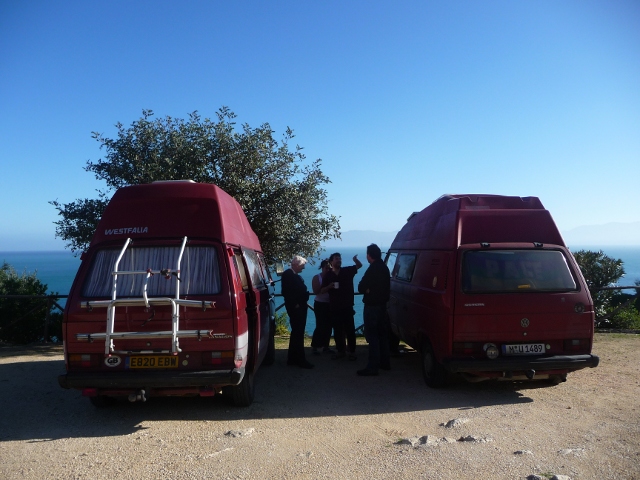
Zingaro, of course, could not be missed – my mother’s a big fan of a long walk, living in the middle of Derbyshire’s Peak District and owning a large and extremely energetic dog. We did get a bit of a surprise, though, when we arrived at the camp site first thing in the morning – only to find that we already appeared to be there. Another dark red VW T25, with high-top, was already parked up.

Florian and Nelya had spent the night in the carpark, after the bad weather of our Palermo day had caused their ferry to Genoa to be cancelled. Together with their four-year-old daughter, Marina – and, yes, even the cat – they’d spent a few weeks touring round Sicily over Xmas and New Year, but were heading back home to Munich. They’d been travelling off-and-on for many years, and gave us some very enthusiastic recommendations for places we’d been umm-ing and ahh-ing over as Spring destinations. Watch this space!

We also ticked off a couple that we’d not got to previously – Segesta’s Greek temple was as magnificent as expected, together with the theatre on top of the hill opposite. The temple was never fully completed, yet has stood the test of time remarkably well. What you see today (more complete than most) is all that was ever there. The inner temple was never built, and there are various clues as to the incompletion – for example, stone studs left on many blocks, there to help manhandling during installation, would have been removed once no longer required.

Finally, we took a boat trip from the Marsala salines over to the small island of Mozia, site of a Phoenician city. Rediscovered and excavated by yet another peripatetic English Victorian gentleman, many of the finds are in the surprisingly good museum housed in the small castle he had built on the island. Together with a wander round the ruins themselves, this was a real gem of a day out to finish the week off with.

However, our main “Must See” on the island remains unseen. It appears that the Etna excursions don’t run through December to February, with the cablecar being used for skiers instead. Now that we’re out of the house again, we’ve come back to the Palermo campsite for a couple of nights before an early start on Saturday morning for the ferry to Tunis.

By Saturday night, our road will be going in a different direction – we’ll be in Africa!

Posted in By Country - Italy, Travel stuff | 5 Comments