In the shadow of a very active volcano

We quickly settled back into the rhythms of Sicilian life. Our intention to spend a couple of days near Cefalu quickly turned into a week as we waited for a backlog of post (just minor stuff like the van’s new tax disc) to arrive. It wasn’t difficult, though – the Rais Gerbi campsite is a busy one, and there were a whole raft of people who we soon became friendly with. A handful of daytrips all varied in their success. Our first foray into the Madonie mountains barely scratched the surface. We stopped at a Sanctuario at Gibilmanna to enjoy a fantastic view over the coastline, only to be greeted with a drip-sizzle-drip-sizzle sound from the back of the van. One of the engine’s cooling hoses had decided to spray water straight at the hot exhaust. If you’re going to have “issues”, they might as well be where there’s a great view, at lunchtime, immediately after stocking up on some good food, right?

Once the van had cooled down a bit, I could have an investigate and – hopefully – fix. Fortunately, a hose joint had just somehow started leaking, despite being well clamped up. Even more fortunately, it was one that was easy to get at. A quick dismantle showed everything to be in good order, so it all went back together – and, so far, has proved watertight again.

Our second foray into the mountains was MUCH more successful – Castelbuono is a gorgeous town, with an old centre dominated by a large fortified house (Castle’s a bit ambitious – but it’s lovely, whatever you want to call it). Even better, as we wandered towards the centre of town we were accosted by the proprietor of a very upmarket-looking small shop specialising in local food, and forced to taste lots of goodies – several of which were so good that we couldn’t escape without buying them… Once we got to the centre of town, we managed not only to find a very fresh pasta shop and a bakery that smelt so good you couldn’t stop your mouth watering, but another food shop offering tastings – this time Limoncello, Mandarini, and various other flavoured liquers, including Fico d’India (Barbary Fig, or the fruit of the ubiquitous cacti). It’s a hard life sometimes.

Castelbuono has a slightly different approach to most towns to bin day – big bin wagons don’t easily fit down narrow streets, and even small ones can clog traffic utterly. So what better solution than to bring in Valentina and her friends?

They might be rubbish donkeys, but they’re also very very good donkeys, and have no objections whatsoever to having a quick break from their working routine to have their noses scritched and photos taken by passing tourists.

The third foray was a planned bike ride up to the village of Pollina, high above the campsite – we’d driven up there in November, and marvelled at our French friends who had cycled up. In conversation with a couple of others at the site, it started to seem like I was the soft one for thinking it too hard, so maybe I should have a go. Unfortunately (no, really), when I checked my bike over prior to departure, I found that I’d got two broken spokes in the back wheel. Then, as I removed an intact one to take into a bike shop as an example, I managed to puncture the inner tube… One definitely hors-de-combat bike. I was offered loan of a spare bike by a friend at the site, but somehow it wouldn’t have been the same, so I reluctantly decided to abort the plan. Now we just need to find a bike shop, get the bits, and fix it.

The Madonie mountains are truly beautiful – it was the main peak of the range, Pizzo Carbonara, whose covering of snow we’d seen from the boat as we approached Palermo. Our route from Cefalu through towards Etna took us back through the natural park, rich in spring blossom, then through the neighbouring Nebrodie range, offering stunning views of both Pizzo Carbonara and Etna – sometimes simultaneously.

Etna’s not only Europe’s highest active Volcano, but it’s also Europe’s most active Volcano – and it’s even more active than normal so far this year. The morning we arrived back in Palermo, we saw a thick orangey-brown haze across the horizon, thanks to a sizable eruption that very morning. Our arrival to an Agriturismo on the northern slopes was a bit cloudy, but when we woke the following morning – wow. The mountain was RIGHT outside the door of the van, separated only by vines, with the perfect blue sky marred only by clouds around the peak. Oh, wait a sec – they’re not clouds. They’re smoke and steam from the active craters.

Unfortunately, it’s still not possible for us to head up to the top of Etna, via one of the 4×4 trips. There’s just too much snow. The campsite’s at about 750m altitude, the base stations for the cablecars and trips at about 1800m, and you should be able to get up to about 3000m – a bit short of the 3350m summit, but as far as it’s safe to go. As we drove around and up the lower slopes of the mountain, the snow seemed to start at about 1200m – and, by the time we got to the base stations, it was sitting two to three metres high at the sides of the road. In places, the surface of the snow was black with a covering of basalt rock, freshly thrown out by the recent eruptions.

At the northern base station, only skiers were doing anything much. At the southern base station, though, every coach in Germany seemed to have arrived simultaneously to unload their passengers onto the waiting souvenir shops… We briefly considered getting the cablecar up anyway, but as the big screen in the foyer of the station showed nothing but swirly mist and cloud enveloping the live camera, we decided not to bother and walked back out. Just in time for the clouds to start to batter us with icy rain and hail.

As they say – when the going gets tough, the tough go shopping. So we headed back down to the big mall on the edge of Catania we’d visited in similarly dire weather in November. This time, though, we managed not to find anything we needed to buy. Combined with the heavy and aggressive traffic, we gave up completely, and headed back to our peaceful corner of a beautiful vineyard, where we felt it would be rude not to taste the local produce. Excellent it was too – not only the wine, but the other products. As well as the red wine-flavoured face cream, hand cream and soap, we couldn’t resist some of their Vino Cotto – a syrup made from the must of the grapes, the bit left after squishing for wine – a delicious cooking sauce, tasting of treacle toffee – it immediately made me think of November the 5th. In with a tomato-based pasta sauce, it gives a lovely richness and depth of flavour.

On the other side of the campsite, if you can bring yourself to turn your back on Etna for a minute, there’s more beautiful mountains – this time, carved out by the river Alcantara.

Our route away from Etna Wine took us through them, starting with the beautiful hilltown of Castiglione di Sicula.

As we rounded the western edge of the Volcano, and started to head across country towards Siracusa, though, the scenery not only turned flatter but our route more and more convoluted. No roads seemed to head quite where they should, with our confusion only partially resolved when we found a gigantic military airbase – seemingly partially Italian, partially US – in the middle of the plains. Our state of mind didn’t improve as we headed towards the coast north of Siracusa, and found the campsite we were aiming for was closed. We really didn’t want to head back to the miserable and overpriced field we’d stayed at previously (despite Rob & Sarah’s glowing opinion of it), so headed into the city centre for a car park that we’d heard about, offering the possibility to stay overnight.

Aires are a funny thing. Some motorhomers seem to swear by them, but we’ve always found that a bit baffling. Quite apart from our lack of loo & shower making the logistics harder, why stay in an urban car park, when there’s great views to be had from “proper” campsites? It turned out, though, that this one was really a bit of a gem. Yes, it was a car park, heavily used by coaches through the day.
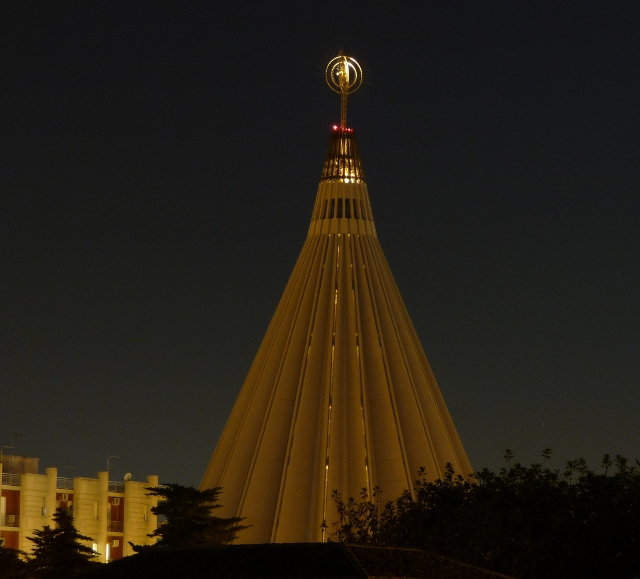
Slap bang in the centre of the city, right next to the impressive landmark modern Sanctuario, it was also a large grassy area, under trees, with full facilities – and, most importantly, an excellent base to see the bits of Siracusa we’d missed. As we walked back on the first evening, we were passed by a very familiar van – our Canadian friends, Jacques and Simone, who we’d met in December in Palermo, then in February on Djerba. Our social whirl here also included a pleasant evening in the company of Danes, Kerstin & Knud – although we couldn’t for the life of us figure out the Brits (a couple seemingly in their 30s), who seemed to spend all their time at the site in their van with the curtains closed, hiding from the beautiful weather and ignoring everybody. <shrug>

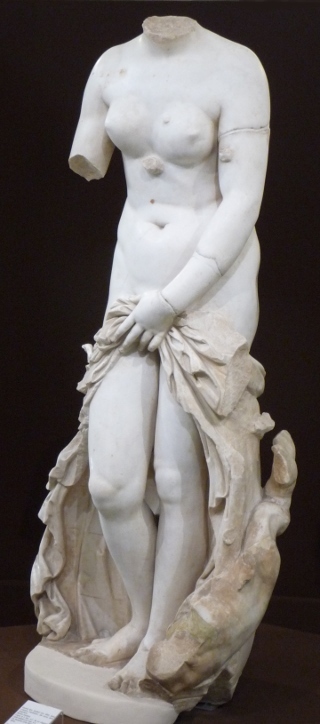
Ortygia, the old town on a small island, had charmed us despite atrocious weather – and it certainly lost none of that allure in beautiful sunshine. It wasn’t why we’d returned, though – the archeological museum and park were the main reasons. The museum is huge, and very well organised – probably a bit too huge, since we quickly started to gloss over with impending cultural overload. There are some real highlights – the coin and jewellery collection in the basement, strangely, was one. We’ve never really enthused over the numismatic displays, but this seemed to capture our imagination. Perhaps it was the sheer quality of the exhibits – silver and gold sparkling under excellent lighting, showing off the incredible detail stamped into them. Perhaps it was the friendly guide, Rosalba, who kept popping up to point us at details we’d have missed otherwise.

The archeological park houses several ruins including a 15,000 seat Greek theatre (with temporary wooden seating being constructed for the summer’s live season), a small amphitheatre, and the Ear of Dionysius – a tall and S-shaped cave, curving back into the sheer rock face. It was busy with school trips, including one group of presumably drama students who were loudly staging a fully costumed 5th century BC protest against their colonists… By contrast to the various Italian groups, the British school group seemed to be dour and subdued, without any of the animation and loud chatter.

Finally, when we’d arrived at the car park, we’d been given a discount voucher for the catacombs just around the corner. In the middle of modern housing, there’s a ruined ancient church. Our immediate assumption – that the damage had been done when the area was bombed in the war – turned out to be false, and the church had lain in ruins since the 1693 earthquake which battered so much of south-east Sicily.

The catacombs underneath stretch for 10,000 square metres, heading off a main axis a kilometre in length, through the chambers of an ancient water supply system, decorated with the remains of 11th and 12th century frescoes. About 20,000 graves have been found, many having been used several times – so potentially the last resting place of upwards of 50,000 people.

And so we’re currently back at Etna Wine, our return greeted enthusiastically by the resident dog who seems to have adopted us as his very own campers. We’re now steeling ourselves for the short trip back to Messina and the ferry back to the mainland. It’s been a wonderful time here on Sicily, and we’re finding it very hard to leave – this place really has stolen a chunk of our hearts.

NB – The original title for this post was going to be “Puthering Heights” – but Ellie didn’t think anybody’d know what “Puthering” meant. Is it really a strange local dialect thing, or is she being overly dictionarycentric?

Posted in Art & Culture stuff, By Country - Italy, Food stuff, Travel stuff, Van stuff, Wildlife stuff | 7 Comments

There and back again – some thoughts about our Tunisia journey

The seed of travelling to Tunisia was sown back in September when we were exploring Genoa and caught sight of a Tunisia Ferries boat in the harbour. The idea grew as we headed south through Italy towards Sicily, watered by learning that we could also get a ferry to Tunis from Palermo or Trapani. Doubts remained about the wisdom of visiting a newly post revolution country, but the Foreign Office website gave us the green light, and it seemed the obvious next step for us.

It wasn’t without trepidation that we boarded the boat. We have experience of driving in North Africa, and of the lengthy procedures of entering countries, potentially with the unwanted ‘help’ of hustlers. Furthermore we were going to arrive at night. Once we easily cleared the port gates into the country though, we didn’t look back. Tunisia kept on giving.

Its people so friendly, the scenery diverse, and with an unexpectedly rich culture and heritage revealing influences from the Phoenicians, the Romans, the Turks and Analusians, as well as the Arabs, and of course the French colonists. The first toe in the water moment lead to us diving straight in and we wouldn’t have missed it for the world.

You can spend up to three months in Tunisia without a visa and not knowing how long we would want to stay, we opted to book the ferry for a stay of two months, being prepared to shorten or extend it. Two months turned out to be just the right amount of time for us to leave hardly a sight or site unvisited, without rushing. The weather wasn’t always in our favour, the harsh European winter took a southern sweep through Tunisia too, so we would suggest a visit in spring rather than winter. The desert areas were baskingly warm in the middle of the day, while night temperatures dropped to around freezing.

Most people speak French and as we were surrounded by people who wanted to talk to us, we practised our language skills much more than we ever have done in France. Our few words of Arabic took us a long way too. It was obvious that people were surprised and appreciative of our efforts. We rarely encountered anyone who wasn’t welcoming and engaging with the people gave us many heartwarming and rewarding times, from the waves and kiss-blowing, to the bored teenagers saying ‘bienvenue’ to the checkpoint officers sharing biscuits and the roadworkers sharing tea, such genuine curiousity and hospitality.

There was the odd bit of hustling and toutage, and some demands for ‘stylos’ from children, but no where near as much as we expected and who can blame a few people in a poor country from trying every opportunity to earn a little cash? It’s par for the course. The only downside is that it makes you more suspicious of those who want to help you without the expectation of anything in return. We felt safe everywhere we went, and even our dealings with the police at checkpoints and when wild camping were jovial and welcoming, and no cadeaux were expected.
The Tunisian tourist industry is primarily geared up to package tourism where a lot of the money would go to multi-nationals rather than to Tunisians, and although there is great potential to promote independent travel and ethical and eco tourism, this hasn’t been fully exploited yet. The industry has been hit hard, firstly as a result of the revolution putting people off, then by the economic crises affecting much of Europe. Numbers are way down and in some areas non-existent, so if things don’t pick up later in the year many more jobs and businesses will disappear and it will be the local Tunisian owners and workers who will suffer.

Tunisia’s low costs have enabled us to stay in some remarkable accommodation, from camping within a ksar compound, to sleeping in a ghorfa – one of the individual storage rooms of a ksar, to a snug cave room in a troglodyte settlement, and a tiled fondouk inn room to faded colonial grandeur. As we return to expensive Europe, we’ll miss the meals out and cheap petrol. We recognise though that while costs may be low for visiting Europeans, they have risen sharply in recent months, making things ever harder for local people.

Our memories of Tunisia stay with us … the many moments that assaulted all our senses and touched our hearts: the haunting melodious and live calls to prayer that reverberate in rounds from minaret to minaret. Easing out of sleep to the 5am call before slumbering on.

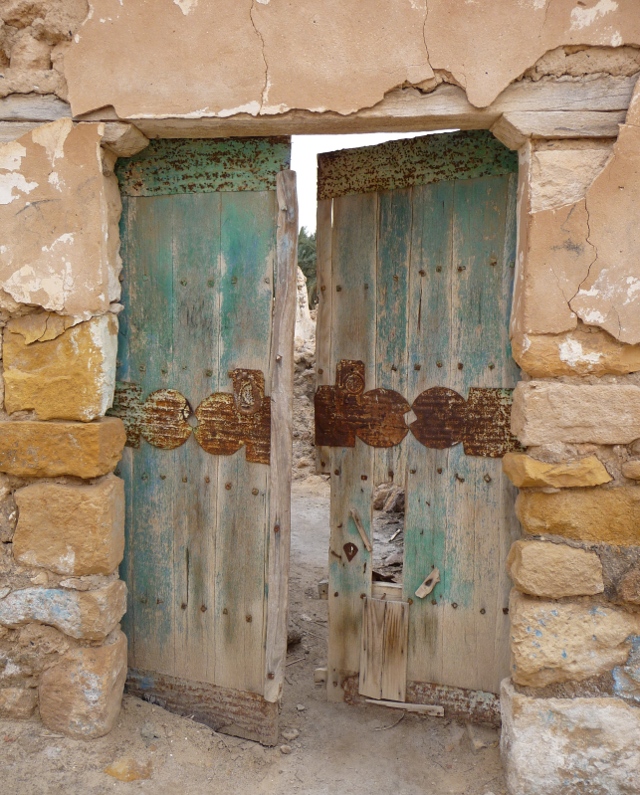
Photogenic blue and yellow studded doors, and the myriad ways to find a path through the medinas past workshops where craftsmen labour in the same way they’ve done for centuries.

The messy enthralling markets, the rank gutters of Tunis and the fragrant steam of  chicha pipes, heady perfumes and spices, the stench of cats, the unoiled screechy donkey noises, eggs hastily cracked and an omelette frying on a street stall griddle plate. Discordant radios blaring ever so slightly off station arabic music. Café flat screens with the floaty cheesey romance of overproduced music videos. The old man stopping us in a Gabès street to give us oranges, the tentative ‘bonjours’ from small children on front steps. The shy but knowing smiles between women of different cultures, a tattooed face and curls peeking out from a floral headscarf.

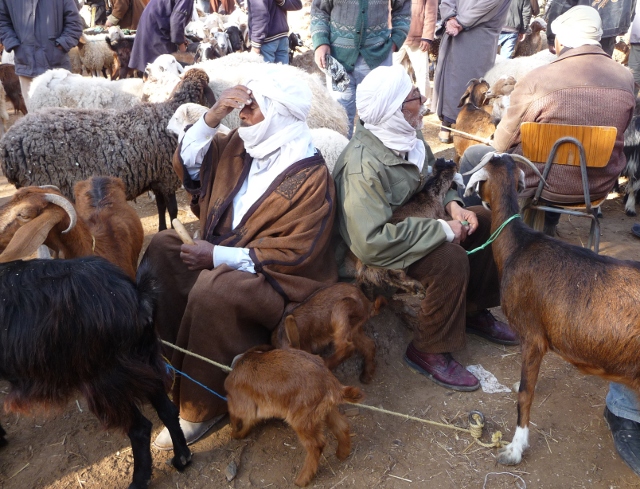
Arabic phrases lilting and guttural by turn, its curling script on ancient velum, courtyards opening from tiled hallways, sacred places, melted icing mosques, abandoned ancient desert mountain settlements, the Douz animal market with its chaotic bleeting and bartering Souk touts ‘come inside five dinars’, ‘come inside for to looking not buying’, ‘I make for you a very good price, madame’. Sweet mint tea on cushioned stone benches.

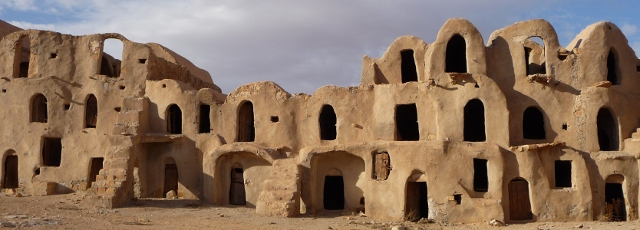
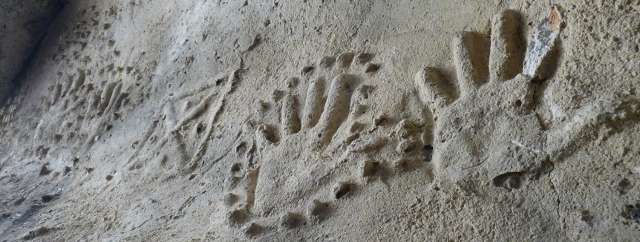
The extraordinary ksour, old communal grain stores, their rounded comforting shapes the same for centuries, the mysterious symbols in their plaster from many generations past about to crumble into dust.

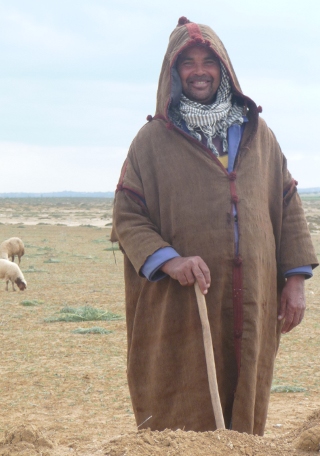
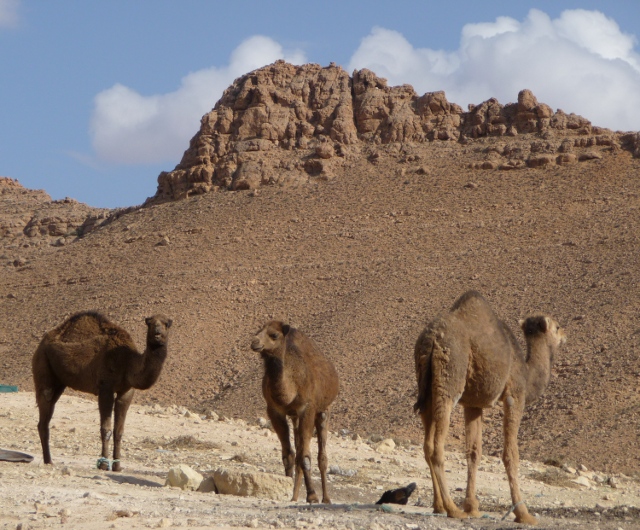
Shepherds with their flocks strolling around for every blade, baby camels in the desert waiting to be captured by herders. Overloaded tired donkeys trit trotting along the roads, horses ploughing deep red earth, fieldworkers bent low over their tasks, fishermen netmending on harbour walls, coloured flakes litter the ground where boats have been repainted.

The impossibly blue azure turquoise seas, thousand acre olive groves, arid hills and the humid palmeries of the oases.

Every city, town and village lined with bare tiled cafés where men chew the fat of a seemingly endless coffee break. It’s always time to go to and from school, the hordes of children and young people stream along the roads of every town. Louages speed dangerously picking up passengers as they fly, sometimes so crowded that peoples’ heads are forced out thruogh the windows.

Thin plastic flyaway bags, whispering on the winds and catching on trees, a blighting blossom. The elegant young women of Tunis, their grandmothers, perhaps, some of the elderly women we saw bent double under 20 litre water carriers out in the country. Washing their clothes in the local stream.

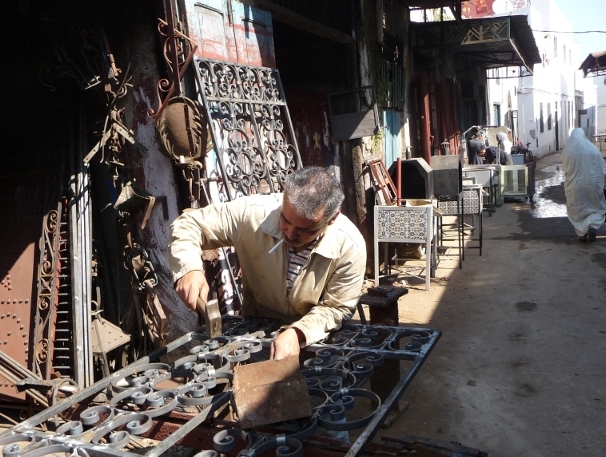
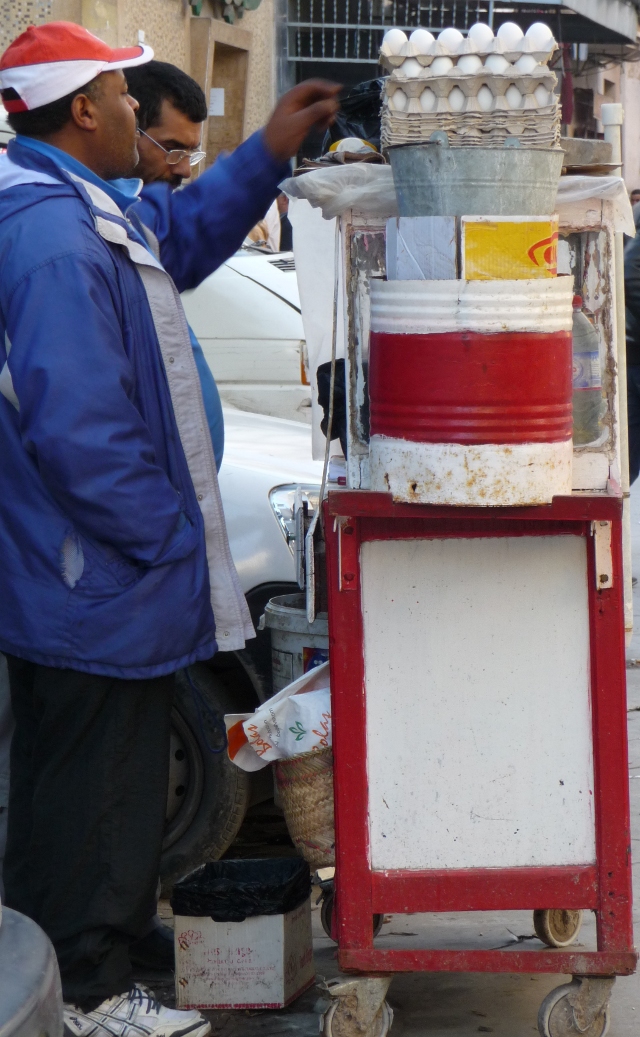
Hole-in-the-wall stores crammed with eggs and tins of jam, baguettes in the cabinet outside. Tiny one room forges, age old sweat and soot of toil, wrought iron gates and grilles leaning against passageway walls.

Sounds from behind curtain obscured rooms, sewing machines, hammers, laughter and children’s cries, a cockerel crowing, or a horse’s whinny. Scraggy cats slinking under bins and mewing outside faded flaking blue doors.

The poignant red chechia’d old men, strolling along, their dignity palpable. A quiet card-playing time in the hat makers’ shop.

Birdsong from the elaborate curliqued cages. Barber shops hoping that Adrian will grace them with his now longer hair.

Red harissa hot soups in clattering souk eateries and wives selling round breads on the edge of the market.

The northern spring landscape so impossibly green, belying the cruel weather-wrought damage to homes and roads. The unimagined wealth of antiquity set against the package tour cheap sun image. And ancient is always meeting modern head on like the horse cart driver with his mobile phone tucked firmly to his ear.

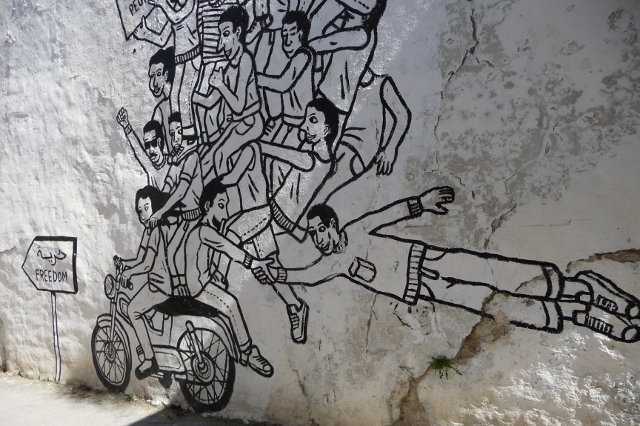
It’s a country in the midst of great change with expectations running high. Now it has its freedom, there are many more problems to address, not least poverty and unemployment.

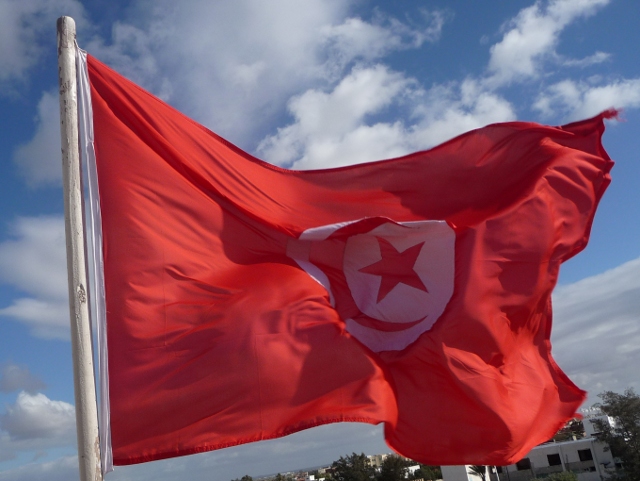
Tunisia is proud to be the cradle of the Arab spring, where the revolution wasn’t without martyrs, but was over quickly. We wish them a peaceful and successful future.
Travelling to Tunisia was an immensely rewarding and important part of the trip for us. We pushed past our comfort zone and learnt a lot about ourselves, about why we’re travelling, the way we travel and how much we’ve absorbed of the country, its people and culture. We want to travel to more countries like this – little known areas and out of the way places. It’s disappointing not to be able to continue onward on the African continent at this stage, but after a bit of recalibration back in Sicily and a bit of mainland Italy, we will be crossing the Adriatic wherever the road goes eastwards.

Posted in By Country - Tunisia, Personal stuff, Travel stuff | 2 Comments

Wherever the tastebuds go in Tunisia

Tunisia shares elements of its food with the other North African countries, but is not known for its cuisine in its own right.  A few key ingredients dominate and can be found across every region in virtually any shop or eatery, and in most of the dishes too: eggs, harissa and tinned tuna. Couscous is of course a national dish and is served quite spicy with some meat and large cut vegetables and a broth.

Harissa, the Tunisian chilli-based paste provides the spicy heat and colour to most dishes. Generally in restaurants and for street food they tone it down for Europeans, so we asked for the normal Tunisian amount for a shot of heat.

Always an oeuf
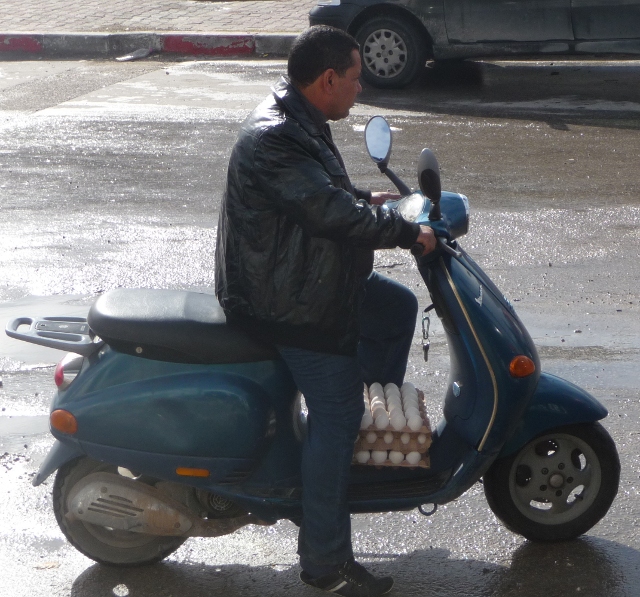
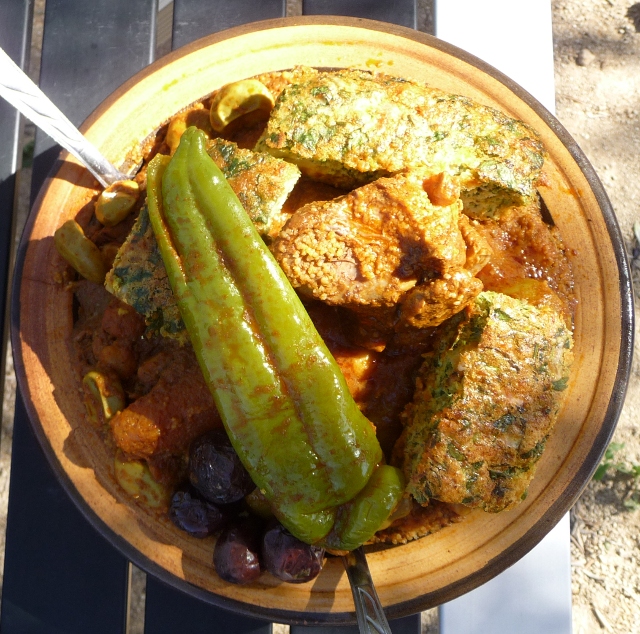
Tunisians buy huge trays of 30 eggs at a time, and they nearly always manage to slip eggs into a meal at some point. You can buy single eggs at any hole-in-the-wall grocery too. Brik a l’oeuf is one of the national dishes. It usually consists of a thin pastry case deep fried with an egg inside. When you break open the crispy wrapping, the yolk oozes out. Tuna, sometimes mashed potato, herbs and other ingredients are often added to the package. It is a delicious and ubiquitous snack and starter in almost every restaurant. Tajine is totally different to a Moroccan tajine, not a meat stew but a baked omelette wedge (eggs again!) with meat and fresh herbs in it, sometimes served with couscous.

There are lots of patisseries selling a wide range of local pastries, some so sweet and sticky your cheeks tingle. There are also more European style pastries and biscuits for sale of very good quality for a fraction of the price we’re used to in the UK.

We loved the chorbas, or soups, nearly always served spicy hot tasty with vegetables, couscous grains or small pasta or vermicelli and chick peas. These were especially welcome when faced with the colder wintry weather in the north of the country.

Street eats
For supreme freshness, good value and tastiness you can’t beat Tunisian street food snacks although you might not get a wide choice from any one vendor. Depending on where you are, you can get different sorts of round and flat breads, some variations are called chapattis, but different to the Indian bread of the same name, and galettes, again, not a French savoury crêpe. These are generously filled with a made-while-you-wait omelette or chopped boiled egg, harissa, tuna, turkey salami, olives, mercuria – a Tunisian salad of finely chopped roasted vegetables, potatoes – all or some of these as you like. Sometimes chawarma or donor kebab style meat is offered. Always fresh and very tasty. Some cafes will also add chips and salad into your sandwich.

Then there’s metabka a ‘Berber pizza’ made of flat round unleavened pan cooked dough stuffed with a spicy tomato and vegetable mixture. These self-contained lunches can cost as little as less than a pound and rarely more than £1.50 for a fully stuffed bread, leaving you feeling the same.

Picnics
With baguettes and round breads at around 12p a throw, breakfasts and lunches were very cheap. However, it was harder to find interesting fillings or toppings. By the time we left Italy we were bored of cheeses and hams, after a couple of months in Tunisia we were longing for them again. There are no pork products there of course and the substitute is turkey in sausages, salami and ham. These don’t necessarily taste bad or of much, but are highly processed and look unappealingly brightly coloured. Tunisians don’t seem to have the taste for cheese as we know it. There are virtually no Tunisian cheeses. The foreign cheeses on offer tend to be the blandest of the European ones, like the made for the market camembert with no taste. Widely available is the kind of UHT cream cheese that comes in quarter packets, which can be an extra street sandwich ingredient. We tried a local goat’s cheese, but it had so little taste it would make mozzarella taste like stilton! Cheese prices are the same as in Europe too.

Even bland cheese was very hard to find in the south of the country and we turned to jam – which you buy in cans. Not expecting a lot from tinned jam, we were pleasantly surprised, the quince and fig varieties are particularly good, and we decant this into jars. We even bought stocks of these to take back to Italy. We also made our own omelette-in-flatbread or -galette sandwiches when we had the opportunity.

Meat, in particular is no cheaper there than in much of Western Europe, so is disproportionately expensive compared with other goods and with what local salaries are. Butchers specialise in a particular type of meat and there is little refinement in the cuts – it’s just mutton or beef, usually on the bone. The bulls’ or sheeps’ heads are often hung outside the shops. You can’t fault its freshness though, in many parts of the country it’s queueing outside! Although we grew more used to this, it’s still disconcerting to see the live sheep standing underneath the hanging carcass and skins of its cohorts. We felt particularly squeamish after seeing the camel butcher in Douz with a camel’s head hanging outside and its legs neatly arranged, so soon after our camel ride. It wasn’t always possible to find a butcher with a mincer either, and the lamb merguez sausages we became fond of weren’t always available.

Chicken and turkey meat and charcouterie products are sold at the specialist chicken and egg shops. Chickens are often still alive and slaughtered and plucked to order, we never had to ask for it this fresh thankfully.

We ate out a lot in Tunisia as it was often as cheap or cheaper to eat out as to buy the ingredients and cook them ourselves. Restaurants are usually very good value and we enjoyed better restaurants without breaking the bank as well as local eateries where dinner for two can cost as little as five pounds. They all have very similar menus though and we braved the Arabic only ones too. Frequently the thing on the menu that’s different and takes your fancy is the one thing they don’t have. Main courses are usually couscous, or chicken and other grilled meats or fish, and chips. Often you’ll see Tunisian diners tucking into something different. Probably a more basic (and cheaper) local dish that they don’t think foreigners will touch, for example, lablabi. This is made of torn up bread soaked in a chick pea broth to which the usual ingredients are added to taste – an egg being served raw on top for you to scramble into the mix yourself – actually much more delicious than it sounds.

Supermarkets are almost non-existent outside larger towns, but there are ‘hole-in-the-wall’ grocers everywhere. These can vary from shops that sell a very small number of a narrow range of products to well-stocked Aladdin’s caves stuffed with tins piled high (harissa, tomato puree, jam and tuna mainly), sacks of dry goods (couscous, rice, flour, chickpeas, spices), chiller cabinets groaning under margarine and yoghurt, and canned and bottled soft drinks, bread and trays of eggs, and any number of household products.

In grocery stores you usually have to request things over the counter rather than wandering around and browsing, comparing prices and generally getting a feel for what’s available. This means you have to know what you want and it’s not always easy to know in advance what you want as this is dependent on what they have!

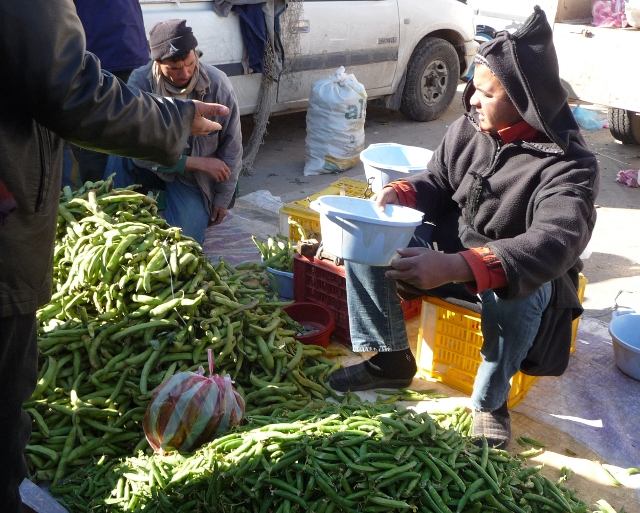
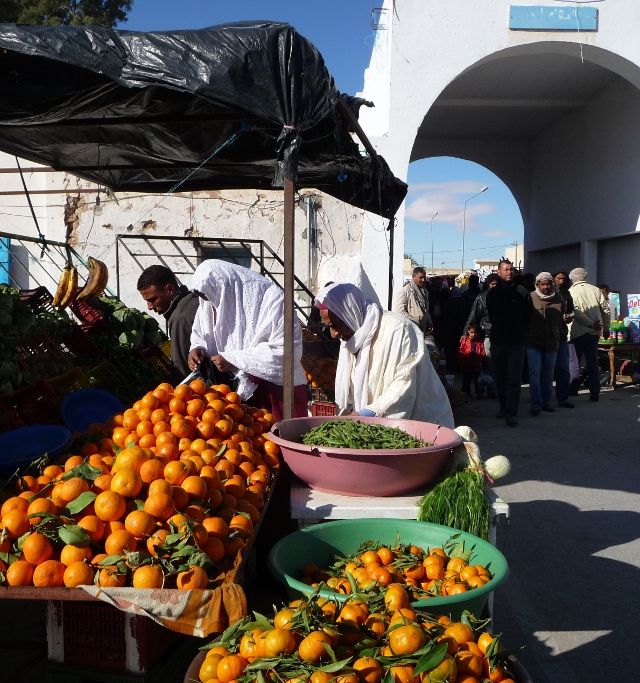
The chaotically colourful arrays of fresh fruit and vegetable shops and markets overflowing streets are a mainstay. Everything that is in season is available very cheaply. You usually get a grubby faded plastic bowl to fill yourself with whatever takes your fancy, then it’s weighed usually on old fashioned weight scales. Carrots, peas, turnips and fennel were very much in season while we were there. You can ask for a slice of a pumpkin or a squash which they have sitting on the counter.


The highlight of Tunisian produce though was for us the wonderful oranges available by the truckload, both for eating and for juicing. We will miss the freshly squeezed orange juice we were making or buying every day.

Most larger towns have a market hall and nearer the coast, the fish is abundant, beautifully arranged on the counter and cheap in restaurants – often grilled outside on the street.

Alcohol is not prohibited in Tunisia as it is in many other Islamic countries and Tunisia produces its own beer and wine. However, it is far from being freely available outside tourist hotel bars and restaurants, and we chose not to hunt it down. We were able to sample a few rather pleasing local wines though, and the drinkable local beer Celtia on occasion, but we were almost alcohol free for two months. The orange juice mentioned above, and the ubiquitous sweet tea, sometimes with mint and/or pine nuts have been our tipples of choice when out at cafés.

After two months in the country, sampling its various dishes many times and using its ingredients to cook our own meals, our palette became somewhat jaded and we have already embraced the delights of Italian cuisine once again. The low fat and almost non-existent alcohol in our diet in Tunisia did have further pleasing effects on our waistlines though.

Posted in By Country - Tunisia, Food stuff | Leave a comment

Bislemma Tunisia, buongiorno Sicilia

After two months touring the country we faced our last couple of days heading back along the north coast to Tunis. We were sad to say goodbye to our wonderful shabby chic hotel room overlooking Tabarka, knowing this leg of our trip is drawing to a close. A day of sunshine and lush green scenery lifted our spirits though.

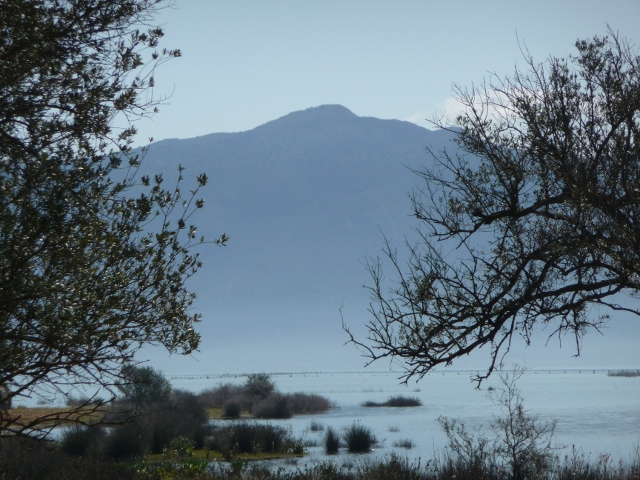
After driving through some busy market towns where we seemed to be a part of the action, we topped a hill and round a bend and saw Jebel Ichkeul and the beautiful lake below it in front of us. This blue shadowy mountain with sparkling water and verdant meadows beneath is one of the most stunning of views in Tunisia.

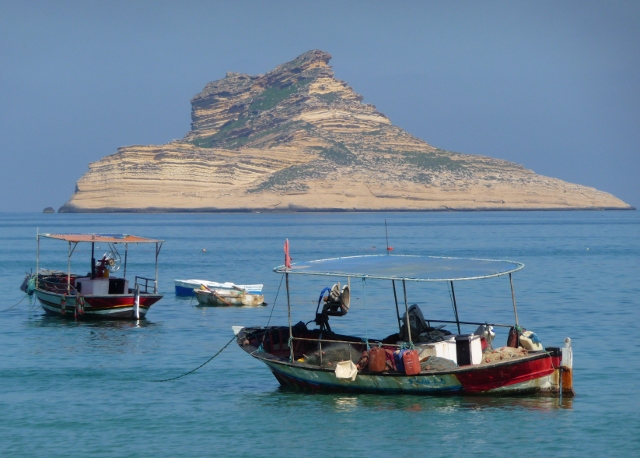
The road took us close to the western end of the lake and we stayed by its side across the north shore too. Then we skirted the southern edge of Lake Bizerte, the city of Bizerte visible on the far side, and the coast to its east taking in the small town of Gar el Melh with its three forts and out along the cape as far as the small seaside town of Rafraf with its fishing boats.

And so back to Tunis and to the Grand Hotel de France again. We got the same room and parked the van in the same spot at the parking garage round the corner, and were greeted like old friends.

We wondered what we would make of Tunis after seeing the rest of the country. The modern European flavour of the newer part of town struck us very strongly, the older parts of town assaulted our senses as ever though.

We explored the crowded alleys and byways through the souks and markets yet again, still finding new ones. Familiar, yet always captivating, we could never tire of this lively winding tangle, although our feet might.

The life and activity here encapsulates the country and its wonderful people. There is a view every few steps and it’s easy to take nearly 200 photos before lunch.

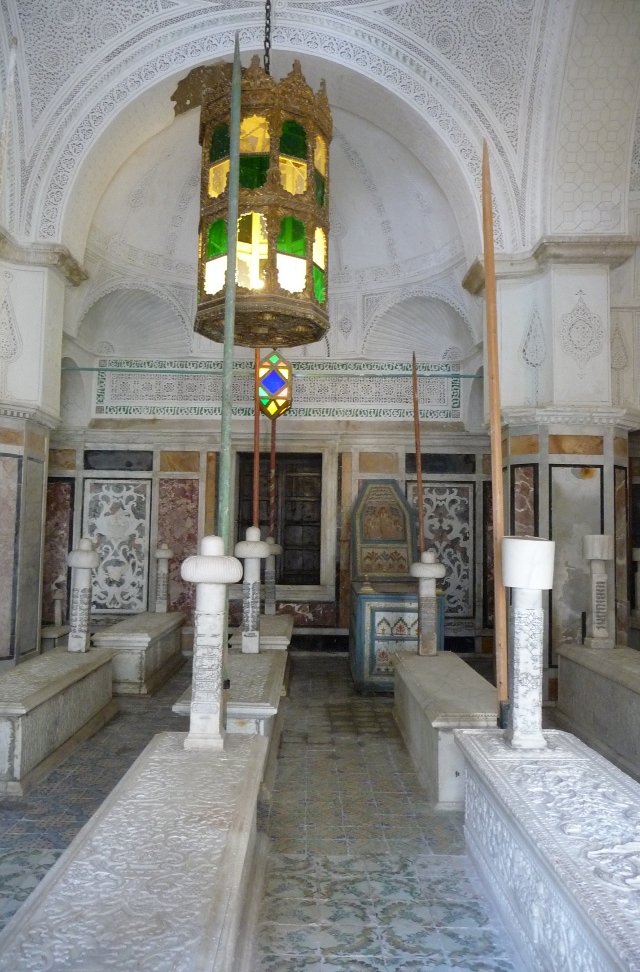
A day or so was spent wandering punctuated by tea stops and delicious snacks and meals – our last opportunities to sample our favourite Tunisian dishes – and seeing a couple of minor but special sights such as the Tourbet el Bey housing the Husaynid dynasty’s tombs from the 18th century to the death of the last prince, assassinated in 1953.

Walking down the busy shopping street by the market hall, crammed with street sellers with makeshift stalls offering anything from pegs and loo rolls, to chicha pipe tobacco, china plates and designer knock-offs, there was a sudden change in the bustle of the scene, and with a flurry of plastic sacks and cardboard, they all disappeared within seconds. We saw them lurking around corners. Then a bunch of uniformed police marched down the street … once they were out of sight stalls were out again and business continued as before.

On our last afternoon in Tunisia we collected the van and drove out to scope out La Goulette, the small town where the ferry port is. From there we followed the route we took two months’ ago in the train along the coast, past the ruins of Carthage out as far as La Marsa, a rather well-to-do seaside suburb. It was Saturday afternoon and the beach and streets were heaving with visitors enjoying the warm spring weather and ice creams.

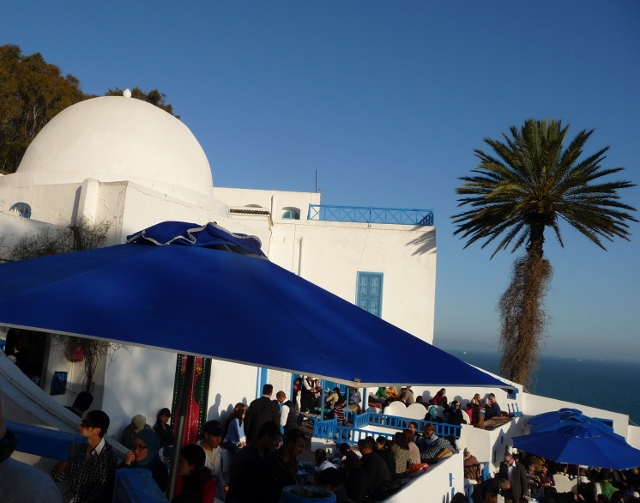
One stop back towards La Goulette was Sidi Bou Said, the blue and white town on a hill overlooking the Gulf of Tunis. It was quiet when we visited in January. Now it was in full swing and thronging with people and traffic. It was lovely to go back there though and enjoy the views from the expensive café, but we were glad to have seen it at a more tranquil time too.

Back to La Goulette and after our last slap up fish dinner in Tunisia, we joined the queue outside the ferry terminal gates. There we remained until long after the ferry was due to depart at 11pm. Finally the gates were opened and the lengthy passport and customs procedures began. How we now appreciate the numbered lanes and relative efficiency of Dover port. Here the several loose lines of vehicles had to go down to one lane on more than once occasion through the path of the port. As midnight and then 1am also came and went, tempers began to fray and we saw several collisions. No one giving way to each other can only have the end result of bruised egos and dented wings. Several cars were in bad shape to begin with, needing to be pushed or towed onto the ferry. Boarding  was a slow process as container freight was being loaded and unloaded on the ship next to ours, through the queueing traffic which had also converged from two directions…

By the time we got on board and found our reclining seats for the night crossing, a family of four was fast asleep in them and we didn’t have the heart to wake them. All the other seats were either full or people had removed the cushions for sleeping on the floor. We thought about a cabin, but the cost would be around the same as three nights in a Tunisian hotel, so we gave up and found some floor space in the bar to stretch out on, relieved when the boat started moving and we finally left Tunis at close to 3am. Only four hours late and nine hours to go. Bislemma Tunisia – goodbye Tunisia.

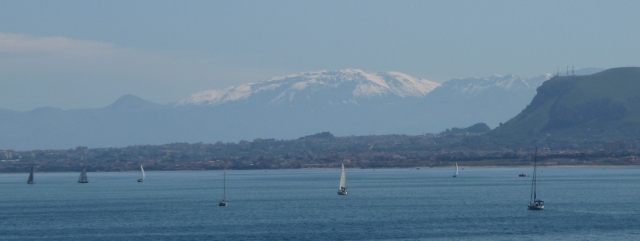
Some sleep was achieved though and once we started spotting the islands close to Sicily, and found out that the boat would dock only two hours behind schedule, we started looking forward to arriving. On the way out to Tunisia, we’d enjoyed the cruise past the coast near Zingaro and San Vito Lo Capo and it was great to see it once again – the familiar shapes of the mountains and bays – rounding the final bend from Mondello into Palermo harbour with its dramatic setting. The mountains in the distance were snowy, the sunshine warm, but the sky was hazy and streaked hinting at Etna’s active presence many miles beyond.

Palermo port is really just off the main drag, so it turns out it doesn’t have a passport control section – there simply isn’t room. So immigration formalities take place on board the ship. Everyone with a red EU passport to gather in one place, all those with a green Tunisian passport (or other non EU), in another at the other end of the boat. There we waited crammed in for quite some time. Luckily Adrian had judged the likely position the morasse of people would move in towards the control on the deck below, so we were fairly far forward. The three officers sat at a white plastic table with their laptops and checked everyone slowly through. Finally we had arrived. So to the car deck and there was our van in the middle of the lines of cars still waiting for their owners. It could be another hour or more to wait for them so we could get off. Thankfully it wasn’t as bad as it first looked. There was a little bit of space here and there and with a bit of clever manoevering, following three different sets of directions, we were able to escape and drive joyfully out into the busy Palermo traffic.

We took a slow coastal road east out of town towards a campsite near Cefalu we’d stayed at briefly back in late November, stopping to buy supplies on the way. We had of course especially been missing pork-related delicacies and hit a delicatessen to buy hams and sausages. That first mouthful of prosciutto crudo the owner gave me to taste – the first ham in more than two months, was heavenly. Suddenly we were in love with Italy all over again. With our ferry docking so late we had only just made the shops which close by 1.30pm on a Sunday, but hadn’t bought any wine … disaster! But our lovely German neighbours at the campsite were touched by our plight and came to the rescue with a rather nice Nero d’Avola.

Posted in Art & Culture stuff, By Country - Italy, By Country - Tunisia, Food stuff, Travel stuff | Leave a comment

Just Roman around

As mentioned in the traveloguey post of our quick lap of the north-west of Tunisia, this region is chock-full of some of the best Roman sites in the country. We ended up taking in six of them – all very different, and all impressive in different ways.

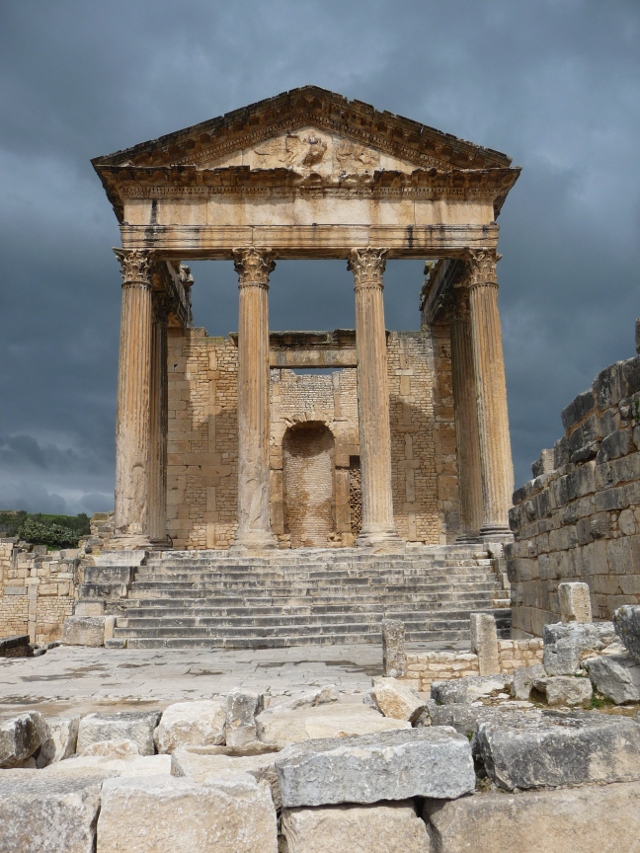
We started off at Sbeitla, not far north of Gafsa. The site is right in the town, making it almost impossible to miss. As you approach the town on the main road – BAM! There it is, just behind a low fence to your left. Three huge and almost complete temples, forming the Capitol of the ancient town, surrounded by a whole raft of other ruins.

It’s the Capitol – the large temple complex at one end of the forum, one of the focal points of the Roman city itself, which is Sbeitla’s real tour-de-force, but there’s other highlights, too.

Apart from a better-than-average selection of intact mosiacs including a baptistry font almost as good as that in the Bardo, there’s an olive-oil press almost identical to some of the much later ones we’d seen around the south of the country, a theatre overlooking a river gorge down one edge of the site, and an impressive triumphal arch. The triumphal arch gives a fine example of Sbeitla’s biggest down-side, too. Being slap-bang in the reality of the modern town, it’s very difficult to get your head into the site properly – you just can’t disassociate yourself from the 21st century sufficiently. From the site itself, you just can’t even get a half-way decent pic of the arch, since there’s a brightly coloured petrol station forecourt right behind it…

That’s not a mutter that you could level at Haidra, way up in the hills right on the Algerian border.

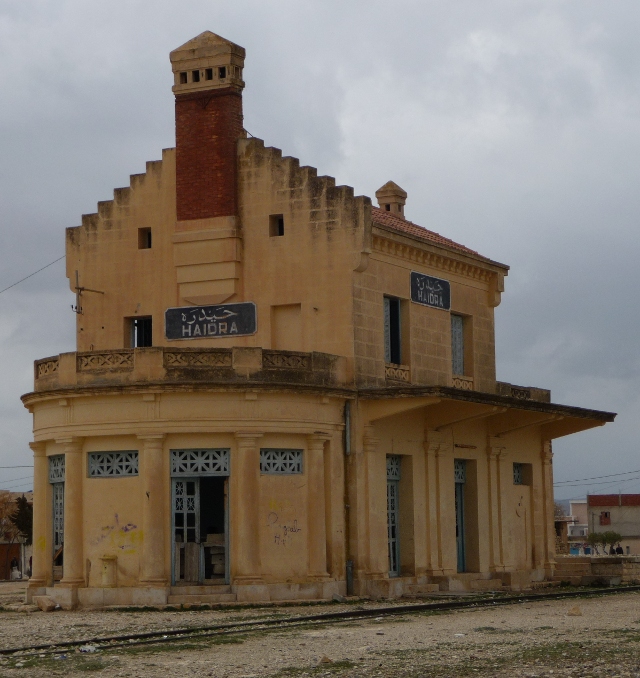
The site does indeed sit on the edge of the modern town, but it doesn’t feel in any way overshadowed by it. That’s probably because there’s virtually nothing to the modern village, with the really rather wonderful (but dilapidated and disused) French colonial railway station about the only visible building.

There’s another triumphal arch, in an amazing state of preservation, thanks to the Byzantines. Back in the 6th century, when Tunisia was an outpost of their empire, after the post-Roman Germanics of various descriptions and before the Arabs, they protected several of the main Roman relics by encasing them in thick stone walls. Nobody really seems to know why, but it was definitely a good thing to do.

The Byzantine walls have mostly been removed, leaving the Roman buildings inside crisply visible, without having been affected by much of the erosion of the centuries. Impressive though the arch here was, though, it was knocked into the shadows by the ruins of the nearby fort, climbing up the hillside from the river gorge below.

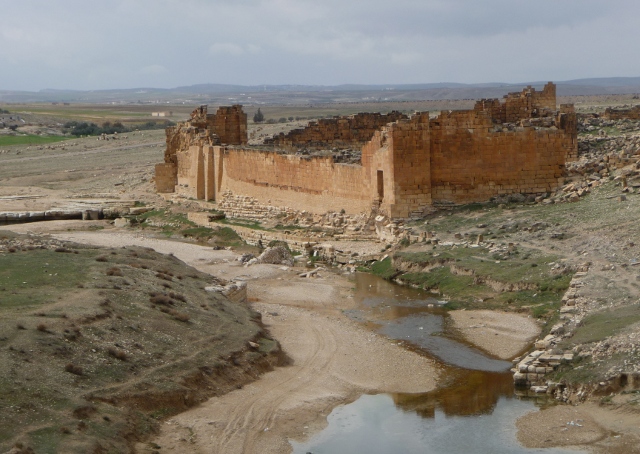
It’s difficult to find a suitable superlative to describe the size of the fort – it’s about 100 metres wide, and twice that long. In places the surviving walls are ten metres high and, although the fort is mostly empty, there are a couple of impressive chapels nestling against the perimeter. As you walk along the river walls, outside, the stub of a road bridge juts out above your head – ground level inside. There’s other buildings dotted around the site, including a couple of mausoleums and various “buildings with troughs” (purpose utterly unknown, but they had plenty of stone troughs, several of which had weathered and eroded into the most gorgeous shapes), making for a very pleasant wander around fields, with some great views around.

Makthar presented another approach to the relationship between modern town and ruins – we couldn’t actually find the ruins at first… Even asking locals for directions proved fruitless. Did they even exist? Yes, they did – we found them unsigned behind the museum, skulking in the shadows on one edge of town. The site’s reputed to have fantastic views – to be honest, we were a bit disappointed, especially after Haidra. It’s not that it’s bad, but it’s just not as good as it could be – it’s high up in the mountains, but the vistas from the site are surprisingly modest, given some of the roads we went over on the way to and from it. The amphitheatre was a small one, but if you’d just tripped over it without any context, you’d have thought it a much more recent Spanish bullring or similar. The forum has another well-preserved triumphal arch at one end, and there’s an impressive set of baths just down the hillside. Probably our favourite corner of the site was a couple of small buildings thought to have been used as the base for a sort of paramilitary youth group. Together with the “quadrilobe” next to it, this “scola” was complete enough that you could really identify with the structures, yet just decrepit enough that they felt properly ancient.

Hidden in a quiet, tree-shaded glade, they could easily have passed for a Victorian folly in the grounds of a National Trust property somewhere in the UK. The skies certainly fit that impression, with a solid covering of leaden cloud approaching so rapidly that we were certain we’d be drenched before we’d finished – fortunately, we weren’t.

Dougga’s one of the big names of Tunisia, and has another superb location to go with it, draped across a hillside with truly panoramic views.

As such, though, it’s firmly on the daytrip circuit – with the ubiquitous coach parties being dragged around for twenty minutes, never straying far from their guide before being shoved back on for the return trip to the Zone Touristique by the beach – this time, Monastir and Sousse. Dougga really felt like a city, probably more so than any of the sites since Pompeii and Herculaneum.

Separated by the baths complex from the forum and Capitol temple, there’s a residential area with identifiable houses crammed in cheek-by-jowl, several with multiple stories still existing.

One of them is alleged to have been a house of ill-repute, complete with a large stone phallus outside the door – but this was felt a little graphic for early tourist sensibilities, and removed to a less prominent position on the site. The theatre loomed over the site from above, with tiers of seating curling round the hill behind. Below, a wonderful mausoleum predated the Romans, dating back to their Lybico-Punic predecessors.

The Roman city was very much an updating of the earlier settlement – everything’s squeezed into a meandering pattern, rather than the usual Roman grid, and the forum isn’t even rectangular…

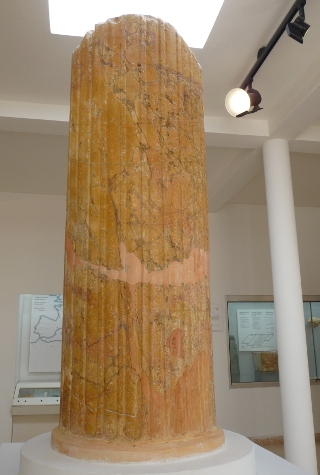
Almost every big Roman site, anywhere around the world, will have had bits of Chemtou marble used for the statuary, columns or cladding of some of the most impressive buildings. The most fashionable and expensive of marbles for centuries, the colourful yellow-based stone was one of the Imperial favourites. The quarries where tens of thousands of slaves and prisoners carved it out of the hills south of Ain Draham still sit as raw scars, not dissimilar to a smaller-scale version of the Medulas in Spain. They’re not something you’d go a long way out of your way for, though, if it wasn’t for the museum that sits next to the site. Quite probably the most impressive we’ve seen in the country, it’s definitely the most “European” – probably something to do with a good chunk of the money and expertise for it coming from Germany – a real contrast to most of the ill-labelled semi-random collections of stuff that mostly pass for museums. Once the stone was quarried, it would have had a real trial of a trip, initially by river all the way to the east coast, later by road across the mountains to Tabarka on the north. The bridge built for the journey north lies in pieces in the river – huge chunks of arch showing the scale of what would have been there originally.


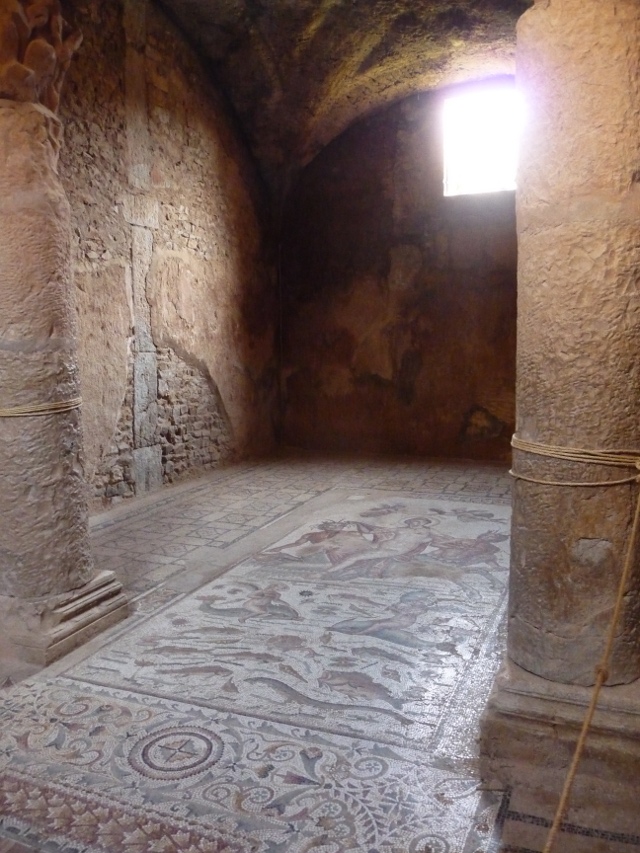
Nearby was the final site – Bulla Regia. Probably the most unusual of them all, it’s thought to have been unique in the Roman world, with the biggest and poshest villas being largely built underground. They weren’t quite like the pit houses of Matmata, though – they were more like big multi-roomed cellars, very similar to typical Roman houses, just with a first-floor ground level outside… Some of the houses still boast some of the lushest mosaics not to have been removed to museums.

A definite Romaned-out feeling had started to settle upon us as we wandered around, not helped by the first of the main underground houses being closed for restoration work – but going down the steps into the House of the Hunt really knocked us back out of it and into proper appreciativeness again. Even better, though, was the House of Amphitrite, a Roman sea-goddess. The mosaic flooring really was utterly spectacular.


Half-a-dozen very different sites, all crammed into a relatively small region. I’m not sure that there was any one that we’d have cheerfully missed out, but Makthar probably came closest, with Sbeitla only really saved by the sheer wow-factor of the Capitol. We had nearly missed out Haidra, though – quite a chunk of a detour, not on the best of roads – but it turned out to be probably our favourite of them all. None were anything approaching busy – Dougga was the only one where we even saw more than one or two other foreign visitors. It didn’t stop Sbeitla harbouring a few touts, though – their patter was so predictable – first some coins, then a carved stone head, finally some ceramic oil lanterns – that we managed to discombobulate the last couple – whether they thought we were psychic, I’m not sure, but they really didn’t seem to be expecting us to know what they were about to offer…

Posted in Art & Culture stuff, By Country - Tunisia | 3 Comments

Northern climes

Heading north from Gafsa gave us a major change of scene, as the landscape became greener, lusher, and generally much more European. We were definitely away from the desert, as we followed the west of the country, dipping towards and away from the Algerian border, north towards the Mediterranean again.

This stage of the trip’s been shaped by visiting a lot of Roman sites – and, to try to stop this post turning into another rambling epic, they’re all dealt with en-masse elsewhere.

Our first stop after Gafsa turned out to be El Kef. Or Le Kef, depending who you listen to. Although, for simplicity, everybody seems to refer to it just as Kef. The unofficial capital of the west of the country, we’d first encountered Kef in Kairouan, in conversation with a resident of the town. He’d not been over-enthusiastic about its merits as a tourist destination, to be fair, and the weather seemed determined to prove him right. As we approached the town, spread across the side of a mountain, the dismal dark skies opened. We weren’t totally sorry that, since the north of the country is almost utterly devoid of camping facilities, it was time for another hotel. We thought we’d start by looking at a cheapie recommended by the guidebook, and finally got our bearings sufficiently to dive down the small side road that led towards it. What we hadn’t noticed was that the small side road turned into a tiny tunnel through some buildings, with shops opening in on either side. Anywhere else, it’d be pedestrianised… But here – no problem, so long as the vehicle’ll fit, go for it. It was touch-and-go (almost literally), but we fit through, and were rewarded with a pleasantly shabby room overlooking the Kasbah fort that crowns the town.

We spent a (merely overcast) day wandering round Kef, and it’s really not that bad. It’s no Grade-A citybreak destination, for sure – but there’s definitely worse. The old town boasts some really quite pleasant streets to just wander aimlessly around, and the fact that there’s nothing to see inside the Kasbah doesn’t matter too much.

There is an attractive old mosque, and a decent museum of local life housed in a wonderful old Sufi shrine. Even better, though, the hotel’s friendly management also run a restaurant a few streets away – with an alcohol licence. We actually partook of our first bottle of wine since arriving in Tunisia!

Because of the utter lack of accommodation options, Kef served as a basis for a foray south again, heading for an impressive flat-topped mountain named after a pre-Roman king, Jugurtha’s Table.

Definitely border country, this – as you approach, there’s several police checkpoints, with varying degrees of attention being paid to documents, everything from a ten-minute pause whilst our passport details were checked over the radio to a quick handshake and “Bienvenue”… Then, as we rounded one corner in the road, we found an Army convoy parked up – out with the paperwork again, this time with automatic rifles clearly visible. A photo stop later saw us leap-frogged by the army, and – of course – our next catch-up with them repeated the checks… To be fair, it was a different squaddie, but even so. There weren’t THAT many other people around… In fact, I think the only other vehicle we saw was a battered old Peugeot 504 which passed us as we were stopped having some lunch. Passed us, stopped, and reversed towards us. The driver leapt out, and jogged over – to offer us a mobile phone he thought we might like to buy. The mountains were utterly beautiful, and well worth the loop around – even if we didn’t actually feel inclined to put the walking boots on and go for a trek.

The weather in this corner of the country was something we’ve been aware might cause us issues – back at the start of February, the mountains in the very north were hit badly by heavy snow, which caused terrible flooding as torrential rains helped it melt rapidly. So it wasn’t a great surprise that our next accommodation base (a thoroughly dull hotel, saved only by a big log fire), Teboursouk, quickly became known as Teboursoak. All night we were kept awake by the rain overflowing right outside our window, so loudly and consistently that we started to think it must be a burst pipe or overflowing sink.

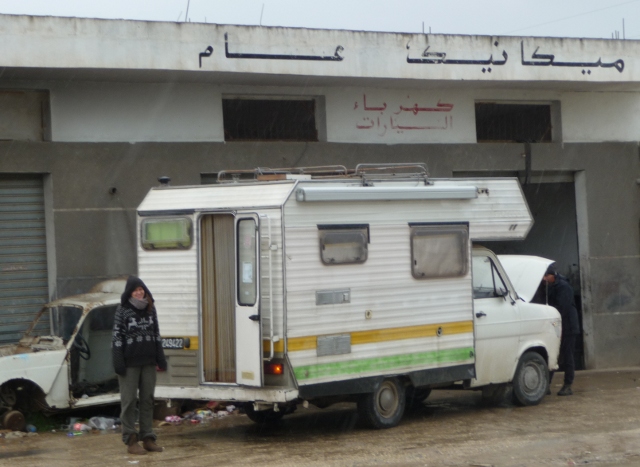
Time for a slight change of plan. The weather in the North East was forecast to start improving a little earlier, and the roads heading that way looked more major, so we decided to make our rough loop of the country more of a very bottom-heavy figure-8. As we approached Tunis, we spotted that rarest of sights here – another camper, and not even a huge new Fridge-Freezer, but a battered and shabby old Transit on Italian plates parked at the side of the road. Unfortunately, though, as we passed we noticed the bonnet up. A quick reverse and a chat was called for. Lotfi (Tunisian) and Anna (Polish) were heading for that evening’s ferry back home to Italy but the pulley (with fan attached) had sheared off the waterpump, leaving them firmly stationary. Ooops. Tow-rope o’clock. The next small town wasn’t that far, and we left them outside a hole-in-the-wall garage, with the mechanic already diving in to see how he might be able to get them moving again. We’ve not heard any more from them, so we’re hoping they got going and caught their boat!

Skirting the edge of Tunis was slow, not helped by the heaviest traffic we’ve seen for months, flooded roads and disorganised roadworks. Eventually, though, we headed towards Bizerte, virtually the most northerly tip of the African continent, and proud possessor of the only campsite at this end of Tunisia. We found the campsite, quickly – it’s probably the best-signed campsite in the country. Unfortunately, the warm initial impressions pretty much stopped there. Then we headed off to look at the town, wondering if a hotel might not be a better option. Nope, the hotels in Bizerte are all dire, dull or massively overpriced – and most of them thoroughly deserve at least two of those descriptions. At least the campsite was cheap and in amongst trees, even if it was a big chunk out of town and with showers blessed only with solar heating – on another cold, wet, overcast day. Deep joy. Fortunately, the large number of scraggy dogs around the site turned out to be friendly (and the three puppies deeply cute), and the sun had at least taken the edge off the cold water, even if calling it “tepid” was more than a little generous. Happy Birthday, me.

The following day, the sun tried to appear, and Bizerte seemed a bit more attractive as a town. The stone of the twin 17th century fortresses, flanking the channel in to the old port, almost broke out in a gentle honey glow.

One of the forts houses the town’s medina – a real rabbit-warren of narrow twisting streets. It’s totally residential, apart from the odd small workshop.

We eventually started to get our bearings and head back out again, when we got into conversation with a local chap who promptly dragged us into his house and onto the rooftop terrace to show us the view from the Kasbah’s walls over the old port.

A wander around town found us a likely looking lunch stop, a small and lively restaurant. In we headed, sat down, and stared at the Arabic-only menu on the wall. Eventually, the waiter finished his many trips to give our table a quick wipe and find fresh cutlery, and sent the owner over to explain what was available. “We have couscous with fish…” Our reply – intended as a gently non-committal noise to encourage him to go on with the choices – seemed to be taken as assent, and off he headed, pausing only to take a couple of wonderfully fresh-looking silvery fish out of the dilapidated chilled display cabinet. A while later, two big bowls of couscous appeared. No sign of any fish. After staring at it and each other for a moment, we shrugged and dived in. Once they were emptied, our feeling of being thoroughly fed was rewarded with a big plate of grilled fish and all the trimmings…

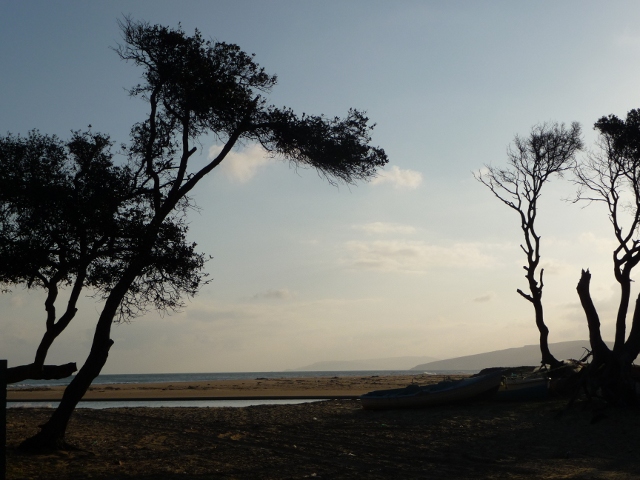
So, now that we were on the north coast, time to head back west again. We’d been told by Aad & Marieke, the dutch Landie owners we met in Douz, that there was a restaurant at Cap Serrat where you could camp overnight – except they’d had to leave in a hurry due to the flooding, barely getting through – and the roads were marked on our map as being piste rather than tarmac. In the end, it turned out not to be an issue. The road through was utterly beautiful, heading through forested areas to a gorgeous secluded cove.

We didn't even get out of bed to take this photo...

The view from our camping spot on the edge of the beach was stunning – a river wound across the sand, flowing fast and deep, meaning that the only way onto most of the sand was by boat or a loooong (probably about 10km) walk… Jamel, the patron, was out of food though for the evening – apart from the tail end of some M’loukia sauce, one of the Tunisian specialities that had evaded our tastebuds so far. Made from the plant that gives Jute fibres, Jew’s Mallow, it’s a thick green (“slimy” is a term we’ve heard) paste – and a saucer of it was quickly ladled out along with some bread to dip in it. Delicious. Our peace for the evening was invaded soon after dark, though, by a convoy of about a dozen big 4x4s on French plates. Half an hour of manouvering and general fannying about later, it went all peaceful for a bit – although that didn’t last, when somebody had the brainwave to use a red emergency flare to provide some late-night lighting…Still, at least one of them had the decency to apologise for the noise as they all left in the morning (eventually, after another half hour of manouvering and fannying).

The following day was an energetically idle one, if you see what I mean – the bikes came off the back, and we headed off for a little explore of the track heading up the mountain behind the village, for some wonderful cliff-top views as we approached the lighthouse.

We’d told Jamel that we’d eat in the restaurant that evening, so he headed off to the nearest town to stock up on ingredients. Not an easy task if you’re relying on the Louage minibus (or, in this case, a battered Isuzu pickup) to the nearest town, 30km away… A 10am departure saw him return at about 4pm, but the chicken couscous was delicious.

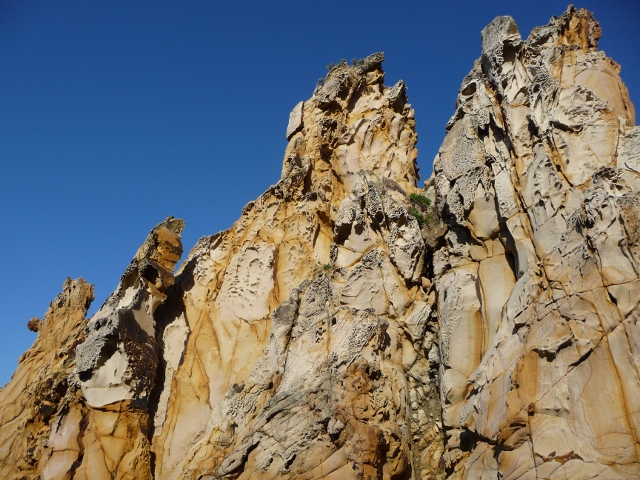
Our final major stop on the north coast was Tabarka. Our expectations weren’t that high, since it’s a bit of a resort, and we were mainly intending to use it as an accommodation base for visiting the mountains of Ain Draham inland. It turned out to be a gem of a place. Sure, there’s a fairly naff Zone Touristique row of big hotels on the edge of town, but the town itself was very pleasant. Fairly small, it’s dominated by a Genoese castle on an island just off-shore, with a row of spectacular rock needles facing it.

Ignoring the Zone hotels, the in-town options were mainly described in the guidebook as “overpriced for the facilities”, and all around the same (far higher than we’ve been looking at) price-band.

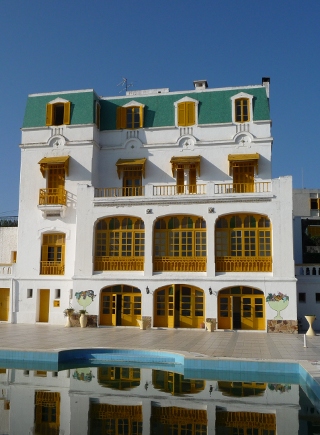
If that’s the case, might as well aim totally high, right? One of the hotels, the Dar Mimosa, looked to be a league ahead of the others, in what could easily have passed as a small French chateau on a hill overlooking the town. We wandered into reception with one of those “It doesn’t hurt to ask, but we know the answer already” feelings – only to find that it really wasn’t that expensive at all. Including a three-course meal, a night was no more than we’ve paid for a campsite. And as for the room we were given. Wow. Double doors, straight off the impressive main staircase, leading onto a huge room with a terrace facing the sea and castle. We could have easily got used to sitting on that terrace, as the sinking sun cast a golden glow over the town, with a cold beer in our hands and cashew nuts on the table. Our room, if you look at the pic above, was the left-hand and centre windows on the second floor terrace – yep, half the width of the building…

Ain Draham was the epicentre of the snow and flooding a month earlier, an “Alpine” resort established by the French colonists as a sort of escape-the-summer-heat equivalent to India’s Shimla. The views from the mountains, overlooking lush valleys with cork oaks a-plenty, were certainly something very special – the kind of vista that there’s no way you can come close to capturing in a photo. Maybe if you took about a dozen and stitched ’em together, but life’s a bit short for that sort of mullarkey.

As we left Tabarka for the mountains, though, we thought we were going to be stuffed – following the signs lead us up a road full of smooth sweeping bends as it climbed – a real driver’s joy, and with absolutely zero traffic. Then, suddenly, a couple of “No Entry” signs in the middle of the entrance to one corner – and a sea of mud, trees and rocks several metres high totally obliterating the road.

We returned back down the hill, to a junction that appeared to be being rebuilt, and decided to see if that road gave us a route – no “Diversion” signs, nothing. Confusion only increased, though, as the km posts at the side of the road revealed the same road number as the one we thought we’d been on. An explanation soon formed as the road passed along a valley floor through what appeared to be a war zone – a ghost village of gutted and half-demolished houses, trees roughly ripped up, and general devastation – and all against a background of a newly completed dam. Probably just as well that the new lake hadn’t actually been filled yet, with the new road closed. Further up, the road showed more and more signs of the aftermath of the weather. Landslips had twisted the crash barriers into knots, and in some places the road was totally missing up to the centre line. Other sections were hastily patched. This part of the country had definitely been hit very hard, very recently, in a way that our warm and summery blue-sky day made very hard to picture.

Posted in By Country - Tunisia, Food stuff, Travel stuff | 1 Comment

Lezard Rouge

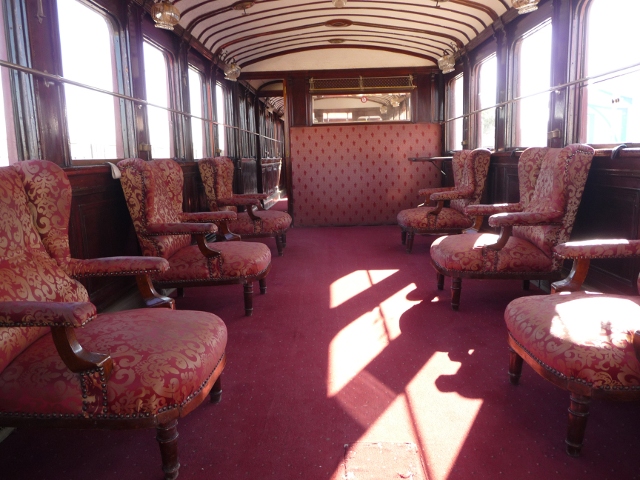
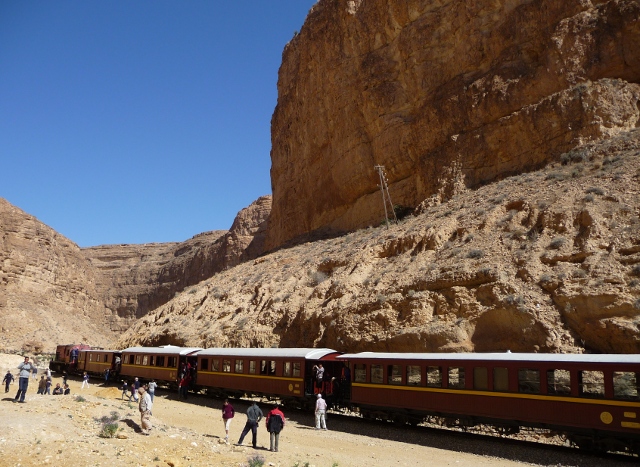
The “Red Lizard” was the personal train of the Bey (the King, before 1882 and the French colonisation) and makes a little known but iconic sightseeing journey. Restored 19th century carriages are pulled by a modern diesel locomotive – unfortunately not steam – up into the Seldja Gorges in the mountains east of the mountain oases. It doesn’t run every day so we’d arranged a few days around making the trip. If you get to the station at Metlaoui early you get the best seats. We arrived very early, way ahead of the hotel day trippers, and were rewarded with the plush leather sofa in the Bey’s own carriage.

The train trundles very slowly up into the series of gorges, often with sheer rock on either side and with fabulous views in between. It stops here and there so you can all get out and take pictures. Although we had the best seats, we also spent a lot of time standing by the railings between the carriages and peering out of windows.

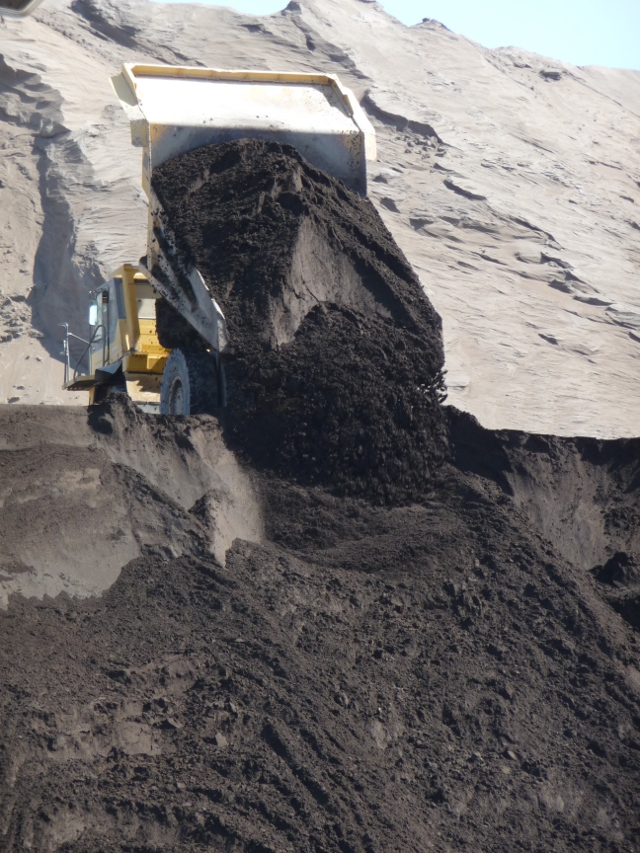
At the end of the line – right in the heart of the phosphate mines – you get out and watch while the locomotive is moved to the new front of the train for the slow journey back down. Also fascinating to watch were the massive trucks emptying mining waste on the heap high above the tracks.

Posted in By Country - Tunisia, Travel stuff | Leave a comment

The mountain oases

We’ve explored most of the oasis towns in Tunisia’s south and were really looking forward to seeing the dramatic sounding mountain oasis villages in the far west of the country along the Algerian border. The desert plain stretched flat and empty from Tozeur to the foot of the textured mountains, which as you came closer split into small jagged foothills lining the edge of the higher ridges behind them.

The “dromedaries crossing” warning signs were true to their word and we saw a group of camels with their young along the road side.

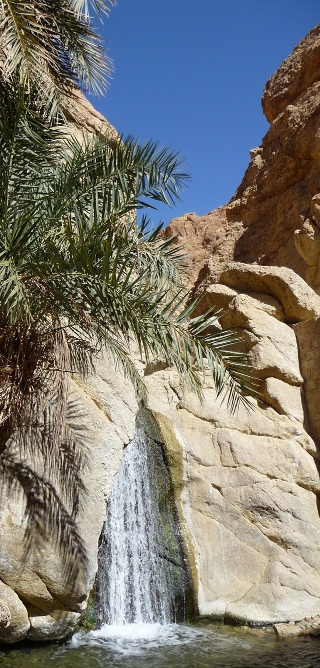
The first oasis we came to was Chebika. A small oasis with arid land reaching above it and a water source gushing out between a gap in the cliffs. We stopped to go for a wander round. There were the usual tat stalls lining the whole area, but it was the gang of youths who gave it their all to get us to buy rocks from them before we had even parked that we’ll most remember Chebika for.

There are tables overflowing with rocks and crystals of different sorts throughout the region, from the ubiquitous desert roses through to the slabs of transparent mica. There are also rocks which, when split open, reveal the crystals within. We’ve seen some beautiful examples. The ones waved around by our young chaps had purple crystals inside. We had no intention of buying any, but as usual it wasn’t about whether or not we wanted them. We must surely want to buy if only a price could be agreed. The starting offer was 300TD – around £150. We were asked if we wouldn’t trade our bicycles, or surely we had a bottle of whiskey we could swap? No. OK vodka then? By the time we had managed to shed our followers and had walked to the small waterfall and back to the van, they had dropped the price to 5TD or biscuits maybe. We later found out that the local youths find rock crystals and dye them with purple ink to look like amethysts. They did look a bit oddly coloured.

Being some of the very few tourists around has its advantages and disadvantages. Of the travellers that do make it to these out of the way places, very few of them are independent. Most are on day trips from their hotel in Tozeur, or even as far afield as Djerba. These people, mostly French, spend a few minutes in each place and are firmly protected from would-be guides and rock vendors by their drivers. If you’re on your own you are fair game!

Chebika’s old village sits in ruins above the oasis – barely visible against the mountain behind it. It was abandoned after severe flooding in the area in 1969. The road from Chebika wound up through spectacular mountain canyons – bending and twisting to Tameghza.

Before reaching the town we visited the first of two ‘panoramic cascades’ on the edge of the oasis below the town.

It probably was more impressive once, but the floods affected the lay of the land and now it is a rather modest although very attractive fall of water. The scenery itself is rather hidden by the number of souvenir stalls almost on top of the waterfall itself.

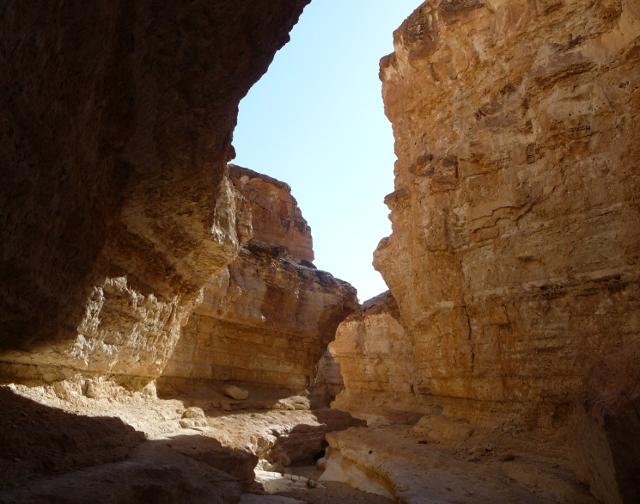
As we drove through the new part of town, we were greeted by a drunk calling out to us from the gutter. Also, the children of various ages were quite vehement in their demands for dinars and stylos. For the first time since arriving in the country, we felt a hostile vibe. There was none of the cheerful friendly greetings and banter we’ve grown used to. We strolled down to the second cascade, even managing to shake off our ‘guide’ after a while. It was quite pretty but again not as impressive as it once had been, although it did have marginally fewer shops right by it. We wandered down river and discovered a hidden narrow gorge, almost like a tunnel of rock heading off from the river into the mountains. This wonderful area is not signed nor is it mentioned in the guidebook.

Round the valley by the wide dry riverbed lies the old town of Tameghza, with the oasis palmeries and the mountains behind it, it is in a stunning position.

Like Chebika, it was abandoned after the flooding. We managed to cross the dry riverbed and parked by an entrance point through the walls. We were immediately followed in by the young would-be guide whose services we’d already turned down out on the main road. He wasted a lot of his time following us around before he gradually got the message. The old town ruins were dotted with small marabouts and the buildings were partial walls and rubble.

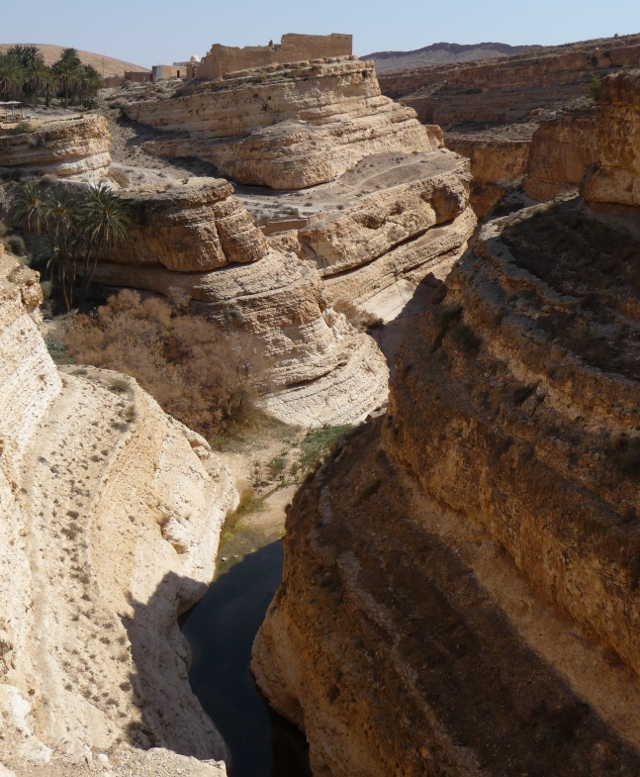
Mides is the gem of the three mountain oases and our favourite for its dramatic setting. The ruins of old Mides are perched atop the rock of one side of a deep gorge.

The trappings of tourism were less intrusive and there were comparatively few touts. Those there were quickly took no for an answer and we were left in peace. Bar the stop-for-a-few minutes day trippers, we were the only tourists around. The day was our warmest in Tunisia yet, and we enjoyed a quiet meander along the opposite side of the gorge in the sun and then into the town itself, exploring amongst the old abandoned houses to the far end where the views were still more impressive.

We got talking to one of the guys waiting around for someone to guide or sell rocks to, and it turned out there was an open campsite at Mides. We would have loved to have camped here but had found no information about sites in the area, no signs to any from the road either. There had been one at Tameghza but it had closed. We promised to put the Mides site details on the internet for him. Small Tunisian businesses are struggling, but don’t do much in the way of marketing themselves.

We returned to our campsite at Gafsa taking a wonderful western mountain route back. East of the mountain oases is a big phospate mining area with its own manmade scenery. The area has been depressed for years as the deposits are running out and there is much unemployment as a result. There has been a lot of unrest recently as workers sit in and demonstrate. It was here the revolution started too. All was peaceful and very friendly as we drove through the mining towns.

Gafsa itself is a busy major town and marks the transition between the desert south and the greener north of the country. Its oasis is a mix of palms, olive groves and fruit bushes and trees and has a different feel to those we’d visited in the south. In spite of being on the edge of town, it felt rural, idyllic and tranquil. People living simple lives working on the land and tending their livestock in ways unchanged for centuries, just the addition of a tractor or two driven by boy racers weaving around the donkey carts (and tourists on bikes).

The El-hassan campsite was in the heart of the oasis and is one of the better ones we’ve been to and also includes a cafe and restaurant. We spent a lazy Saturday enjoying the weather and had just finished one of our omelette in flat bread lunches, when the owner came out bearing a gift for us – a huge bowl of the most wondrous couscous. It was delicious. After eating all afternoon, we didn’t need any more food that day!

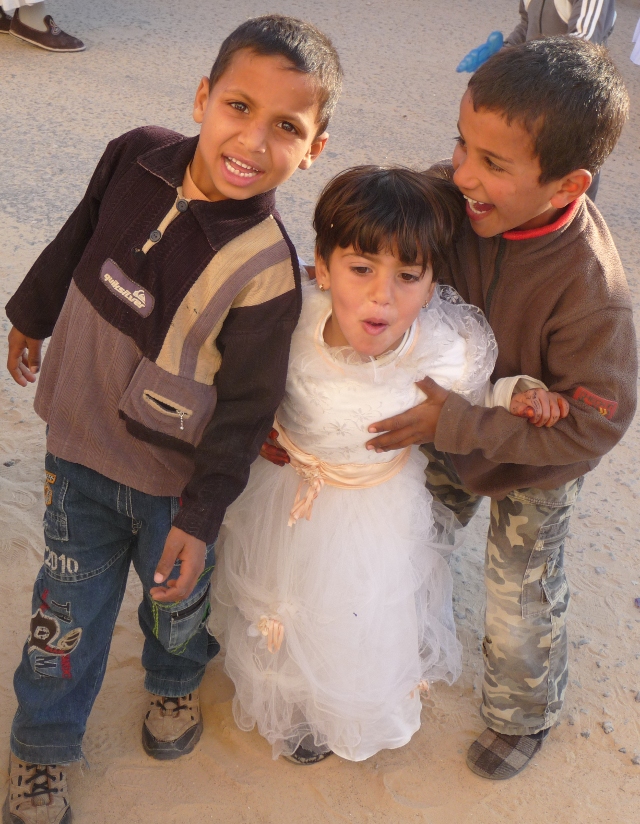
In the evening we were invited to have a look at a wedding party being held there. It was a more modern affair than the one we’d glimpsed at Douz, and we felt rather out of place to say the least. The very frilly bride and her rather embarrassed-looking groom sat on thrones on a raised platform at the front of the room with a formally sat audience of older women and children crowding the small space. A tiny dance floor in front of the married couple was bursting forth with heavily made-up young women dancing to modern Arab and Western-sounding music. All the men, apart from the groom, were sitting smoking chicha and drinking coffee outside the hall.

Posted in By Country - Tunisia, Food stuff, Travel stuff, Wildlife stuff | Leave a comment

Across the Chott

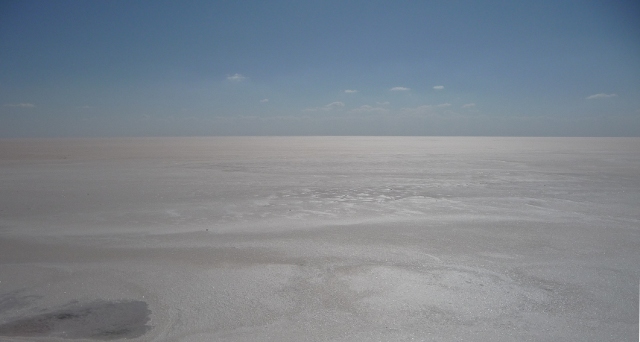
There was only one way to go when we left Douz – across the Chott el Jerid. Shown on maps as a lake, for eleven months of the year it’s just a flat salt pan, extending 100km east-west and 50km north-south.

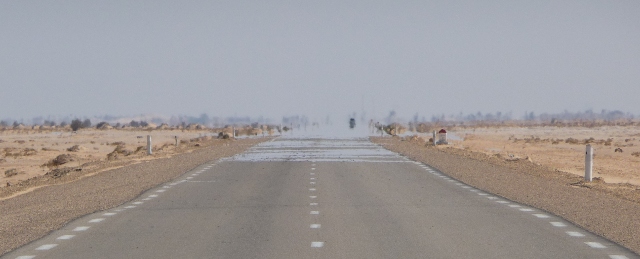
Apart from a road, built by the army and raised above the surface of the lake bed, there is nothing there (if you don’t include the string of cafes along the road, all of which had a selection of salt sculptures of varying success). Along the northern edge, red mountains climb above their reflections – except they aren’t reflections, merely mirages as the heat on the flat surface bends light and tricks the eye.

Once across, we entered Tozeur, again with the ability to choose a campsite – one of which we’d heard was excellent. Eventually, we found it – but were gently bewildered at the size. More than three or four vehicles would have been a squeeze in what appeared to be the car park for some (albeit very nice) cabins behind the owner’s house. There was, we were quickly told, more space in the “other part” of the site down the road – and we were welcome to go and look, but he suggested this area was the better. We had a look anyway. There was indeed plenty of space – so much that the front half had been rented out for use as a gas bottle storage and distribution yard. After we squeezed back past the articulated wagon being loaded, we decided to keep looking. The various lists we’d found suggested there were as many as three other campsites in town – but it turned out that they were all one which kept changing management and name… It wasn’t bad at all – but there was no hot water. The plumber was arriving the next day, insh’allah – but, even then, it was a bit of a trek out. So we headed back to the small site, prepared to treat it only as a one-nighter.

We’d deliberately arrived in Tozeur on Saturday, as Sunday’s the market day. It quickly turned out, though, that the market actually opened on Saturday afternoon – so off we toddled for a first scouting trip. The market is huge – sprawling from a dedicated area, off one of the main streets through town, into back roads and every available patch of spare space. Quickly, though, we realised that what it provided in terms of number of stalls, it lacked in breadth of goods – there was remarkably little variety. With a sigh, we headed off in search of something to eat – and quickly decided on the Restaurant Le Minaret. If ever you’re in Tozeur, and hungry, go here. It is superb. In a beautifully restored old building at the back of the main mosque, the decor is tastefully traditional, with the beautiful lanterns casting interesting shadows and patches of colour on everything. The food is good, too – although, on reflection, a little lightly spiced, presumably in deference to the tastes of the French tourists who are probably their main clientele. There was certainly nothing to complain about with our camel steaks – and as for the desert… Doigts de Fatima – crispy pastry rolls, but instead of the usual savoury (yep, egg and tuna!) filling, they were filled with a dark chocolate source, and served with home-made orange ice-cream. Delicious. A second visit a couple of days later saw Ellie tucking into Camel Carpaccio…

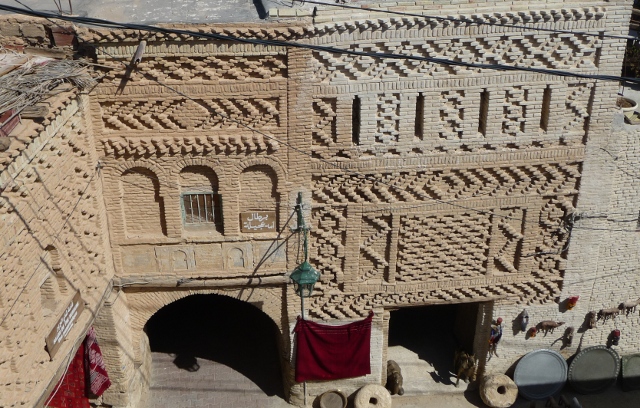
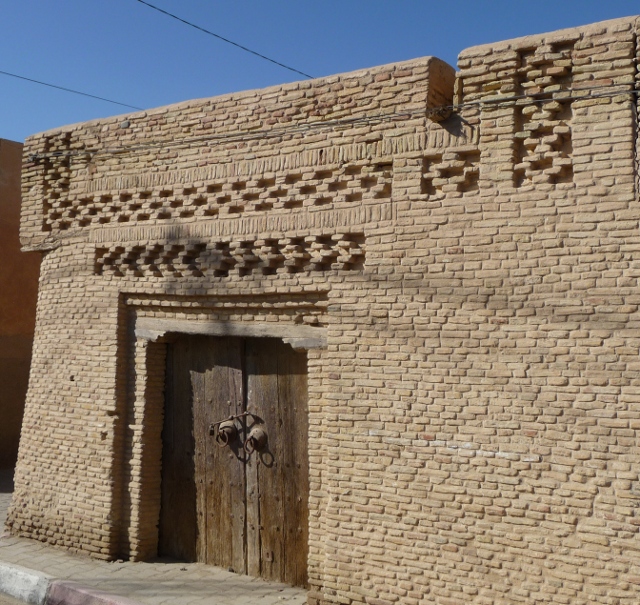
Somehow, and despite our guidebook’s warnings that it’s touristy, the town grew on us quite quickly, and we ended up staying for five nights. Famed for the decorative brickwork of the buildings, the old quarter is beautiful – and very different to the other old towns we’ve wandered through.

Most of the tat-emporiums catering to the souvenir requirements of the Zone Touristique residents have been kept out of the old quarter, and whilst there were groups being route-marched through, it was mostly quiet but for local residential life. Small children broke off from their games to hail you with a friendly “Bonjour”, quickly followed by “Donnez-moi un stylo!”… Old women shuffled around in traditional dress, totally covered in a black cloth with a single white embroidered stripe. We wandered into one house, signed as an art gallery – home, workshop and display space to Raoudha.

We admired her art (as well as the setting!) before being invited to sit down with a cup of tea, and a long chat followed – interrupted by the full-blooded cry of the Muezzin from the nearby Mosque. Not, though, the call to prayer – it turns out that round these parts, they fill-in the gaps by broadcasting public announcements – everything from births, marriages and deaths through to lost property.

Opposite, an old Zaouia shrine had been converted into a house-museum. Saoud, our guide around, was wonderful – her infectious enthusiasm shone through in everything she explained – usually including singing or reciting her own poetry, as she switched seamlessly between Arabic, French and English.

Just around the corner, we found a slightly ramshackle street stall, selling the utterly delicious Tozeur speciality, Metabka – “Berber Pizza” – two fresh unleavened round breads, the dough filled with a mix of Harissa and chopped vegetables, and sealed together before cooking on a hot griddle not unlike those of a French creperie. We’ve had them before – our first taste was on Kerkennah – but these were definitely the best (and hottest!) yet.

We’ve been lugging the bikes around Tunisia on the back of the van, only using them lightly and intermittently, until now – they proved invaluable in exploring the oasis and palmerie, and beyond into the salty scrubland on the edge of the Chott. Compared to the one in Douz, this seems much better kept – the palms look healthier, and there’s a greater variety of plants growing, including banana trees.

Deep in the middle of the oasis, there’s a statue of Ibn Chabbat, who in the 13th century drew up an irrigation plan so fair in the distribution of limited water that the French colonists were reprinting it in the 20th century. To this day, he’s clearly a good chap to rely on for slaking your thirst on a hot day – because right opposite the statue was an extremely pleasant cafe, spread through and under the shade of the trees.

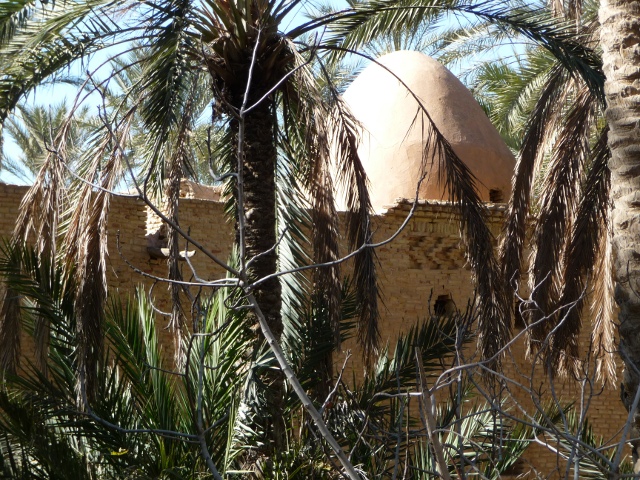
To the east of Tozeur lies Nefta, close (no more than about 30km) to the Algerian border. The old quarters lie centred around the Corbeille, a sunken crater filled with palms slap bang in the centre of town. Old mosques and shrines teeter precipitously on the rim after disastrous flooding in 1990. A centre of Sufi Islam, these old quarters are full of small and twisting back streets, dotted around with many religious buildings. As with Tozeur, the town’s Chott side has a large palmerie – and, again, many small and picturesque domed marabouts punctuate the trees. A pleasant town to walk around and just enjoy the scenery, with one of the quarters having decorative brickwork similar to that in Tozeur – apparently, the protrusions are not merely for appearance, but help to create cooling air draughts due to convection and the patterns of shade.

However, it did have a slightly more persistent undercurrent to the surface friendliness – we had the driver of a horse-drawn caleche follow us up the road trying to persuade, cajole and browbeat us into using his services, whilst a conversation struck up over a cup of tea in a cafe quickly turned into an interview with a potential guide… At the local house-museum, though, there was no such pressure – we were shown around the courtyard and suites of rooms, including granary attics and secret hiding-place for anti-colonisation insurgents, before sitting in the sun with the inevitable mint tea… Some of the rooms were also available for B&B.

Very tempting, but we managed (somehow) to resist.

Posted in Art & Culture stuff, By Country - Tunisia, Food stuff, Travel stuff | 1 Comment

Half a dozen days in Douz

We rolled into Douz around noon after our drive from Ksar Ghilene. There is nothing on the way save a few closed-looking cafes and semi-nomadic shepherds and their flocks. First we tried to find the campsite on our own, but we failed so we went to the tourist office. The chap there was only too eager to help and jumped aboard his moped and sped along to the edge of the oasis where we found Camping Desert Club and met Sophie, the French owner. An oasis indeed, this is the best campsite we’ve found in Tunisia so far. It is run to a high standard and is clean and well cared for with friendly staff. We felt immediately that we would spend a few days here. In fact, the few days turned into a week. The tourist office chap was duly tipped and we managed to persuade him that he couldn’t buy me no matter how many camels he offered.

Douz is billed as the ‘gateway to the Sahara’ but is as much workaday town as tourist destination. It has narrow streets full of shoemakers and metalworkers and small hole-in-the-wall shops. Its rather tacky tourist zone is tucked away on the other side of the oasis and we stayed away from the largely empty hotels and the bored looking camels waiting in vain for tourists. There is a lot of golden sand here, but it lacks the drama and beauty of the copper-coloured dunes of Ksar Ghilene. The campsite is a stopping point for off-roaders, both independent and in organised groups, in search of desert adventures, as well as the few motorhome over-winterers. Three big French vehicles were there. The couples from two of them returned a couple of days after we arrived, having walked to Ksar Ghilene, a 90km trek across the desert, with transport back.

We didn’t do anything remotely energetic, needing time to relax and catch up on much needed laundry. Washing machines are few and far between in Tunisia – no launderettes, no service washeries that we been able to find – so it was a godsend to find a machine, weather, time and space to do washing. The weather has warmed up considerably since we left the south east of the country and we’ve been able to sit out until longer into the evening. There was even beer available.

One of our biggest challenges in Douz was finding interesting things to eat. There is no cheese except plastic processed stuff and it’s hard to find boneless cuts of meat, for ease of preparing in a small campervan. It is almost impossible to find beef in Douz, and the lamb only comes in chops. Of the many butchers, none had a mincer. We could have camel though. There was a camel butcher, but after making friends with camels at Ksar Ghilene, we couldn’t bring ourselves to walk past the head hanging up and the neatly arranged legs outside … We also saw a camel in a pick-up being taken there. Vegetarians no, but sometimes squeamish about quite how fresh the meat is here! Luckily we did track down the chicken and egg shop.

And there’s plenty of fresh vegetables piled high as usual, though a narrow range of what’s in season. We’re still buying the lovely oranges that we’ve been enjoying throughout Tunisia. We also bought galettes, not pancakes here but a kind of round unleavened bread that you can split and fill with an omelette just the right size from our small frying pan, with harissa of course. This solved the ‘what to have with our bread’ problem.

We had a fascinating tour of the local museum, which gave us a real insight into the traditions of the fast disappearing desert nomadic life. Although there is the air of mystery and enchantment of the desert, in reality it was and still is a very hard existence, especially for the women who appeared to be confined to one half of the tent, preparing food and bringing up children the whole time.

Thursdays are the high point of the week in Douz, when it’s market day. We could hear bustle and noise from first thing and realised that the animal market was literally only a stone’s throw from the campsite. There were a lot of donkey, goat and sheep sounds in the air! Every Peugeot 404 pick up from miles around was parked up with animals being led hither and yon.

Flocks of sheep and goats looped into ropes so they could all be led at once, lambs and kids following on. There were horses, donkeys, rabbits, chickens and even a clutch of camels in a corner.

It was very ‘free form’, no pens and the business of the day was going on all around you as you walked through the area amongst the oasis palms, with money changing hands and animals being loaded into vehicles, willingly and unwillingly. One goat was being tethered to a bale of hay on top of a horse cart.

We cycled round the oasis, looking at all the date palmeries, and did a trip out in the van to the Nefzaoua region around Douz and up to Kebili, the next larger town. There were lots of villages tucked into the edge of the desert, surrounded by dunes and oases, a few marabouts and ruins. We got our first taste of the Chott El Jerid. This is a huge dry salt lake extending westwards. There were mirages – distant islands shimmering above the ground, and water where there was none.

In Kebili we visited the old town, in the middle of an oasis. It was abandoned in 1979 because of overcrowded conditions. It was impossible to extend the town without damaging the palmeries, so a new town was built beyond the oasis. The ruins here looked like they were in a war zone. Some buildings quite gone except for a wall or two, others almost intact.

We sat down for tea with a retired teacher who is spearheading the preservation society. He was born here 70 years ago and still lives here with his family. There is a plan to rebuild some of the houses and up to 24 families are expected to move back. A Czech film about the Battle of Tobruk was recently filmed here.

By the time we headed back to Douz the wind had got up and there was quite a sand haze on the roads.


We also did some much welcome socialising. We met Steve, a British independent traveller who was touring Tunisia by public transport, who shared stories from his extensive travels over a couple of meals together. One of them at Ali Baba’s cafe in the Bedouin tent in the back garden, the other home cooked in our van.

We also met Jochin and Sylvia again, having first seen them at Ksar Ghilene. They are Germans living in Italy who were exploring the desert in their Landrover with their small son, Jakob.

In the last couple of days at Douz, Marieke and Aad from The Netherlands arrived in their Landrover with a roof tent.

They had come straight down from the north of the country where there has been a lot of bad weather. They told firsthand about how they only just made it out from some severely flooded areas where there have also been landslides. We are heading that way and will review the situation as we go. If the roads are badly damaged we may have to miss out the mountainous northwest of the country.

One evening while we were sitting talking with Aad and Marieke, and thinking about preparing dinner, we heard the sound of music floating across the oasis. We all jumped up and walked in its direction. It was some way off, but our walk was rewarded by turning a corner and finding a wedding band playing in the street, surrounded by brightly dressed up guests thronging in the golden afternoon light.

Small girls in traditional dress with henna tattooed hands and small boys running around. Women and older girls were standing and sitting together at one end of the street.


It was a joyous occasion – we’ve learned how important weddings are here with festivities lasting for seven days. It was unclear who was the bride and who was the groom but no matter, they were all enjoying themselves. And we loved watching until it was time for the band to move on with the throng following them.

Posted in Art & Culture stuff, By Country - Tunisia, Food stuff, Travel stuff, Wildlife stuff | 2 Comments